The D.C. Council unanimously voted to approve the city’s final fiscal year 2027 budget on June 23, restoring funding to many social programs cut in Mayor Muriel Bowser’s original budget proposal.
The council added more than $400 million to the budget, with the majority coming from decoupling D.C.’s tax code from the federal tax code. This, plus $150 million from the District’s reserve, reversed cuts to popular programs like housing vouchers.
But the moves have also drawn criticism. Chief Financial Officer Glen Lee warned in a letter to Council Chair Phil Mendelson ahead of the vote that the use of the reserve means he could declare the budget “unbalanced.” Many councilmembers also expressed concerns the body was only filling gaps for a year, setting the new mayor and council up with many of the same issues.
“If we do not begin to make difficult decisions in the near future, we may very well find ourselves in the same position next year, facing many of these same challenges,” Ward 7 Councilmember Wendell Felder said at the vote.
Ward 1 Councilmember Brianne Nadeau, who is stepping down after this term, thanked her colleagues and Mendelson for filling the gaps, but offered a similar critique on the reliance on one-time funding to support critical programs. She’s committed to proposing a wealth tax this fall, which she says could help the District afford to do more for its citizens.
“In May, we were handed a budget that was balanced on the backs of our most vulnerable residents, a budget that asked nothing of our most fortunate residents, and although council has identified one-time funding to address many, though not all, of the funding gaps, this budget still asks nothing of those who can afford more,” Nadeau said.
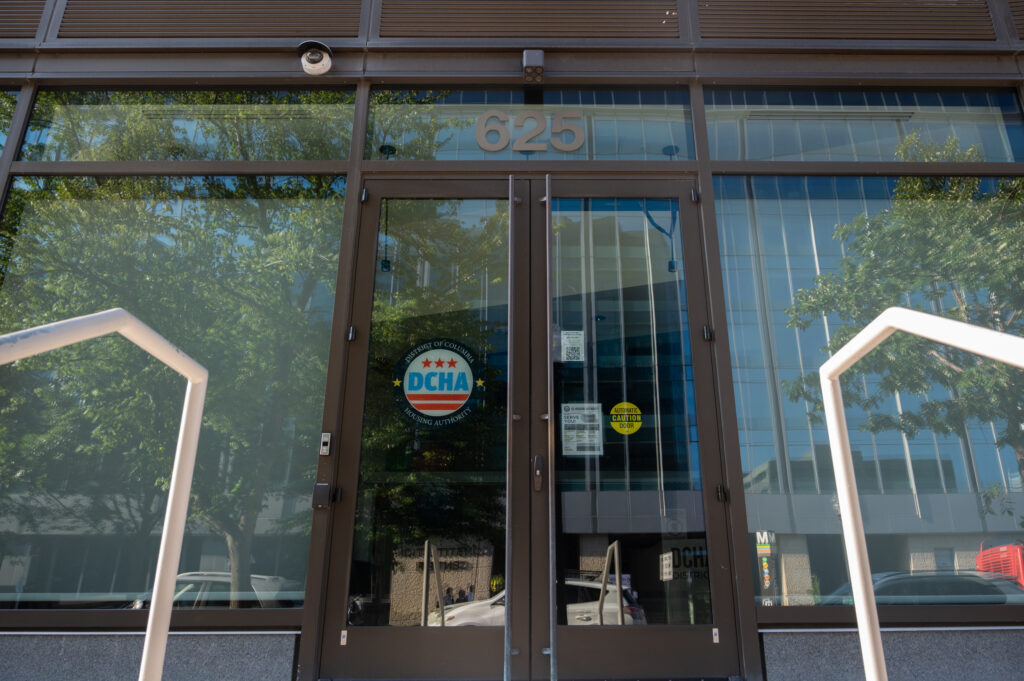
Some of the funds the council found went to a $28.2 million increase in funding for the Department of Human Services and D.C. Housing Authority to support 469 existing housing vouchers.
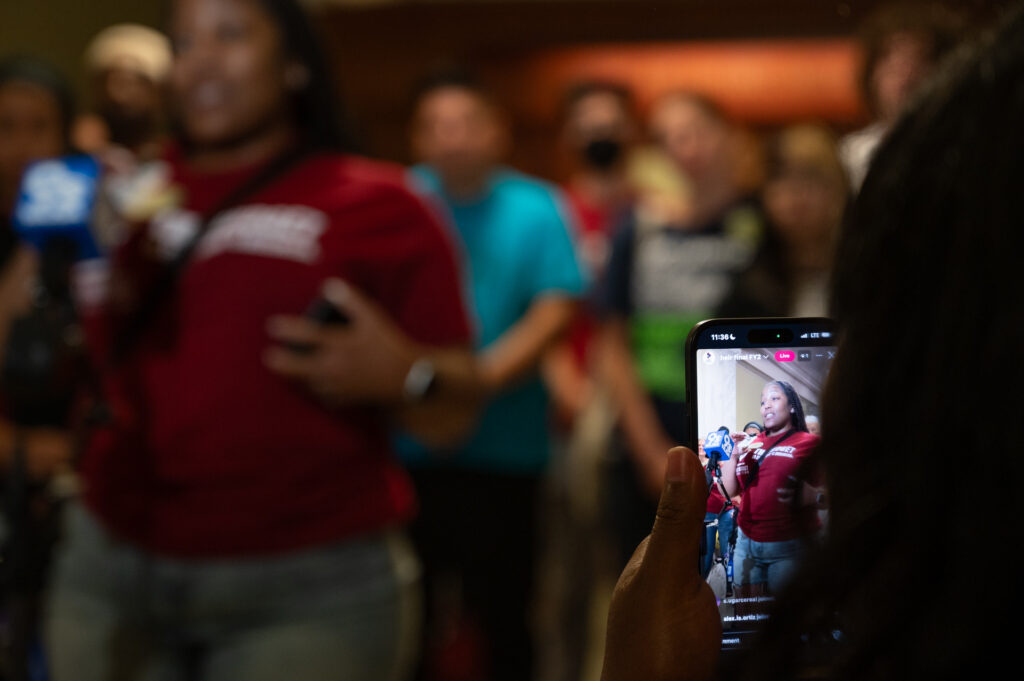
Vouchers have been one of the main points of concern this budget season, with Bowser proposing cuts to Permanent Supportive Housing. In May, advocates protested at D.C.’s Wilson Building, calling on the council to fund new vouchers to bring people out of homelessness.
Most of these 469 vouchers are currently being used by D.C. residents. Under Bowser’s budget, vouchers that went unused due to the recipient moving out of the city, passing away, or finding themselves no longer eligible for the program would have ceased to exist. Now, unused vouchers will be preserved and transferred to new families or individuals.
The final budget also funded 190 vouchers for families exiting the time-limited Rapid Rehousing program and earmarked $1.7 million to assist voucher holders with security deposits. The Office of Victim Services and Justice Grants also received a total of $56 million, money that will be used in part to fund domestic violence services.
“These investments reflect the work of residents, advocates, workers, families, ANC commissioners, civic leaders, and community organizations who showed up, spoke up, and made clear that their neighborhoods and this city’s needs matter,” Ward 4 Councilmember Janeese Lewis George said.
Not all advocate demands were met. The council did not add new vouchers to the existing pool. Advocacy group D.C. Action argued this leaves 521 households in danger of being in a shelter or on the streets, as the Biden-era Emergency Housing Voucher Program will no longer subsidize their housing once funds run out this year. The housing authority has said it is working on a plan to keep these people housed.
Prior to the final budget vote, the council approved five amendments, including a contingency plan for any revenue exceeding the CFO’s fiscal year 2026 estimate.
The contingency plan pledges the first $150 million in excess funds will go toward restoring the fiscal stabilization reserve. The next $9 million of recurring revenue will be transferred to the D.C. Housing Authority to use if the federal emergency housing voucher program expires. The next $3 million will be allocated for the Emergency Rental Assistance Program (ERAP).
If there isn’t excess revenue, the council’s final budget will not reverse cuts to ERAP, leaving the program with a $7 million budget, a $1.6 million cut from fiscal year 2026. At a budget oversight hearing on April 30, advocates testified against cuts to ERAP, warning that without properly funding the program, other, more expensive, services like homeless shelters and emergency rooms will be forced to shoulder the burden of increased evictions.
“Prevention is cheaper than a crisis response,” Philip Johnson, a legislative advocacy fellow at the United Planning Organization, said at the April hearing. “If ERAP is not for low-income residents facing eviction, where is the funded alternative?”
In the final budget, the council was also able to restore $12.8 million to the Temporary Assistance for Needy Families (TANF), which provides cash assistance to families in need, to pause the implementation of time limits, $1.5 million to reduce sanctions, and $121,000 to expand TANF eligibility to pregnant people in their second trimester. $5.6 million for cost-of-living adjustments was left unfunded, according to D.C. Action.
The fiscal year 2027 budget also restored $1.5 million for permanent supportive/extended transitional housing-youth, which was previously cut by Bowser, and established a $250 thousand grant for the Sasha Bruce Youthwork drop-in center, which lost District funding last year. The D.C. Commission on Poverty remained unfunded in the Council’s final budget, despite advocacy from the commission’s leadership.
Mendelson has committed to holding a public hearing to discuss the issue of taxes and revenue in the fall, and Nadeau said she will soon introduce permanent legislation for a wealth proceeds tax.
“The next mayor will face a significant structural debt with the budget we’re passing now,” Nadeau said.
The budget will now go to Bowser’s desk for her signature.