The D.C. Housing Authority (DCHA) voted to approve its Fiscal Year 2027 Moving to Work (MTW) Annual Plan at a Board of Commissioners meeting on July 8.
The plan updates interim reexamination policies and processes for public housing and voucher-based projects to save DCHA money during a tight budget year. Some advocates believe, however, the plan does more harm than good and disincentivizes families to work for fear of losing housing support. Four out of the five DCHA commissioners voted yes on the plan, while Commissioner Rhonda Hamilton abstained from voting.
MTW is a trial program authorized by Congress for participating public housing agencies, including DCHA, to find ways to use federal dollars more efficiently, increase housing choice for low-income residents, and help residents find employment. The MTW program governs public housing units and housing choice voucher (HCV) assistance programs. MTW offers DCHA flexibility by exempting the agency from some rules, allowing it to combine policies and access more funding.
While DCHA says this year’s plan will maintain access to affordable housing while saving the agency money, advocates at Legal Aid DC and Empower DC argue it will weather the department’s budget crisis at the expense of participating residents.
DCHA anticipates a significant federal budget shortfall in its housing assistance payment subsidy of about $35 million, which could impact 1,400 families, Theresa Silla, executive director of the D.C. Interagency Council on Homelessness, said at the July meeting. The plan attempts to offset some of these costs by making it easier for DCHA to raise rents on families in public housing.
“It’s really important to understand that these provisions are an attempt to share a little bit of the pain across all of our families so that we do not have to stop payment or otherwise impact these 1,400 families,” Silla said.
Public housing and voucher residents generally pay 30% of their income towards rent. The plan changes DCHA’s policy on interim reexaminations, a check-up that calculates a rent change when a family reports a change in income. It is unclear how frequently these reexaminations will occur, but families are required to report all income increases.
For HCV households, DCHA will consider raising rent if the annual increase in income is $2,400 or more. For public housing households, interim reexaminations will be conducted if the family reports any increase in income.
The new policy could create burdens for HCV and public housing households, many of whom work irregular hours or receive irregular pay, according to Sarah Plavcan, a senior staff attorney at Legal Aid DC. In particular, gig economy workers and hourly workers may report increases in income during surge seasons.
“You won’t have all of that extra money the next month. You’ll be asked to pay an additional amount beyond what you can reasonably pay,” Plavcan said. “When we’re talking about gig workers, they could end up being required to pay more than they make in the next month total.”
These burdens aren’t just financial, she said. The administrative responsibilities create additional work for the tenant.
“It is the time and the energy and the burden of having to continuously report your income, and for example, the fear that if you don’t report every single paycheck, then DCHA might say you’re in violation of the rules, so we might terminate you,” Plavcan said.
Additionally, Plavcan said the policy could disincentivize tenants from working more hours or accepting promotions, contradicting MTW’s objective of incentivizing households to work. Public assistance programs based on income can produce a phenomenon known as the benefits cliff, where families face restrictions that can cut them off from support if their incomes increase. This creates serious dilemmas if the increased income is not enough to replace the costs covered by the program resources.
“Every extra hour I work, that’s going to be counted towards what I have to pay, not just this month, but next month. So I’m just not going to take those extra hours,” Plavcan said.
While income increases might trigger a rent hike, the changes prevent HCV households from requesting an interim decrease, or a rent adjustment when a household’s income decreases, for three months following entering the program, moving to a new apartment, or another reexamination. Before, HCV households could request an interim rent decrease at any time. The MTW plan only provides exemptions for households experiencing layoffs or loss of benefits.
The limited exemptions raised concerns for advocates. In a written comment to DCHA, Legal Aid wrote the exemptions do not cover common cases like domestic violence, a family member of a participant becoming disabled, or unexpected changes in family composition. Legal Aid DC said the cost would be shifted onto financially vulnerable families who could pay more rent than they can afford for several months.
“To the extent that DCHA is expecting cost savings from this change, they expect those savings to come directly from the pockets of its participants,” Legal Aid wrote.
Plavcan questioned whether the changes would produce substantial savings for the agency. For example, implementing the interim reexamination policy could increase administrative costs since staff would have to spend more time reviewing income increases.
“The worst case scenario here is that DCHA is going to end up removing all of these rights for participants and for residents, and then they will still have this same enormous shortfall that they’re talking about,” Plavcan said.
Housing advocates also worry the revised plan will decrease housing choices for participants, contradicting the goal of the MTW program. One aspect prevents families with project-based vouchers from transferring to tenant-based units. Another prevents voucher households from requesting a transfer within two years of being at a property, an increase from the previous 12-month restriction. Critics said the initiative would lock tenants down to a property longer than a standard D.C. lease, so participating families would have fewer housing choices than unassisted families.
“These kinds of things speak to a system where tenants feel like they have little rights or options, and it perpetuates this distrust that exists between DCHA and their clients,” Daniel del Pielago, housing director of Empower DC, said.
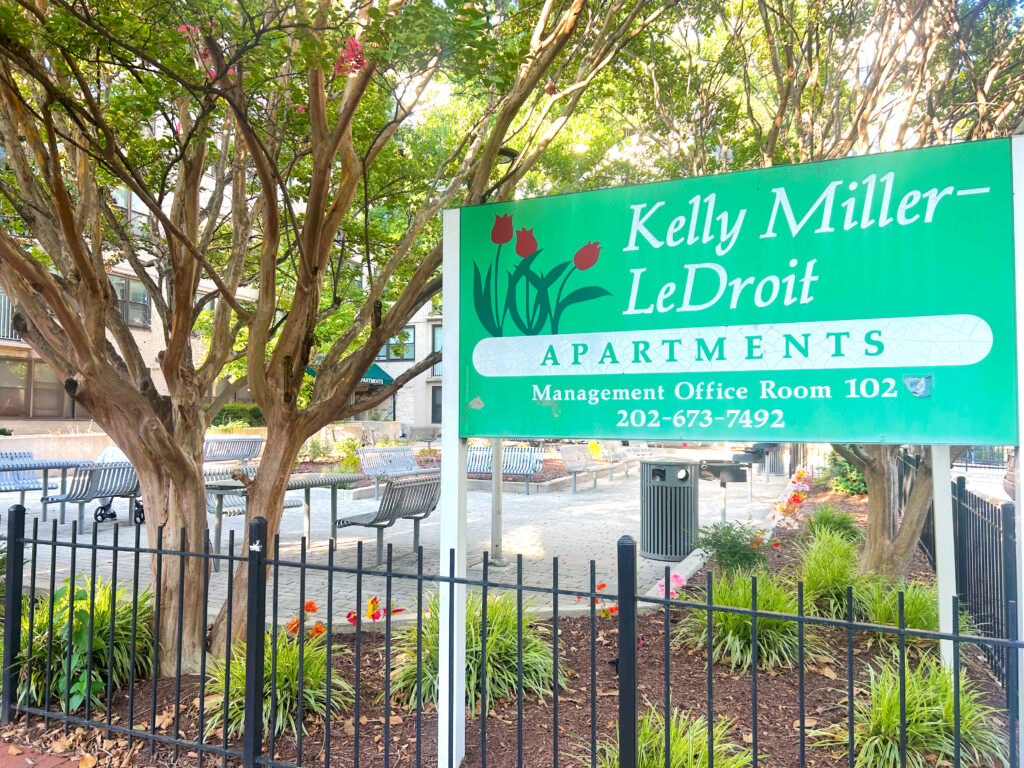
Of particular concern to del Pielago is the inclusion of a planned application to demolish or dispose of seven new public housing properties, including Kelly Miller Dwellings and LeDroit Apartments, amounting to 896 total units. Del Pielago said DCHA has applied for demolitions and disposals in past years but has not gone through with them, leaving residents with uncertainty. HUD authorizes public housing agencies to demolish public housing units that are obsolete due to their condition or location. Public housing agencies may also conduct a disposition of their properties, which transfers the public housing unit to another entity.
D.C.’s MTW plan already listed 7,468 public housing units as planned to be removed. Many of these public housing units will undergo a Rental Assistance Demonstration (RAD) conversion, which converts public housing stock to project-based voucher housing. The RAD program allows DCHA to secure other funding opportunities amid decreasing federal funding. This is especially important because federal public housing funding does not allow for the modernization of units, interim DCHA Executive Director Nicole Wickliffe said at a public hearing.
Instead of directly providing housing, public housing agencies subsidize rent for tenants in privately owned apartments.
“If these aren’t publicly held resources anymore, who knows what will happen in the future? We could lose, as mentioned, very important housing stock in the city,” del Pielago said. “A lot of these properties simply sit on significant swaths of land that, to private developers, to private business people, are where they can extract a lot of money, and that is often done without caring for what happens to the people that live there.”
While more than 8,000 public housing units could be approved for demolition or disposal in the MTW plan, DCHA will undergo a formal process before any project begins, an agency spokesperson wrote in a statement to Street Sense.
“There are additional steps, including robust engagement with any potentially impacted residents and submission of an application to the U.S. Department of Housing and Urban Development (HUD), before any demolition or disposition activity begins,” the spokesperson wrote.
DCHA also confirmed it reviewed and considered all public comments during the public comment period, which ended on June 27. The agency has not published an updated version of the MTW plan based on public comments, but will post an updated version once it has submitted the plan to HUD. Approval of the plan does not necessarily mean these changes will occur immediately or at all.
“We hope that they will consider our comments and continue to keep in contact with the community about those changes if they do choose to implement them,” Plavcan said.
This article originally appeared in Street Sense’s July 15, 2026 edition.