Since Mayor Muriel Bowser proposed her fiscal year 2027 budget in April, lawmakers and homelessness advocates have scrambled to avoid her proposed cut of hundreds of housing vouchers. In its first budget vote, the D.C. Council has found the answer — for now.
On June 8, D.C. Council Chair Phil Mendelson announced he was adding more than $400 million to the budget. The majority comes from savings via decoupling the city’s tax code from the federal tax code. Some of this money went to an increase of $28.2 million in funding to the Department of Human Services and D.C. Housing Authority to support 469 existing housing vouchers. Additionally, the budget will fund 190 vouchers for families exiting Rapid Rehousing and set aside $1.7 million to help voucher holders with security deposits.
“Many of these people, young and old, families, kids, grandparents, would have become homeless,” Councilmember Robert White, who chairs the Committee on Housing, said at the June 9 vote. “The council stepped up.”
Most of the 469 vouchers in question are currently used by D.C. residents. According to the council’s budget documents, under Bowser’s budget, the city would not have been able to support the current number of vouchers. When someone stopped using a voucher because they moved out of the city, died, or were no longer eligible for the program, the voucher would have ceased to exist. The funding preserves these vouchers to instead go to new families or individuals. It also reinstates 150 vouchers that were not allocated to new families last year, but does not add new vouchers to the existing pool.
Funding for the vouchers comes after months of budget hearings aimed at finding resources to support programs left out of Bowser’s budget as the city copes with a $1.1 billion budget deficit. Programs supporting the District’s most vulnerable, including domestic violence survivors, at-risk youth, and residents experiencing or at risk of experiencing homelessness, were cut in Bower’s proposed budget.
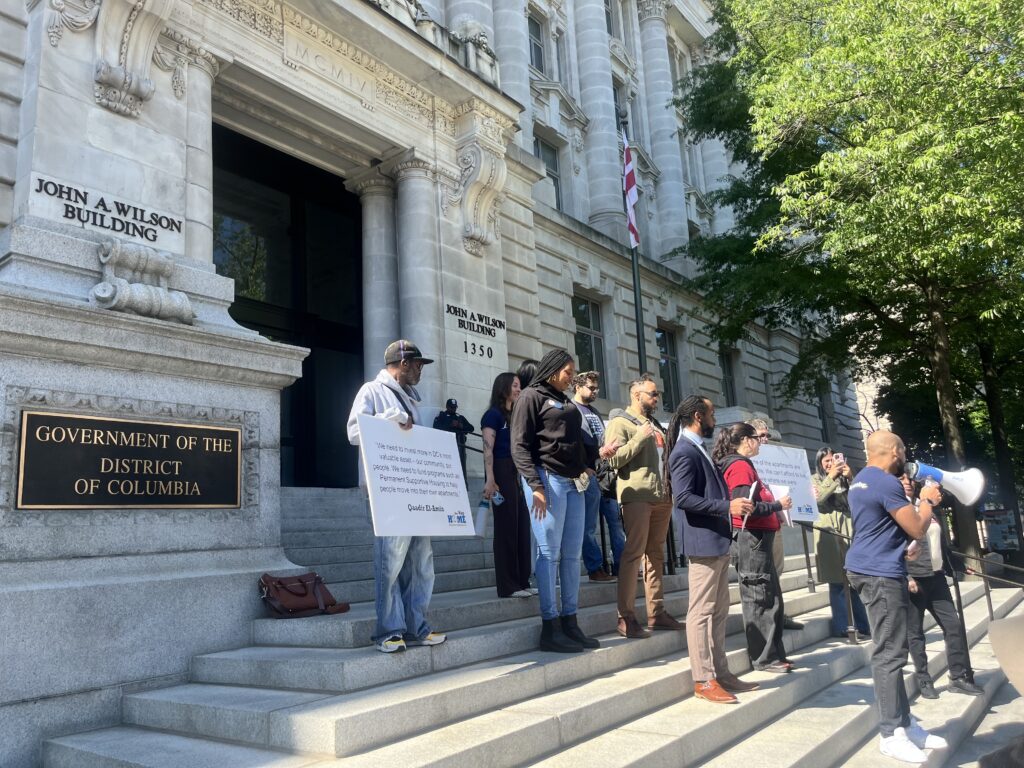
As a response to the cuts, advocates and residents participating in these programs testified at an April 30 hearing to urge the council to find funds for the city’s vital resources. Following the announcement of increased funding, advocacy organizations like the Fair Budget Coalition and the Way Home Campaign expressed appreciation but emphasized remaining gaps, such as the cost-of-living adjustments for people in the Temporary Assistance for Needy Families, and the 521 federal housing vouchers set to expire soon.
“[Chairman Mendelson] did some great things, but the work isn’t done!” the Fair Budget Coalition wrote on X, formerly Twitter. “We need new recurring revenue for over 500 households facing loss of housing at the end of Dec, alliance health participants who lost care, lost COLAs for the poorest families, and so much more waiting for restoration.”
Alongside the voucher funding, the council also announced an addition of $27.3 million to D.C. Access to Justice to support domestic violence and other legal services. Organizations advocating for survivors like the D.C. Coalition Against Domestic Violence shared similar sentiments to the Fair Budget Coalition in their push for further financial support, including for domestic violence services and 521 federal Emergency Housing Vouchers.
Advocates and budget specialists also noted the temporary nature of the budget increases, as the city continues to face funding issues. Tazra Mitchell, who serves as the chief policy and strategy officer at the D.C. Fiscal Institute, highlighted many additions are one-time boosts, leaving the issue of funding resources for vulnerable residents that the mayor and council faced in April to continue into the next fiscal cycle.
“Their work is not done yet, largely because they’re kicking the can down the [road] on how to solve recurring budget needs, just like they did last year,” Mitchell wrote on X.
The council’s work isn’t done for this year, either. Lawmakers will take a final budget vote on June 23. As part of that vote, they could add an amendment creating a wealth tax and use the revenue to fund additional programs, as suggested in a proposal headed by Ward 1 Councilmember Brianne Nadeau. For now, the council has left the idea on the table, though Mendelson warned D.C. will likely need to raise taxes by 2027, when the city has a new mayor.
This article originally appeared in Street Sense’s June 17, 2026 edition.