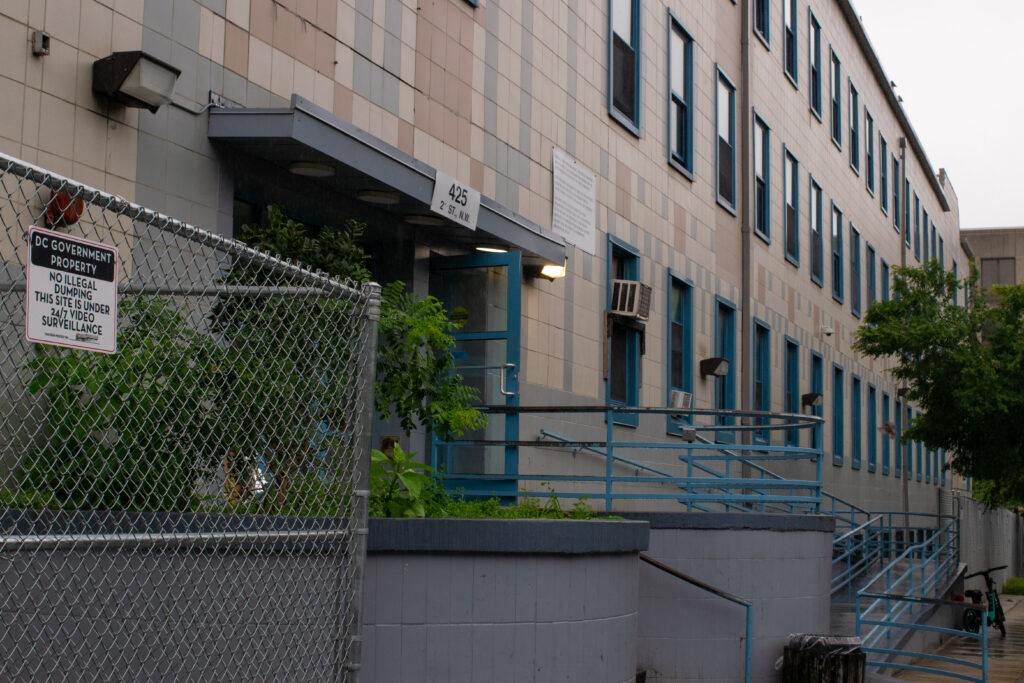
In her proposed budget, D.C. Mayor Muriel Bowser proposed funding toward renovating emergency and temporary homeless shelters, while longer-term housing options received funding hits. The proposal comes as shelters across the District grapple with high demand, with the population of people experiencing homelessness exceeding capacity in the city’s shelters and other housing programs.
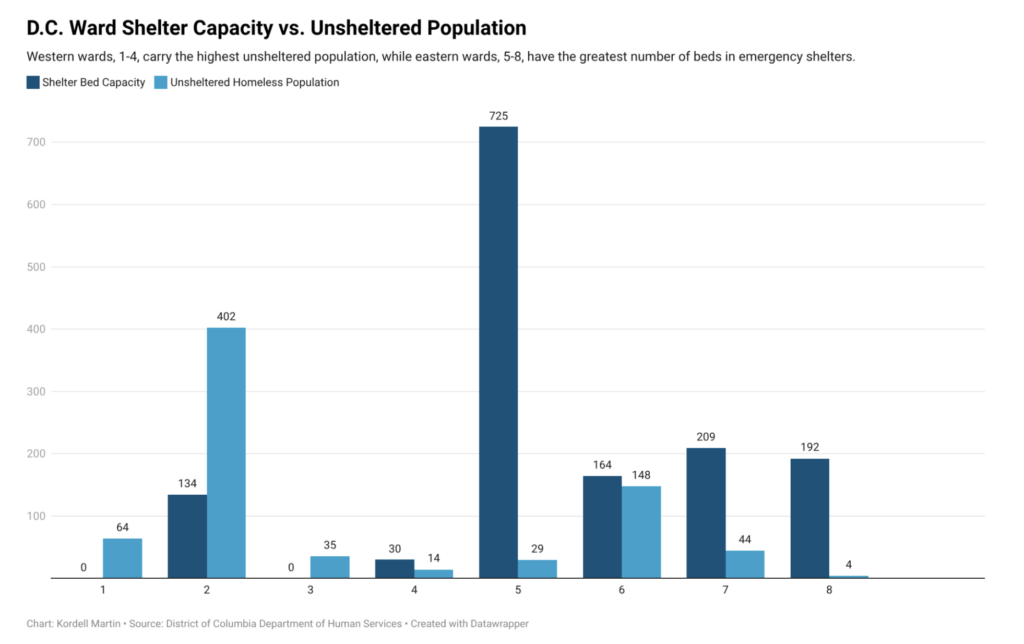
There are over 5,000 people experiencing homelessness in the District, far outnumbering beds in emergency shelters, according to the Metropolitan Washington Council of Governments’ 2025 Point-in-Time Count report. This includes 792 unsheltered individuals, or people living outside, according to the D.C. Department of Human Services (DHS). A DHS spokesperson told Street Sense that, as of April, there are 1,454 beds in low-barrier homeless shelters.
In March, low-barrier shelters reached a nightly average capacity of 90%, according to a census conducted by The Community Partnership for the Prevention of Homelessness. Facilities with the most beds, New York Avenue Men’s Emergency Shelter and 801 East Men’s Shelter, operated at full capacity on average each night as reported in the census, reaching maximum occupancy of 437 beds. Men’s and women’s shelters across the city maintained an average of fewer than 100 vacancies a night.
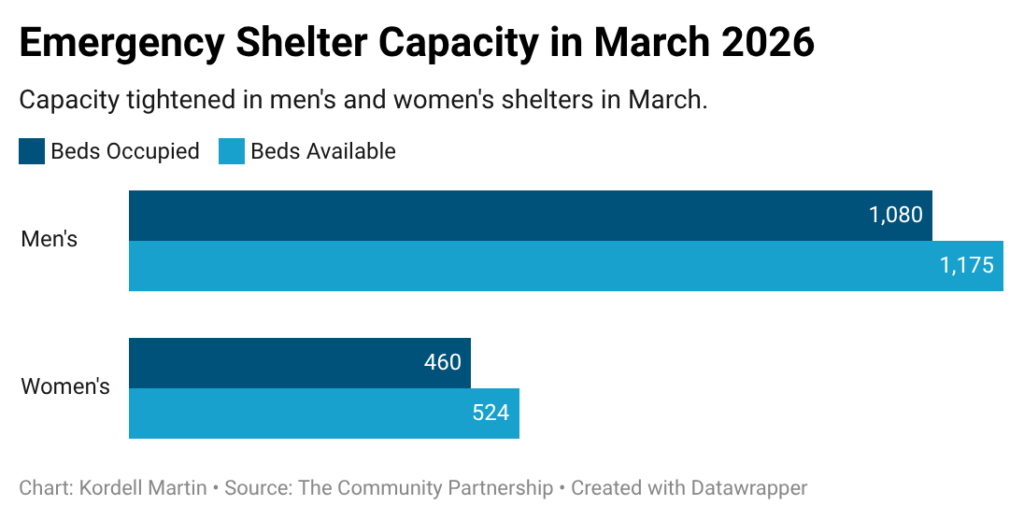
Shelter capacity is monitored nightly to determine if additional beds are needed to meet demand, according to the DHS spokesperson. Capacity demands can vary at different points of the year, as some shelters are open when weather poses a significant risk to the health of those experiencing homelessness, like hypothermia season, which DHS dates from Nov. 1 to April 15.
Some prefer living outside to staying in shelters, but in other cases, if people seeking shelter are turned away, they may be forced to either sleep outside or travel to find facilities outside of their current ward. The DHS spokesperson said people experiencing homelessness can call the District’s Shelter Hotline for free transportation to shelters from anywhere in the city if they can’t find a facility near them.
Housing services in the budget
Bowser presented her proposed Fiscal Year 2027 budget on April 10. The budget, which totals $1.1 billion less than the previous year, sees significant cuts to homeless service programs, including housing vouchers and Rapid Rehousing.
DHS is facing a 7.5% decrease in its overall budget. According to DHS Director Rachel Pierre, in a briefing in partnership with the Interagency Council on Homelessness and Fair Budget Coalition D.C., the proposal provides opportunities for advancing shelter system reforms despite the difficult financial period.
The proposed budget will utilize just over $37 million in capital funds for the District’s shelter system. Last year, funding for the shelter system sat at over $76 million, which covered the creation of the New York Avenue shelter and the redevelopment of the Community for Creative Non-Violence (CCNV).
DHS plans to distribute this year’s funds through the replacement of the CCNV, which acts as the District’s largest homeless shelter, costing $28.6 million. Additionally, the New York Avenue shelter will be replaced for another $4 million. The Blair Shelter and Naylor Road Shelter will also see renovations, costing $1.5 million and $2 million, respectively. The rest of the capital funding will go toward the replacement of elevators at the 801 East shelter for $1 million.
The proposed budget allows for emergency shelters to support 405 families daily, compared to the 440 families currently supported by emergency shelters. In contrast, services like Permanent Supportive Housing (PSH) expect to assist nearly 3,000 families, alongside 4,734 individuals.
The budget proposal funds no new housing vouchers, leaving nearly 40,000 individuals in need of housing on the housing voucher waitlist.
Additionally, the Rapid Rehousing program’s $3.1 million cut means it will only be able to support 100 individuals in the upcoming fiscal year, which runs from Oct 1, 2026, to Sept 30, 2027, compared to the 111 individuals supported in the last fiscal year. New cases will be added only when previous individuals exit the program.
The prioritization of shelter renovations in the proposed budget will help with upkeep for short-term, emergency housing, but for D.C. residents who become homeless in the coming year, programs to assist in finding more permanent housing are limited.
Non-congregate shelters
Beyond emergency, low-barrier shelters, Bowser’s budget proposal also includes $25 million in funding for the city to purchase a new non-congregate shelter site. Non-congregate shelters, also known as bridge housing in D.C., are high-barrier shelters where residents have semi-private rooms. To get into non-congregate shelters, residents have to be referred to the program and meet certain qualifications.
The District currently has two non-congregate shelters — the Aston and the E Street shelter — which are both in Northwest D.C. The proposed budget also includes $3 million in operating funds for these existing locations.
Most of D.C.’s shelters are congregate, meaning many people stay in the same room, and residents are typically divided by gender. Many Washingtonians experiencing homelessness who live outside say conditions like these prevent them from staying in shelters. But non-congregate shelters offer residents more privacy and allow mixed-gender couples and adult families to stay together.
However, some worry that investing millions in a third non-congregate shelter isn’t an efficient use of the city’s limited funds, especially as other housing programs face cuts and when existing bridge housing sites aren’t being used to their full capacity.
According to DHS oversight documents, the E Street shelter should be at its full capacity of 190 beds in use by June; the DHS spokesperson told Street Sense the shelter currently has 90 residents. The building for the Aston also has capacity for 190 residents, but the program is currently capped at 100 residents, and all of these seats are filled, according to the DHS spokesperson. The 100-resident limit comes from the Good Neighbor Agreement, which was approved by the Aston Community Advisory Team and is meant to govern relations between the shelter and the surrounding community, though the local Advisory Neighborhood Commission has passed three resolutions seeking to raise the cap.
The proposed budget includes a 3% increase in funding for the Aston and E Street to account for rising costs, but does not include funding to expand the Aston’s capacity.
“Given the tight budget circumstances we’re facing… we should be using every resource we have.” Kate Coventry, the director of legislative strategy at the D.C. Fiscal Policy Institute, said. “I will be asking the Council to examine whether or not it makes more financial sense to expand capacity at the Aston, where capacity has been kept artificially low by an enrollment cap, or whether it makes the most financial sense to open a third bridge housing site.”
DHS oversight documents say the agency is targeting a capacity of about 100 beds for the third bridge housing site, and that it anticipates the city will acquire the third site before the end of this calendar year. However, both the Aston and E Street shelters took over two and a half years from when the city identified the site for purchase to when the site opened. Both developments needed renovations and faced other unplanned delays before they opened. They were also significantly more expensive than the $25 million set aside for acquiring the third site; the Aston and E Street took about $33 million and $48 million, respectively, for acquiring the buildings and doing construction before opening.
“It is much more likely that we could get the Aston capacity increased faster than we could open a third bridge housing site,” Coventry said.
Non-congregate shelters are intended to connect residents with permanent housing. At the Aston, for example, in the last fiscal year, 54% of the 70 individuals who left the program for permanent housing, with the vast majority receiving Permanent Supportive Housing (PSH). However, advocates worry that if programs like PSH aren’t adequately funded by the new budget, bridge housing residents won’t be able to exit to stable, long-term housing.
“People will get in shelter and be trapped, and then we will need more shelter because we won’t have any movement,” Coventry said. “The idea is that bridge housing is a bridge to housing, not a bridge to nothing, which is what it is going to be without more resources.”
This article originally appeared in Street Sense’s May 6, 2026 edition.