Is Trump’s ruthless approach to homelessness actually different than DC’s?
Trump’s deployment of the National Guard and ICE had some obvious targets. But in the background, homeless folks were also feeling the pain. There were displacements and arrests of homeless encampments, all in the name of keeping the city clean and crime free. Franziska Wild and Madi Koesler from Street Sense Media are here to break down what happened over that month and where DC’s homeless population stands now.
By Julia Karron | Full episode

As Encampment Clearings Continue, One Resident Seeks Peace and Justice

Since the end of the federal officers surge, local agencies have continued clearings at encampments across the District, all while the Bowser administration encourages former and current occupants to enter public shelters.
As officials and advocates prepare for a couple of clearings across Northwest, at least one resident is telling The Informer that, even with housing insecurity and unemployment, they have no interest in leaving their encampment, nor are they considering a stay in a shelter.
“Everybody was shocked [that] I don’t want to live in a shelter,” said Getachew Gurumu, an unhoused D.C. resident who lives along Arkansas Avenue in Northwest.
The scheduled Oct. 15 clearing of Gurumu’s Arkansas Avenue encampment — a process that includes a full cleanup, biohazard removal and a reminder that the space must remain clear at all times — follows what Gurumu recounted as the Office of the Deputy Mayor for Health and Human Services’ (DMHHS) June visit to the public space.
Gurumu told The Informer that DMHHS officials appeared at the site because of a request he made, six months prior, that the deputy mayor’s office remove resources that accumulated in the space. Gurumu, who appeared at ease with the upcoming clearing, balked at the notion of leaving what he described as a plot of land owned by all congregants of the Ethiopian Orthodox Church.
“My religion is Orthodox. There is no private church,” Gurumu said on Monday morning. “The Orthodox church means Ethiopian people. That people work [and] they make a church. I built that. Therefore, no one…cannot take me. No one.”
By Sam P.K. Collins | Full story

A special edition on homelessness in DC
For 10 years now, if we’re counting correctly, the team at Street Sense has led local newsrooms in a short, focused burst of coverage of homelessness. (More about our local street newspaper’s work!)
It was already a vitally important topic for the public to read about and better understand even before the current presidential administration started specifically targeting our homeless neighbors. But the ongoing nature of the crisis, along with continued cuts to our local newsrooms, means it doesn’t always get the in-depth coverage it deserves.
Our contribution to the project is this, a special holiday edition of our newsletter featuring local newsrooms’ stories from last week.
By Zach Adams, Serena Zets, Gracie McKenzie, and the 7:30 team | Full newsletter roundup

D.C. renters face record eviction levels amid dwindling aid and rising housing costs
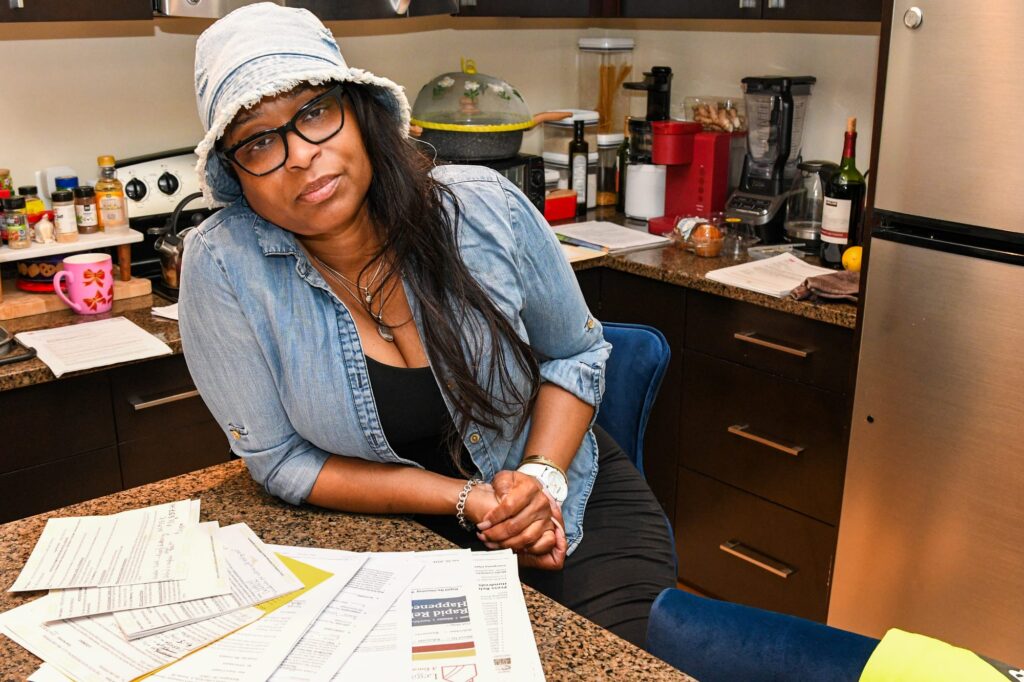
Melvine Perkins has spent years trying to pull herself out of poverty — working temp jobs, applying for rental aid, and doing everything possible to stay in housing. But in a city where rent costs outpace wages and assistance often runs dry, each step forward seems to push her two steps back. Now, after years of fighting to stay in her one-bedroom apartment, she’s again facing eviction.
“It’s just by the grace of God that I have the mental bandwidth to not crash and burn. I’m telling you I have been through it,” she told Street Sense/The 51st. “I’m not in this situation because I want to be.”
Perkins now owes more than $55,000 in back rent, and her landlord has filed for eviction. Climbing out of debt, she says, has felt nearly impossible without more assistance or a higher-paying job — both of which have been hard to secure while also navigating court hearings, legal filings, and the constant paperwork tied to her case. She has agreed to move out by the end of October as part of a negotiated resolution to her case.
“Every day I wake up, I feel like I am in a mental obstacle course,” she says.
Perkins isn’t alone: Last year, completed evictions in the District rose to record levels, with 1,869 households removed from their homes under a court order. That rise marked the largest increase since the year before the pandemic, according to new data from the Office of the Tenant Advocate obtained and analyzed by Street Sense, The 51st, and American University’s Investigative Reporting Workshop. And these trends show no signs of slowing down. By the end of June 2025, the city had already recorded at least 1,477 completed evictions, with three months left in the fiscal year, nearing totals seen in the entire year pre-pandemic.
While final numbers for this year won’t be available until early next year, average monthly evictions in D.C. are the highest they’ve been in six years. Before the pandemic, the city averaged about 124 evictions a month. That number dropped sharply during COVID, but jumped to roughly 156 per month in fiscal year 2024 – and has climbed even higher in 2025, averaging 164 each month so far.
By James Jarvis and Taylor Nichols | Full story


Safety fears keep many homeless people from shelters, nonprofit leaders report
On the streets of D.C., many people experiencing homelessness don’t know where to find shelters, which is a problem compounded by public ignorance and shrinking nonprofit funding that threatens essential services.
According to CNN, about 15 percent of D.C.’s homeless population live on the streets. Nonprofit leaders suggest safety and shelter regulations are what keep them away from seeking temporary or permanent housing.
Sophia Palmer, house manager for the Coalition for the Homeless at the Park Road Transitional Program in Columbia Heights, said many homeless people in D.C. are unaware of where to access resources such as shelters.
Many people experiencing homelessness avoid shelters due to safety concerns and fears for their personal belongings. Recent nonprofit budget cuts have further strained shelters, limiting the services they can provide.
By Kadie Fishman and Sophie Milner-Gorvine | Full story

Opinion: The housing crisis solution DC officials continue to ignore

You’ve heard the adage hundreds of times: The definition of insanity is doing the same thing over and over while expecting different results. Many DC elected officials and government functionaries have been wearing straitjackets for years.
Consider the policies around homelessness and housing that city officials have advanced over the past 20 years, for example. They have basically required appropriating millions of dollars each year to subsidize construction of new apartments, mostly at 50% to 80% of median income. That range has meant that insignificant numbers of units have been available for very low-income residents, many of whom are on the edge of experiencing homelessness if they lose their jobs and miss a mortgage or rent payment, as happened to thousands during the COVID-19 pandemic.
I have never experienced homelessness. But when I was a young single mother pinched every day for money, I frequently worried about how I was going to pay rent and buy food.
It’s true DC officials used lots of federal and local money during the pandemic to help mitigate such fears, preventing evictions and foreclosures. Those funds have long since run out, however.
Unfortunately, the District has raced back to its flawed, pre-pandemic approach to creating so-called affordable housing. Simultaneously, officials, including Mayor Muriel Bowser, seem to be gutting the few laws, like the Tenant Opportunity to Purchase Act (TOPA), that have been a bulwark for renters against market forces.
The results of this combination of myopia and insensitivity have been more housing instability and persistent homelessness in the nation’s capital.
By jonetta rose barras | Full story

Many remain unhoused on D.C. streets, months after the Trump administration ordered sweeping encampment clearings
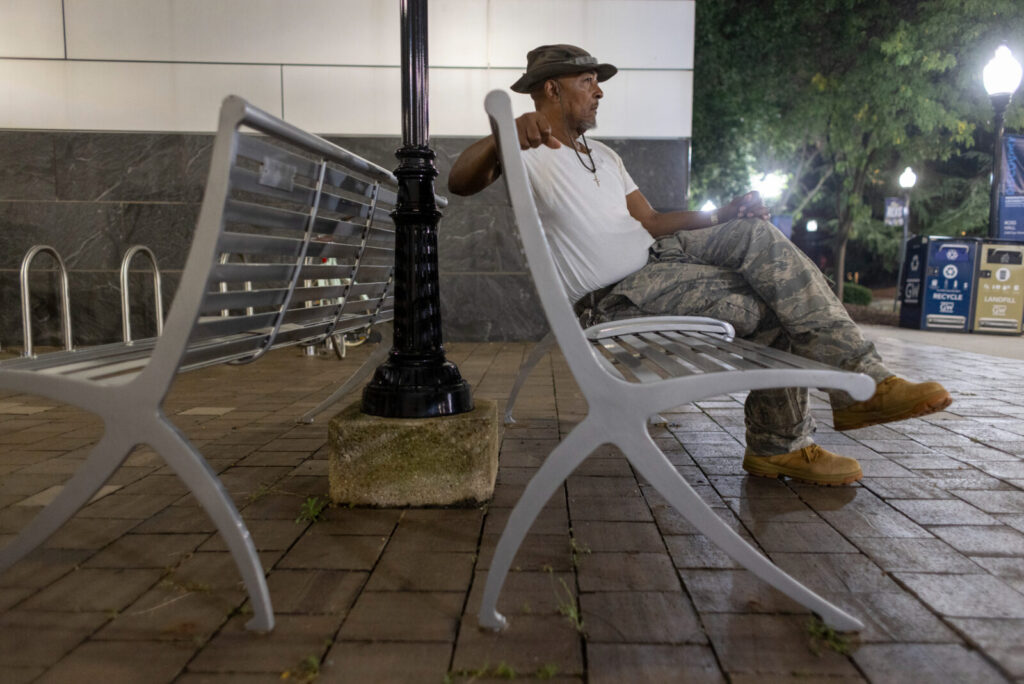
Near the Foggy Bottom Metro station, a man with a slight limp is sweeping up trash and cigarette butts.
He is David Beatty, 67. He uses his own broom and dustpan, saying he wants to make where he and his neighbors live more “beautiful.” “Isn’t that loving your neighbor?” he says.
Until August, Beatty was living in a small homeless encampment near the Lincoln Memorial. It was one of the encampments cleared under President Trump’s federal takeover of the District. The Trump administration said it cleared a total of more than 50.
Beatty is still sleeping outside. Now, he just doesn’t have his tent.
“He didn’t like the way it looked,” Beatty says of Trump. “He wasn’t worried about us.”
Before the federal takeover on Aug. 11, there were 74 encampment locations with a total of approximately 128 residents, according to the Office of the Deputy Mayor for Health and Human Services (DMHHS). The Trump administration says it cleared most of those encampments in less than a month.
Nearly two months later, many of the former encampment residents remain in the region, and without housing.
By Sarah Y. Kim | Full story

At one of D.C.’s busiest intersections, the “drive-by friendliness” of Alan’s Oasis
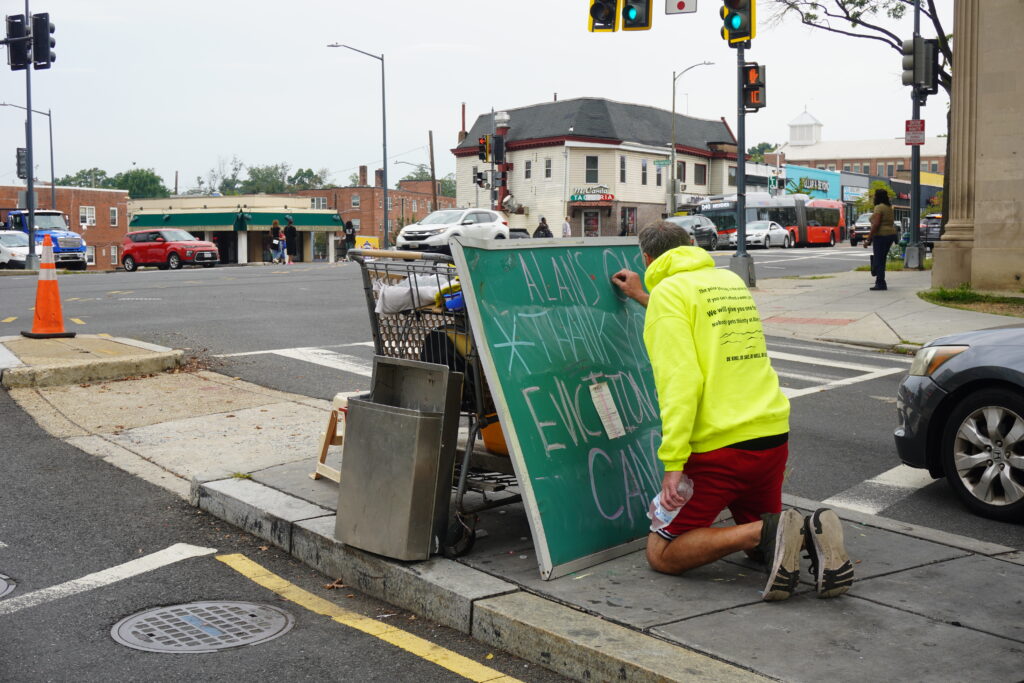
The cacophony of car horns and screeching brakes at the cross of Missouri and Georgia Avenues doesn’t distract Alan as he makes his way through traffic. Equipped with two bottles of water in his hands, he weaves expertly among the cars, making sure to stop and tell a passerby if their headlight is out or their gas tank door is open. Some notice his tall frame clad in a bright green shirt; others don’t, or pretend not to.
Occasionally, someone rolls a window down and Alan hands them a water. Other times, he hears the familiar lock of a car door as he walks by.
Three years ago, Alan, who goes only by his first name to protect his privacy while living outside, stood near this same intersection. He had $8 and nowhere to go. After buying a case of water and finding a cooler outside of the nearby Walmart, he went to work selling water. Within a week, he learned that if he gave the water away, people gave him more money. In an effort he calls Alan’s Oasis, he’s been giving away water at this intersection ever since.
Alan’s handmade signs speckle the sides of Missouri, announcing to drivers they have come across his oasis. On the median, a giant green chalkboard propped up against a shopping cart reads, “The price you say is the price you pay. Homeless and Hustling. If you can’t afford a water, just ask. Alan will give you one FREE. NOBODY goes thirsty at Alan’s oasis.” Those who look hard enough can make out a frowning face inside the “O” in “homeless.”
The morning of Sept. 24, day 1,242, the sign holds a different message: “Eviction of Oasis TODAY. Stand with Alan.”
By Alaena Hunt | Full story
In D.C., LGBTQ homelessness on the rise despite overall decline

The annual 2025 Point-In-Time (PIT) count of homeless people in the District of Columbia conducted in January shows there was an overall 9 percent decrease in homelessness in the city compared to 2024.
But the annual count, conducted on Jan. 29 and released in May, shows the total number of homeless youth between the ages of 18 and 24 who self-identify as LGBTQ rose from 28 percent in 2024 to 37 percent this year.
When the data is broken down to show the number of “single” homeless youth alone and homeless youth accompanied by one or more of their children, the 2025 count shows that LGBTQ youth, 18-24, comprised 38.4 percent of all single youth and 9.1 percent of youth, 18-24, with children in “family households.”
Like recent past years, LGBTQ operated, and LGBTQ supportive homeless shelters and transitional housing facilities were operating at full capacity as of this week, according to those familiar with D.C.’s LGBTQ-related homeless programs.
By Lou Chibbaro Jr. | Full story

Two months after the federal takeover began, these homeless D.C. residents are still in hiding
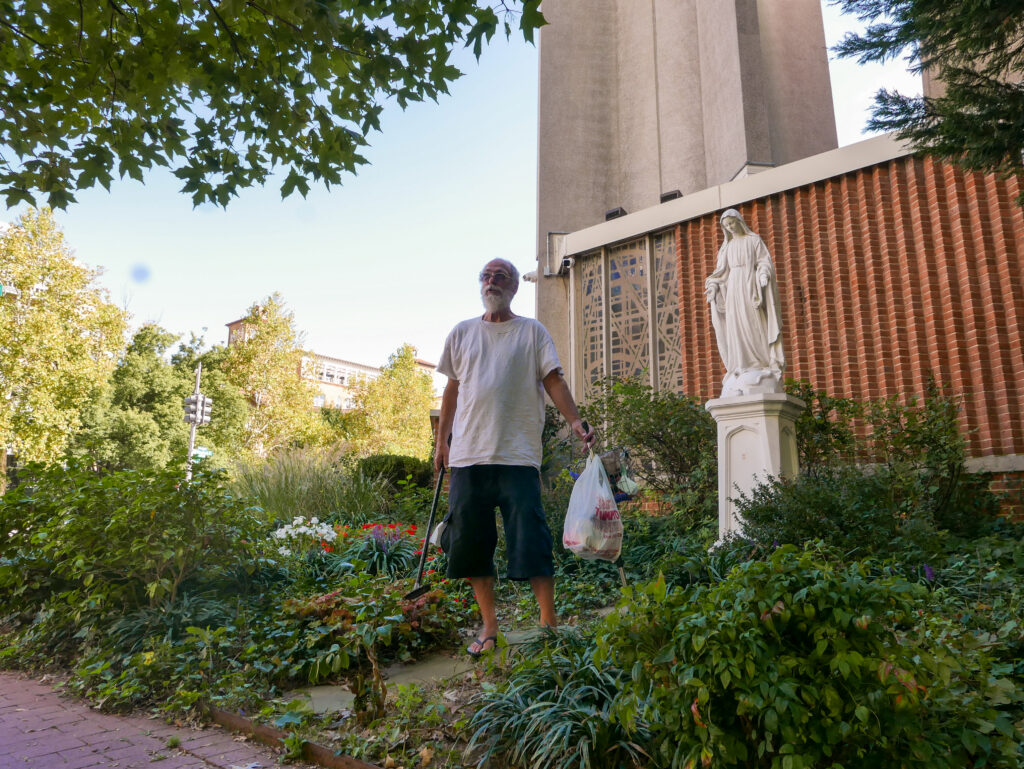
Meghann Abraham was on the phone with her father when the police arrived. He called Abraham after reading in the national news that FBI agents had visited his daughter’s tent as part of President Donald Trump’s D.C. law enforcement surge. He wanted to make sure she was okay.
As Abraham reassured him, an officer from the D.C. police beckoned her over. Abraham told her father she had to hang up.
“We’re clearing all this up today,” she remembers the officer said.
The next hour was overwhelming and anger-inducing.
As the officers trashed the tents and belongings of her neighbors, Abraham hurriedly sifted through the contents of her life. Between her clothes, mattress, dresser, table, and camping chairs, she debated what she should take. Her boyfriend was at work at the time, so she’d have to carry it by herself — where to, she didn’t know.
For a week in August, people without housing in Washington, D.C. were at the center of Trump’s efforts to consolidate power. Donald Trump labeled them a scourge and used their existence as justification for militarizing the capital and taking control of local law enforcement. At the time, much of the national debate revolved around our democracy and its decay, a debate that has since refocused on troop deployments in Chicago and Portland. But the people targeted were never just political pawns — they were always humans living in the most fragile of circumstances. And, long after the national debate has moved on, they remain haunted by the capital’s new posture toward homelessness.
Street Sense has closely followed six people who were displaced during the takeover. Two of them have chosen to flee D.C. entirely for green space in Virginia. Four have stayed in D.C., including Abraham and her boyfriend. From stairwells to metro stations to the grounds of the Pentagon, they’re all still sleeping outside. All six have lost belongings and suffered exhaustion and physical ailments since their abrupt clearings. None of them are closer to housing.
By Madi Koesler and Franziska Wild | Full story
National Alliance to End Homelessness sues HUD for grant restrictions; federal housing funds at risk
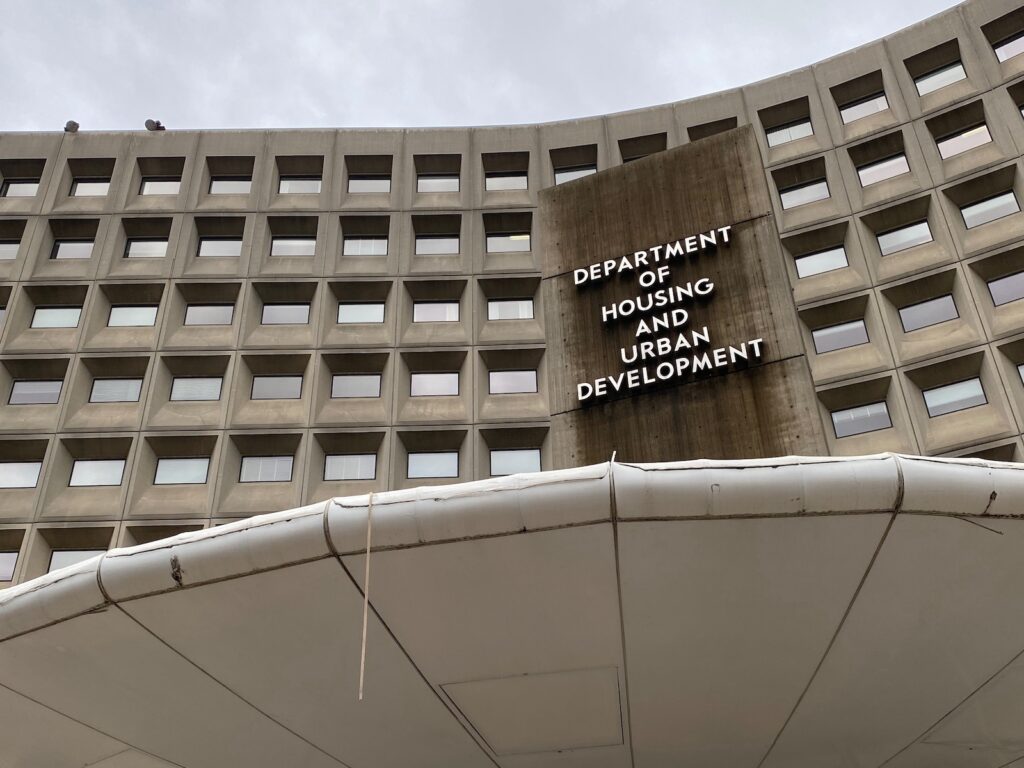
The National Alliance to End Homelessness filed a lawsuit on Sept. 11 against the U.S. Department of Housing and Urban Development (HUD) over what it claims are unlawful and politically-motivated restrictions on federal housing grants for people experiencing homelessness. A federal judge has since issued a temporary restraining order, blocking HUD from enforcing the new criteria while the case is decided.
The new rules, which HUD released on Sept. 5, applied to $75 million in Continuum of Care Builds grants, which are meant to fund permanent housing for people experiencing homelessness. The rules would require applicants to be in jurisdictions that align with the policies and executive orders of the Trump administration, such as cooperating with Immigration and Customs Enforcement (ICE), restricting urban camping, and signing covenants that deny transgender-inclusive housing. If implemented, these criteria could effectively block several left-leaning jurisdictions from receiving federal housing support.
This reworking of Continuum of Care grants is part of the Trump administration’s larger campaign against homelessness services. The government has cut HUD’s staff by at least 30% and has introduced proposals to slash rental assistance by 40%. And with HUD already operating with fewer staff, the government shutdown on Oct. 1 poses an even greater risk to core housing programs and vulnerable populations the agency serves.
By Ranee Brady | Full story
Opening of new non-congregate shelter expands options for homeless residents as advocates push for more beds at Aston
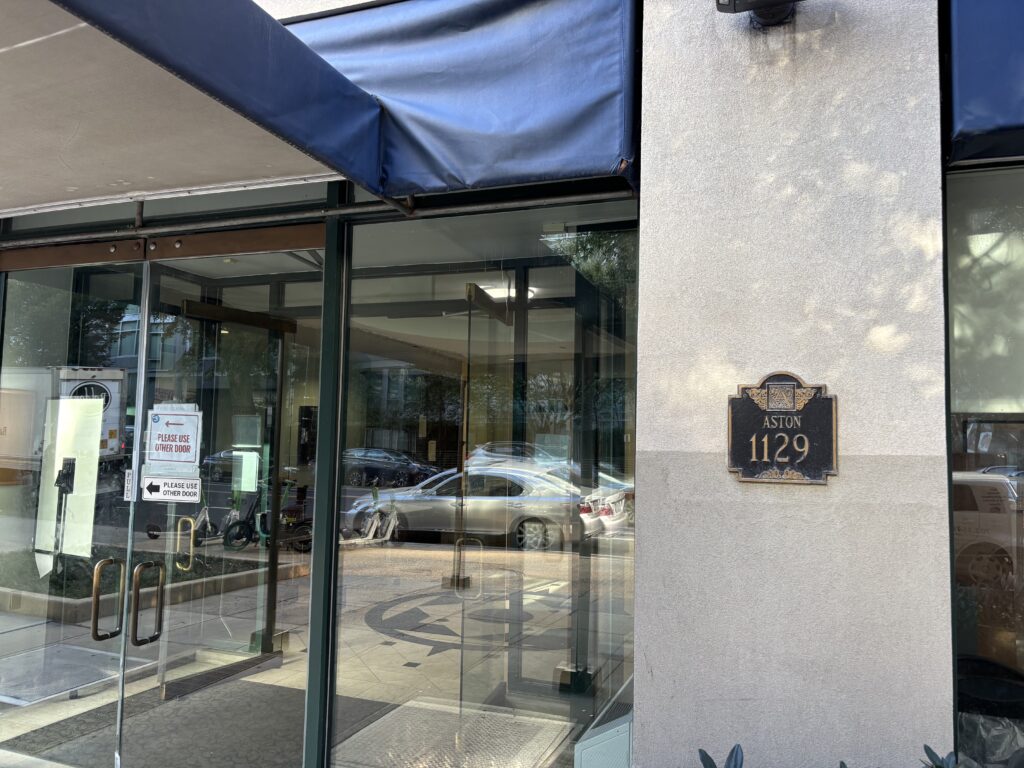
Following a year of delays, D.C.’s E Street shelter opened its doors to residents Sept. 22, according to the D.C. Department of Human Services (DHS). The new, dorm-style shelter expands on the District’s goal to offer non-congregate shelter options for people experiencing homelessness, encouraging more people to move into shelter and acting as a stepping stone toward permanent housing.
The opening of the E Street shelter comes as local government officials and community advocates discuss whether the city is underutilizing the District’s only other non-congregate shelter option, the Aston. As heightened federal oversight in D.C. leads to encampment clearings and Congress threatens escalated enforcement against visible homelessness, advocates worry the city isn’t adequately addressing the growing demand for high-quality shelters.
Non-congregate shelters, also known as bridge housing in D.C., are a high-barrier shelter option that offers residents semi-private rooms and personalized case management throughout their stay. Residents have to be referred to the shelter and meet some qualifications, often proving they’d struggle in communal shelters. This differs from low-barrier shelters, where people can walk in the same day, but do not have a designated space and sleep in rooms with many other residents. After pandemic-era non-congregate shelters closed in 2023, advocates began pushing for the city to replace them with permanent options.
The newest shelter, located at 25 E St., currently has 14 residents and will work toward a full capacity of 190 on a “rolling basis,” according to DHS.
By Molly St. Clair | Full story
Encampment updates: D.C. clears small encampments in the aftermath of the federal takeover
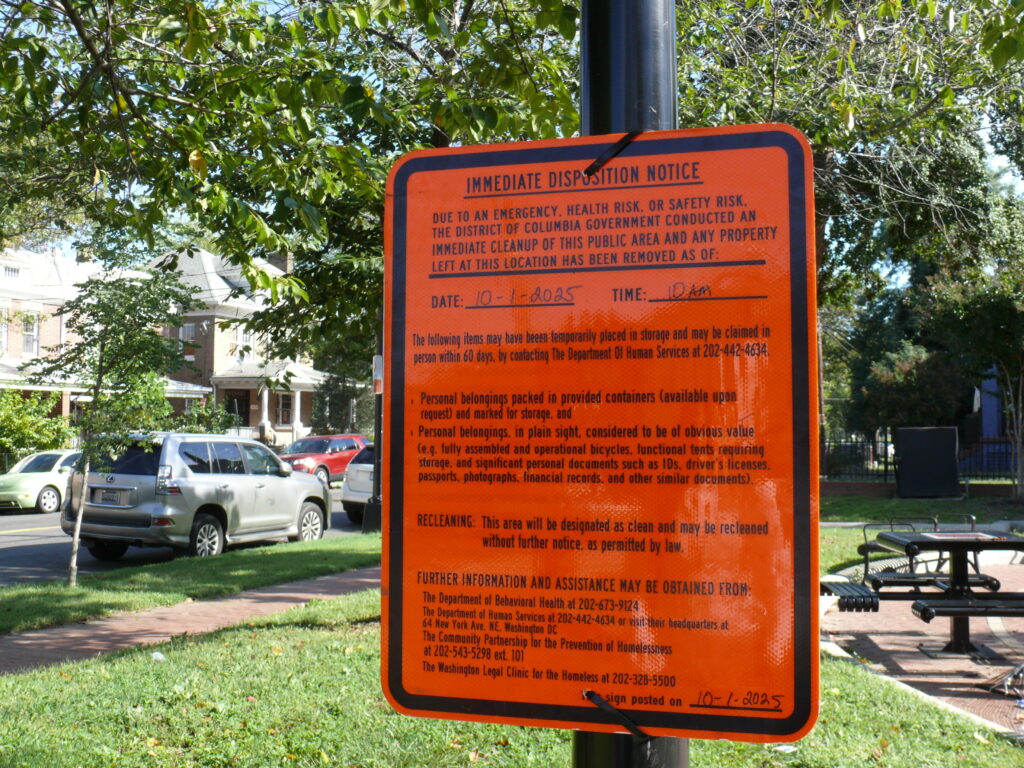
Today’s D-Day, isn’t it?” a man said, as he stopped to catch up with a homeless man whose encampment the city was clearing.
The encampment resident had been living beside a local church in Navy Yard for nearly three months, after experiencing several encampment closures this year. Before staff from D.C.’s Office of the Deputy Mayor for Health and Human Services (DMHHS) arrived for the closure on Sept. 30, he packed his belongings into a shopping cart and moved them across the street, leaving behind a mountain of broken-down cardboard boxes covered in his writing.
During President Donald Trump’s takeover of the Metropolitan Police Department, combined local and federal efforts closed 24 encampments. Since the end of the month-long crackdown on visible homelessness, D.C. has continued to conduct standard scheduled clearings. In September, DMHHS scheduled at least three encampment clearings per week, although several were cancelled or moved to early October. The week of Sept. 29, DMHHS closed five encampments, many of which had just one or two residents.
During a clearing near the McPherson Square metro station on Oct. 2, city officials detained the resident, Daniel Kingery, after he refused to move. Officers pulled Kingery off his structure to the ground, pinned and handcuffed him, and took him to a hospital under an FD-12, a measure to involuntarily hospitalize someone due to mental health concerns.
By Shani Laskin and Molly St. Clair | Full story
Services strive to respond to rising homelessness in Montgomery County
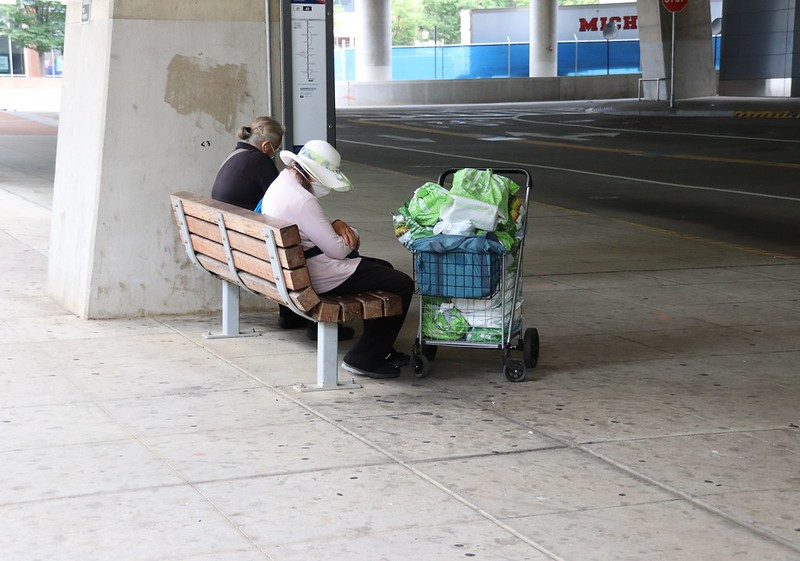
In the Washington region, homelessness has increased by 19% since 2021: from 8,086 in January 2021 to 9,659 in January 2025, per annual Point in Time counts conducted by eight local jurisdictions. During the same period, the number of families experiencing homelessness went up 52%, from 2,318 to 3,517.
While more than half of the region’s homeless population lives in DC, rates of homelessness are growing much faster in the region’s surrounding counties. DC’s homeless population between 2021 and 2025 only increased by 27 people (a 1% increase). By contrast, Montgomery County saw an increase of 933 people experiencing homelessness during the same time period (a 162% increase).
Some of Montgomery County’s increase may be the result of a spillover effect from the District’s aggressive approach to policing homelessness, aided by additional federal pressure. On the ground, however, the evidence is limited and mostly anecdotal.
Service providers believe changes to the SNAP program and the possible removal of subsidies for health plans through the Affordable Care Act (ACA) will have a bigger effect, and will likely manifest around problems that precede homelessness, such as food insecurity
By Carolyn Gallaher | Full story
Aston director says shelter not ready to raise capacity amid local pressure, federal crackdown
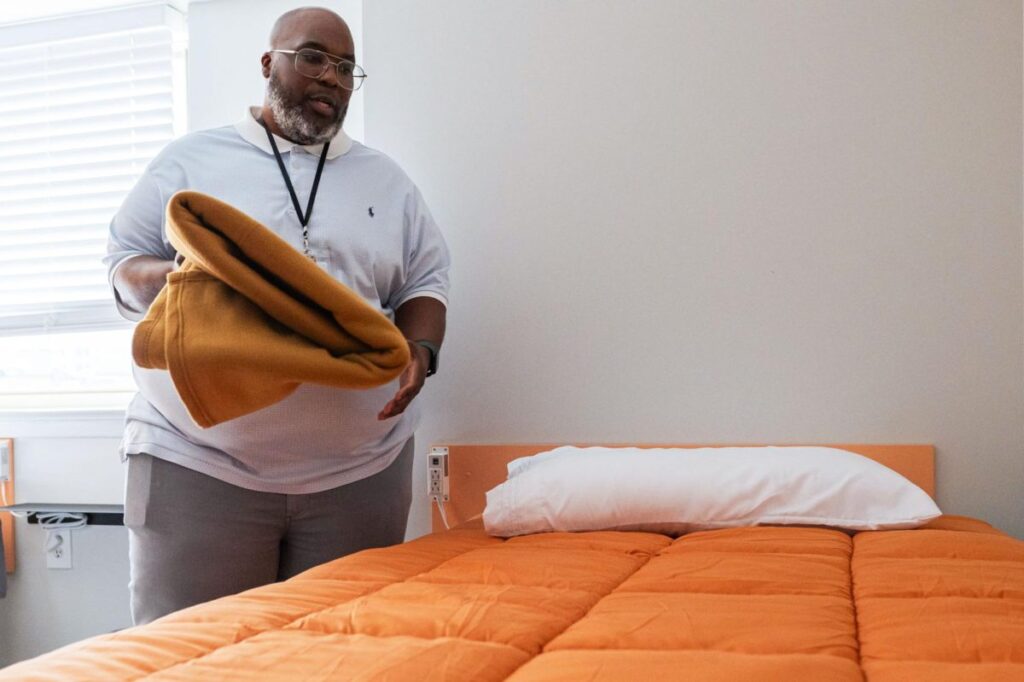
As the city moves to increase the number of shelter beds available to the District’s homeless residents, both in response to President Donald Trump’s D.C. takeover and as part of a broader four-year plan, Foggy Bottom’s local housing refuge isn’t yet prepared to up its capacity.
D.C. officials opened the Aston — the District’s first noncongregate housing program — in November 2024 on New Hampshire Avenue in a former GW dorm with a starting capacity of 50 tenants, which officials raised to 100 in January, though it has the space for 90 additional beds. Local advocates have called on D.C. officials to utilize all available beds at The Aston as the Trump administration have ratcheted up unhoused encampment sweeps this year, and shelters around the District have bolstered capacity in response to federal pressure on encampments, particularly after Trump federalized D.C.’s police force in August.
The Aston has remained close to its 100-resident capacity with an average of 91 tenants in its third quarter, according to a quarterly progress report officials released in August.
The Foggy Bottom and West End Advisory Neighborhood Commission, which includes The Aston, passed a resolution in June calling on Ward 2 D.C. Councilmember Brooke Pinto to express support to D.C. Mayor Muriel Bowser for increasing the shelter’s resident cap from 100 to 190, staggering the uptick with an intermediate target of 150.
By Bryson Kloesel | Full story

A new hotline is working to make it easier to find cheap legal help in D.C.

The process to get free or low-cost legal aid for civil issues in D.C. just got easier.
The newly launched D.C. Resource Bridge (DCRB) streamlines the search for legal assistance by creating a hotline — 202-933-HELP (4357) — which people can call to be matched with a lawyer to speak to about their case. The hotline connects eligible D.C. residents to free or low-cost legal services to help with family law cases, issues with public benefits, financial issues, and cases in the D.C. Court of Appeals.
For many people, the stress of needing legal assistance in the first place is compounded by the difficulty of searching for support they can afford. Legal fees for services in family law, one of DCRB’s coverage areas, vary from under $200 to over $400 an hour, according to the website of local law firm Bourdon & Tortolero.
The city has over 50 different legal offices that provide low-cost aid, each with its own coverage areas and eligibility requirements, according to the leaders of DCRB, which was developed by the DC Bar Foundation and is housed in long-time nonprofit Legal Aid DC. The sheer number of legal services creates a vast but tricky-to-navigate legal landscape, a challenge DCRB hopes to minimize with the hotline.
By Shani Laskin | Full story

Advertisement

Advertisement