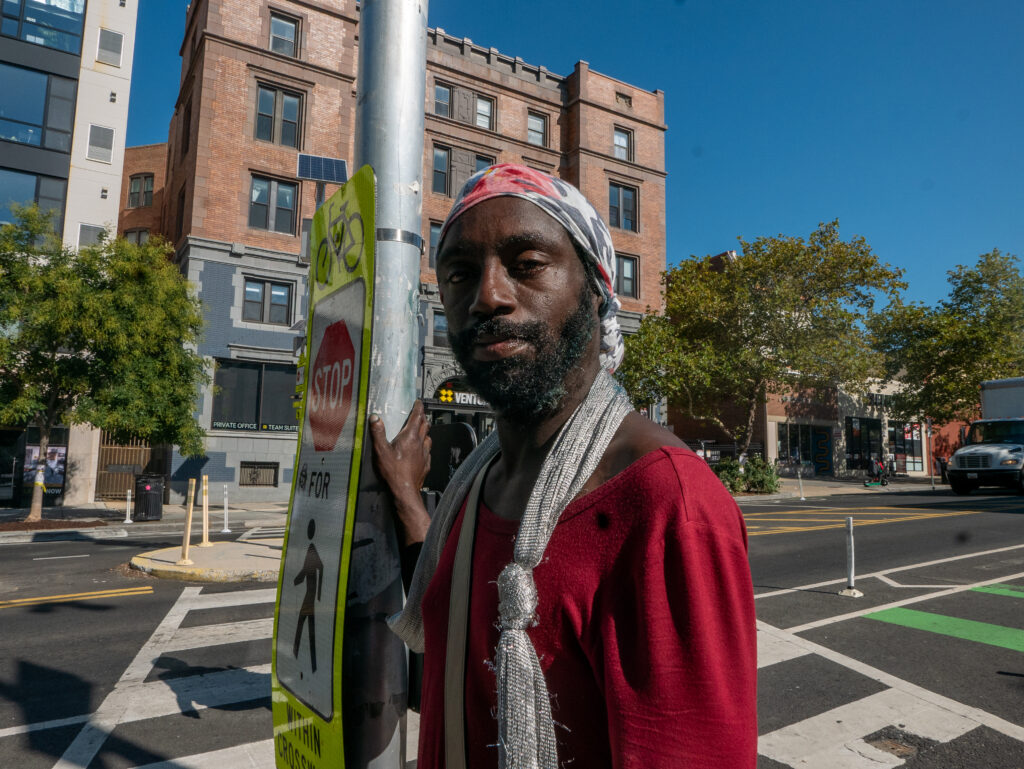
Three weeks into the federal government’s crackdown on visible homelessness and crime in D.C., an impromptu count of people experiencing homelessness found hundreds of people are still living outside in the District.
Combined local and federal efforts closed at least 50 encampments in August, according to the White House, though Street Sense has only confirmed 24 closures since the surge began on Aug. 11. (The White House has not provided a list of closed encampments, or responded to questions about why it could not provide such a list.)
But even as President Donald Trump claimed victory for his efforts, a census of people sleeping outside conducted by the D.C. Department of Human Services (DHS) suggests unsheltered homelessness in the city did not meaningfully decrease due to the encampment closures, which advocates argue do more to move people around than to move them into housing.
Without a doubt, the federal crackdown decreased the number of visible encampments in the District. The count found 54 tents across the city, compared to 107 at the end of July. And the human impact has been clear. People living both at encampments closed by law enforcement and the city’s encampment team have scattered, often losing possessions and community in the process. Some “rough sleepers,” people who sleep outside but not in a tent, have made it a point to avoid law enforcement.
But it’s harder to tell if the crackdown has impacted the number of people experiencing unsheltered homelessness overall. While about 80 new people went into shelter in August, according to the city, at least 764 were still sleeping outside each night, according to the census. This is just 30 people fewer than the annual Point-in-Time (PIT) Count found were sleeping outside in January, though the city cautions against directly comparing the two numbers due to differing methodologies. These numbers don’t include people who are homeless but sleeping in shelters; the January PIT Count recorded a total of over 5,100 people experiencing homelessness in the District.
Meanwhile, the city has scheduled several encampment closures through September, including at encampments that have not been closed recently. The city has closed at least 16 encampments in the last two weeks. While this is an uptick in local encampment closures compared to the summer, it’s not unprecedented, as the city averaged three to four encampment closures a week as recently as this spring.
“We have a relatively small encampment problem in D.C.,” Mayor Muriel Bowser said at an Aug. 27 update on the federal crackdown. “However, it is highly visible.”
The new state of homelessness in D.C.
Shelters, across state lines, friends’ couches — where have people gone since Trump threatened the widespread removal of people experiencing homelessness in the district?
Surveys by Street Sense confirmed that while some people impacted by encampment closures are considering shelter, most stayed outside, either in new spots or without tents. A few crossed state lines into Virginia or Maryland. With the help of mutual aid groups, some residents in special circumstances temporarily moved into hotel rooms. But the question of “where are people going?” is still heavy on the shoulders of D.C.’s unhoused population and outreach workers.
“There has been a significant disruption in the lives of people who live unsheltered,” Deputy Mayor for Health and Human Services Wayne Turnage said ahead of the unsheltered count.
When encampments are closed, people move, and if they don’t have reliable phone service or lose their phone in the closure, they can lose touch with outreach workers. Andy Wassenich, the director of policy at local outreach and housing nonprofit Miriam’s Kitchen, said his team has lost contact with at least 25 people since the takeover began.
Christine Hong, the chief of services to end and prevent homelessness, at the Department of Human Services in Montgomery County, Maryland, said the county has been closely monitoring the data it receives from street outreach and emergency shelters since the White House announced the federal surge. So far, the county has not seen a significant influx of new people, Hong said. But anecdotally, outreach workers and county residents are seeing “new faces,” including people who won’t share their names or where they’re from, which could indicate they’ve recently moved from the District.
“Whenever you clear encampments and the residents do not accept the offer of shelter that you make, they will tend to scatter, so that creates difficulty for our outreach team to relocate and continue the offer of homeless services,” Turnage said, explaining the homeless census was conducted to ensure the city could better provide outreach services to people experiencing homelessness.
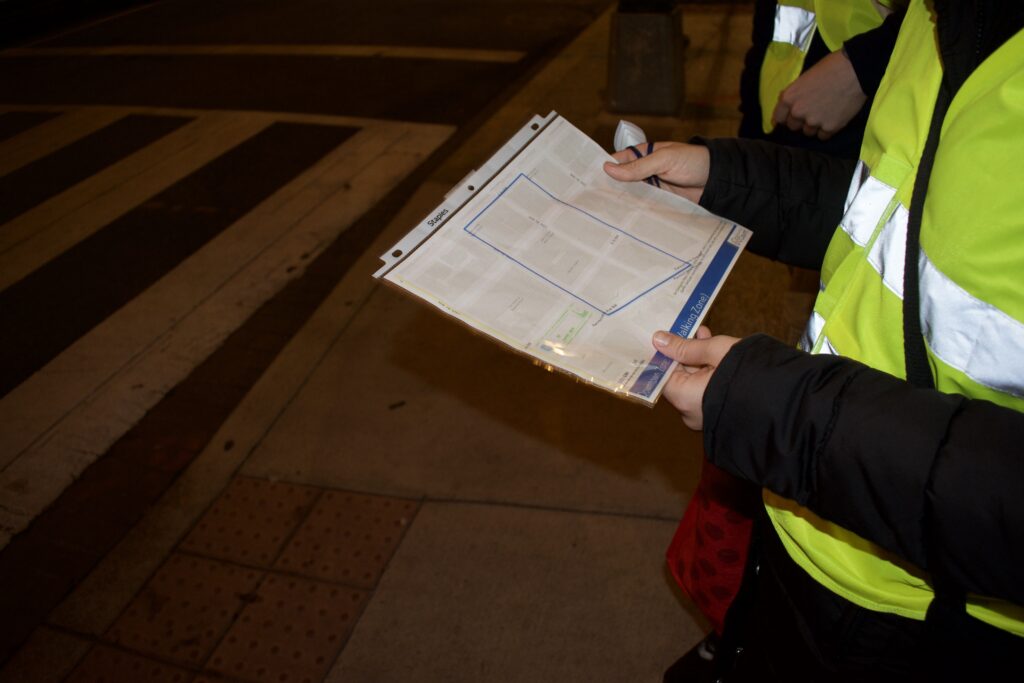
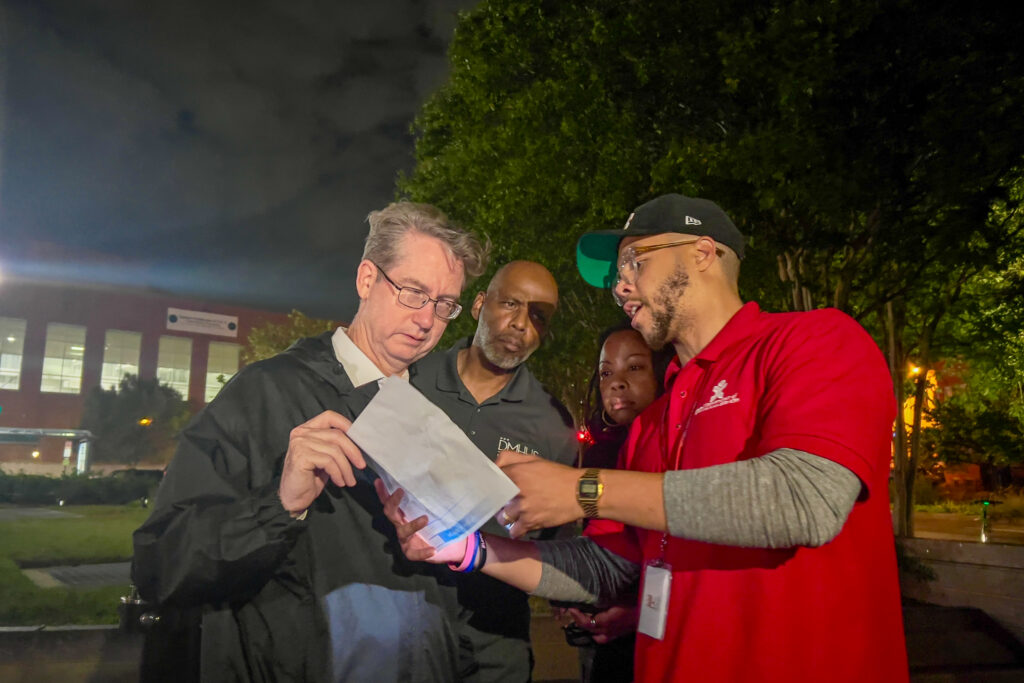
The census somewhat mirrored the annual PIT Count, conducted every January, and attempted to determine where people were sleeping outside the night of Aug. 28, following the mass clearings.
During the census, DHS volunteers and outreach providers walked every block of the city between roughly 9 p.m. and 1 a.m. to count people they assumed to be experiencing homelessness. Counters didn’t individually survey people, meaning there is no confirmation that everyone counted is experiencing homelessness. Instead, volunteers cross-referenced recent data from outreach workers about where people often slept.
Because of the difference in methodology, the city cautioned against comparing this census to PIT Count data, though it is the most recent public data on unsheltered homelessness in the city. The Community Partnership for the Prevention of Homelessness’ PIT Count data reported 798 people sleeping outside in 2025, 900 in 2024, and 825 in 2023, just slightly above the 764 people found in August. The PIT itself is largely understood to be an undercount.
The census was the city’s idea, according to Turnage, and as of the night of the count, there’d been no discussion of sharing results with the federal government.
As winter approaches, the city plans to use data from this count to increase shelter beds, officials said. The city opened 100 new low-barrier shelter beds in early August. D.C. is actively working to increase homelessness services capacity by at least 300 more beds, Bowser announced in a press conference the same week of the census. This includes 190 beds at the new noncongregate facility on E Street set to open in September.
“We don’t expect that we’re gonna have homeless encampments, and we are gonna work to make sure people can come into shelter,” Bowser said at the conference on Aug. 27, ahead of the count.
More beds might sound like an ideal solution to move people inside, but many unsheltered people in D.C. prefer their encampments to the city’s shelters. Encampment residents feel like they have more privacy and autonomy when living outside or in tents than in shelters. Many shelters in the District have curfews, bag limits, and security checks. They also prohibit pets and are, for the most part, single gender, meaning couples and adult families may have to split up.
People living outside emphasize that shelters are not a home. Encampments can provide a sense of community and more freedom than shelters. Having a space that is all their own, even though it’s outside, provides a sense of privacy and ownership that the communal style of shelter living can strip away, even as it offers more protection from the elements.
“You have to cure the problem, not put a band-aid on the problem,” said one person experiencing homelessness, who asked to remain anonymous to protect their safety while living outside.
City-driven encampment closures
Encampment closures during the first week of the crackdown were mired in confusion, as law enforcement led many closures, and it seemed the city’s social service agencies and encampment team were not always aware of closures beforehand.
“When we first got started, it was a little difficult to try to figure out how it would work,” Turnage said on the night of the count.
But now, he said, the federal and local teams have worked out a protocol. The federal government can inform D.C. about sites it finds and ask to get a team there to close the site.
According to a White House official, MPD patrol units are also working to locate and close encampments. The White House is reporting a much higher number of encampments closed than the city, suggesting there have been several closures the city wasn’t at, or still doesn’t have information about.
“President Trump is cleaning up D.C. to make it safe for all residents and visitors while ensuring homeless individuals aren’t out on the streets putting themselves at risk or posing a risk to others. Homeless people will have the opportunity to be taken to a homeless shelter or receive addiction and mental health services,” Abigail Jackson, a White House spokesperson, wrote in response to questions about encampment closures.
Street Sense followed up, asking how the White House is able to ensure people are offered shelter or treatment if the relevant D.C. agencies aren’t aware of a closure. It also requested a list of sites closed by law enforcement at the behest of the White House without DMHHS involvement. White House officials did not provide specific responses to either question.
Since Aug. 18, the city has closed 16 encampments: three scheduled before the federal surge, four regularly scheduled local closures, six emergency closures, which the city calls immediate dispositions, and three federally mandated closures. None of the residents Street Sense was able to speak to at the closures moved into shelter.
The first federally mandated closure was on Aug. 18, outside the Downtown Day Services Center, where people go for meals and other resources. There was one more each of the next two weeks, on K Street downtown and outside the Martin Luther King Jr. Memorial Library, where people who sleep outside like to congregate. The closures were conducted by the city, but ordered by the federal government, according to a spokesperson from the Office of the Deputy Mayor for Health and Human Services (DMHHS), which oversees encampment closures. At least one person staying outside the library lost belongings during the closure, including a phone and other valuables, according to the resident, who emailed Street Sense after the closure.
Three immediate dispositions, near Washington Circle, the Arboretum, and a southwest overpass, took place the last week of August. Street Sense did not know about the closures ahead of time and cannot confirm how many people were affected. Another three immediate dispositions near Martin Luther King Jr Memorial Library, Eastern Market, and Federal Center during the first week of September displaced five people.
Three closures originally scheduled for the first week of the takeover were pushed to the end of August. On Aug. 20, DMHHS conducted the most recent of several closures at a spot in Mount Pleasant. On Aug. 21, DMHHS cleared an encampment on Pennsylvania Avenue and 7th Street SE. The encampment resident, who did not want to speak with Street Sense, has been living around Eastern Market for at least six years, according to neighbors.
In a nod to the increased police presence in the city, two MPD officers arrived at the closure and returned shopping carts to the nearby Trader Joe’s. A man riding by on an electric scooter shouted at the officers, “Nothing better to do?”
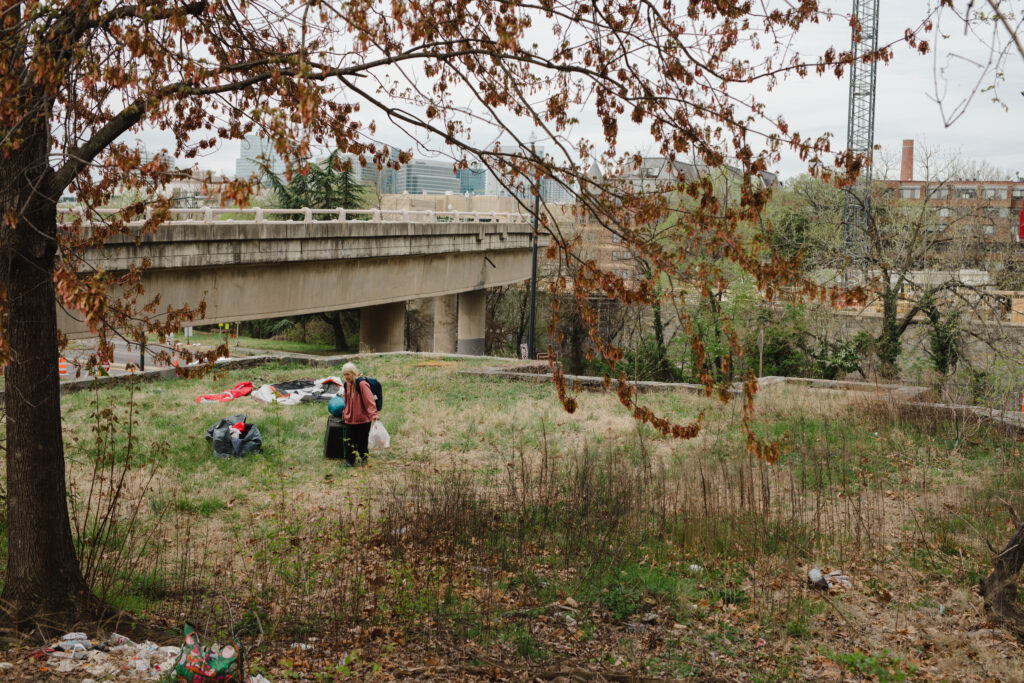
On Aug. 27, DMHHS closed an encampment in the woods behind a liquor store on New York Avenue. The two residents, who declined to speak with Street Sense, moved their valuables in suitcases down the road.
Clearings scheduled for Aug. 26 at 26th and L Streets NW near the Godey Lime Kiln and at 27th and K Streets NW were cancelled because the residents moved before the closure, according to the DMHHS spokesperson. MPD cleared the encampment near Godey Lime Kiln as part of the spate of clearings on Aug. 15.
In early September, the city scheduled nine encampment closures for the following three weeks, largely at locations that have not been cleared recently, suggesting either people have moved there in the past several weeks or they’ve newly been identified for closure.
On Sept. 2, the city cleared a one-person encampment near the Cleveland Park metro station for the fourth time this year. The resident moved nearby.
Ahead of an encampment closure in Adams Morgan on Sept. 3, Coco packed up their cart and moved from outside the Columbia Road Truist to a small park a couple of blocks away. Before DMHHS threw away her unwanted belongings, outreach workers repeatedly offered Coco bridge housing at the Aston.
On Sept. 4, the city closed an encampment in Glover Park near the Guy Mason Recreation Center and the vice president’s home. The resident was not there, and city employees removed her setup, which included a couch, daybed, three sets of matching wicker and wire chairs, and several coolers.
Over the two years Coco lived outside in the Adams Morgan neighborhood, they said she had tried shelters and bridge housing, but felt like they took away her freedom. As a voucher holder, Coco is holding out for a space she can feel is her own without a curfew or roommates.
“I feel like I’m outside unjustly,” Coco said. “People like me [that] have a voucher – get me housed!”
Uncertainty around arrests
So far, Street Sense has not been able to confirm any arrests of people experiencing homelessness using the two statutes the White House has said MPD would enforce to potentially fine or jail people for camping or sleeping outside. These laws include D.C. Code 22-1307, which makes it illegal to block a sidewalk and could, in theory, be used to arrest someone for sleeping outside, as well as D.C. Municipal Regulation 24-100, which bans camping in D.C. Several people have been arrested under D.C. Code 22-1307 in recent weeks, but all in conjunction with protests near the Capitol.
Throughout the takeover, two people have been arrested at encampment clearings, but on the charge of assaulting an officer, according to a White House official. The city encampment team was not present for either arrest. The White House did not provide Street Sense with any specifics about the arrests, meaning reporters could not independently verify their circumstances.
But a number of people experiencing homelessness have been arrested, mostly on minor charges such as having open containers of alcohol and fare evasion. These arrests can be disruptive and traumatizing to people. They’ve also been upsetting for surrounding community members. A recent widely shared video depicts the arrest of an elderly woman experiencing homelessness.
In the video, as nearly a dozen federal agents and local officers walk the handcuffed woman to a police cruiser, neighbors can be heard screaming expletives in anger at the officers. “Yes, we know her, she sits here for years,” one bystander yells, her voice rising in anger. “The f—ing FBI is here.”
Miguel Trindade Deramo, an ANC commissioner from a nearby neighborhood, took and posted a video on the social media platform X. He described the experience as upsetting.
“It’s so disproportionate, it really made me wonder what was the precipitating event,” Deramo told Street Sense. “It’s one thing for MPD to do it, another thing for federal agents.”
Using the time and location of the arrest, Street Sense confirmed via arrest reports the woman was arrested for having an open container of alcohol while she sat on a nearby stoop.
Though the official police takeover expires on Sept. 10, Bowser signed an executive order requiring indefinite cooperation between the city and federal law enforcement. Outreach workers and people experiencing homelessness are still waiting to see the long-term impacts of the crackdown.
One man, who used to live in Washington Circle until he was displaced during the first set of encampment clearings carried out by law enforcement, said he wanted people to know that homelessness does not make someone a criminal.
“Just cause you’re homeless doesn’t mean you’re a drug addict,” the man, who declined to give his name, said. He has a job, pays child support, and makes too much to qualify for food stamps, he said, but doesn’t make enough to pay rent.
“We got people out here actually trying to do better for themselves,” he said.
Mackenzie Konjoyan and Katherine Wilkison contributed reporting.