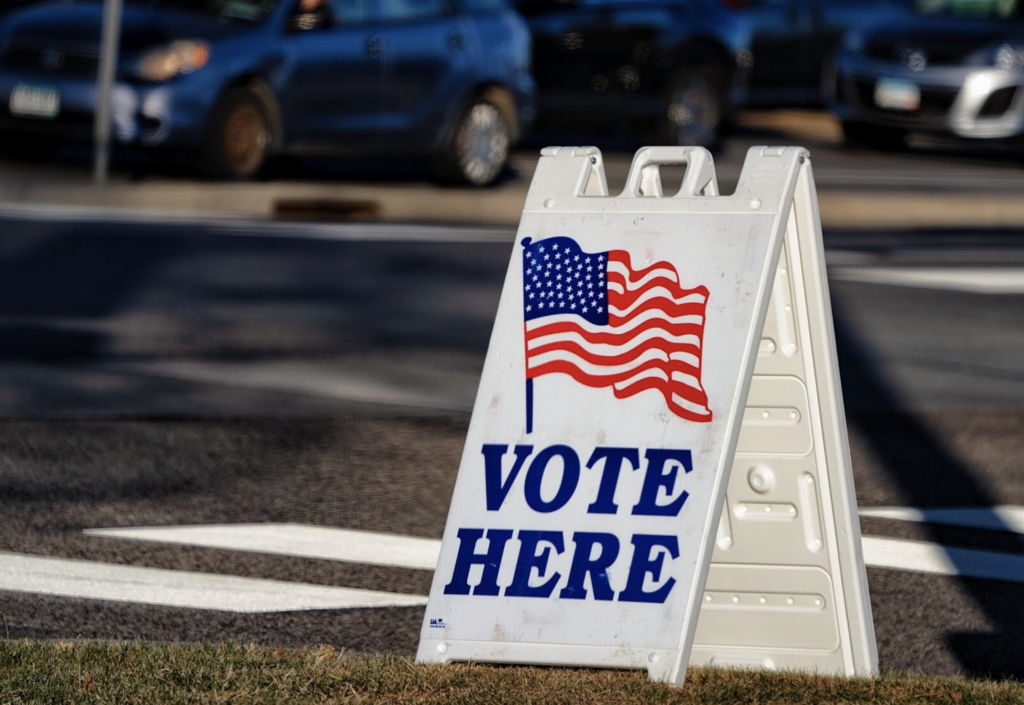
On June 16, D.C. will hold its primary election, which will determine who is on the ballot this November. The Democratic nominees will all be heavily favored to win in the November general election; over 75% of D.C. voters are registered as Democrats, and D.C. has never elected a Republican mayor. Seats up for election city-wide include the D.C. mayor, attorney general, non-voting delegate to the House of Representatives, and two at-large D.C. Council seats. Wards 1, 3, 5, and 6 will also elect councilmembers.
Jump to responses: Mayor, delegate, attorney general
How to vote
All D.C. residents, including U.S. citizens and non-citizens, who will be at least 18 by the general election on Nov. 3, 2026, can register to vote with a party in this election.
Residents can register to vote or update their registration online or with a registration form through May 26. Registration forms are available online, at the Board of Elections office (1015 Half St. SE #750), or at most public libraries. Voters registered as a Democrat, Republican, or D.C. Statehood Green can vote in the June 16 election, though there are only competitive races in the Democratic primary this cycle. Independent voters cannot vote in the primary election, but can vote in a special election for an at-large seat on the council.
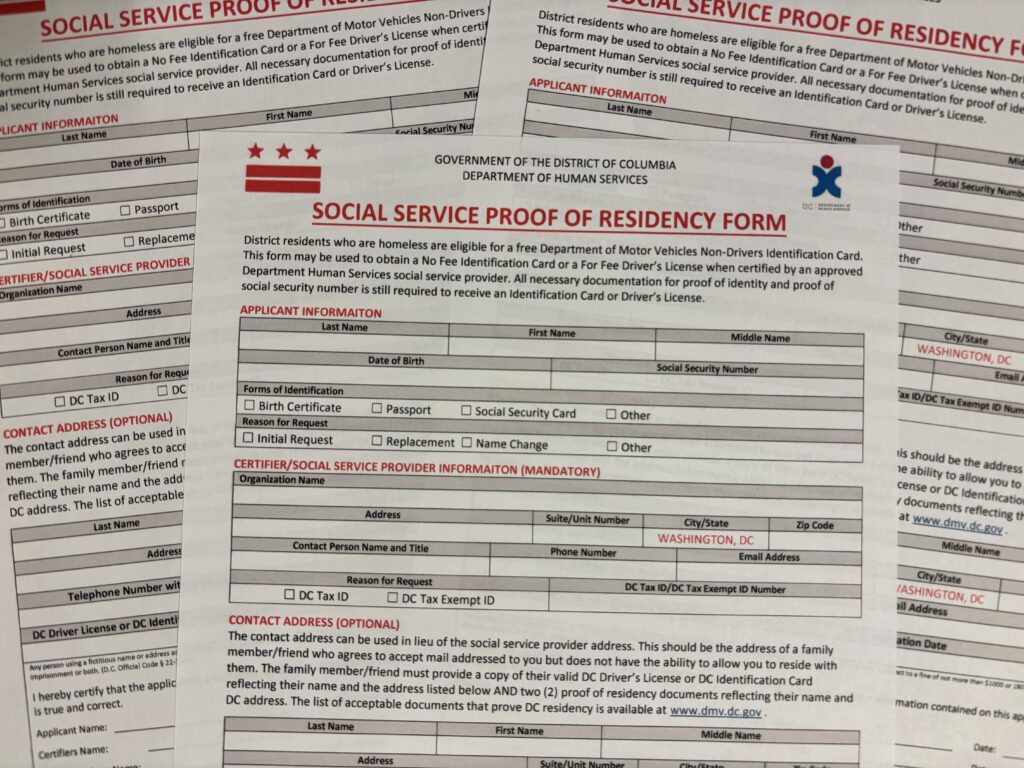
All residents can register to vote during early voting or on Election Day by bringing proof of D.C. residency to the polling center. People experiencing homelessness can use the address of a shelter, park, or intersection, as long as they can provide documentation of residency within the District (this could be an occupancy statement from a D.C. shelter or a current D.C. ID).
Early voting will run from June 8 to June 14. On Election Day, polls across the District will be open from 7 a.m. to 8 p.m. Voters can go to any voting center regardless of their address.
Every registered voter will also receive a ballot in the mail (paid postage is included). To vote by mail, the completed and signed ballot must be postmarked by June 16, and must arrive by June 26. Track ballots on BallotTrax.
Ranked-choice voting
This election will be the first time D.C. voters will use ranked-choice voting. Voters will have the opportunity to vote for up to five candidates per election, ranking candidates in order of preference, starting with their favorite at rank one.
Ranked-choice voting does not split one person’s vote between different candidates. Rather, it allows the vote to go to a second or third choice candidate if the voter’s first choice doesn’t have substantial support. In the first count, everyone’s vote goes to the candidate they ranked at number one. At this point, if no candidate gets 50% of the votes, the candidate with the fewest votes is eliminated, and their votes are redistributed to the candidates each voter ranked second, and so on. A candidate only wins by receiving 50% of votes. Races with only two candidates do not use ranked-choice voting.
Brandon Bush-Thompson, engagement coordinator from Rank the District, said the new voting system will allow voters to focus more on values and policy, instead of casting votes based on who is most likely to win.
Voters should select one candidate for multiple rankings or multiple candidates for one rank, he said, as it could invalidate their ballot. Instead, voters should choose their favorite candidate as rank one, and then select any other candidates they would be comfortable with seeing in office in order of preference. Voters do not have to fill all five ranks.
“If there’s a candidate who you do not like, do not rank them at all,” Bush-Thompson said. If a voter ranks a candidate, they are signifying they would be comfortable with the candidate getting their vote, he said.
Advocates argue ranked-choice is more inclusive than standard voting and the process results in more equitable and representative elections. Bush-Thompson said this system gives voters the opportunity to share their voices in a more democratic way. “If there was ever an opportunity for people’s voices to be heard, this is a system that could give us that opportunity,” he said. “I’m really hoping that people take advantage of it in that way.”
The candidates
D.C. is a different city than it was when it held its last election in 2024. Last August, the Trump administration took over law enforcement powers in the city and cracked down on visible homelessness. Local programs addressing homelessness and poverty are at risk due to changes in funding at both local and national levels. The newly elected lawmakers will shape the District’s response to these issues, among others.
This election comes shortly after Mayor Muriel Bowser released her budget for fiscal year 2027, which included significant cuts to D.C. homeless services, supportive housing vouchers, and additional safety net programs, including domestic violence services and Temporary Assistance to Needy Families.
Street Sense asked all the candidates on the ballot about these issues and more. This guide includes a summary of their responses, as well as the full text of each in a PDF.
Mayor
D.C. will have a new mayor for the first time since 2015. Bowser, who won three consecutive mayoral elections starting in 2014, did not opt to run for re-election in 2026. The mayor oversees the local government, including law enforcement and the District budget. Councilmember Janeese Lewis George and former Councilmember Kenyan McDuffie are considered heavy favorites in the Democratic mayoral primary. There is no Republican nominee for mayor. The winner of the primary will run against the Green Party’s Robert Gross in November, and a number of independent candidates.
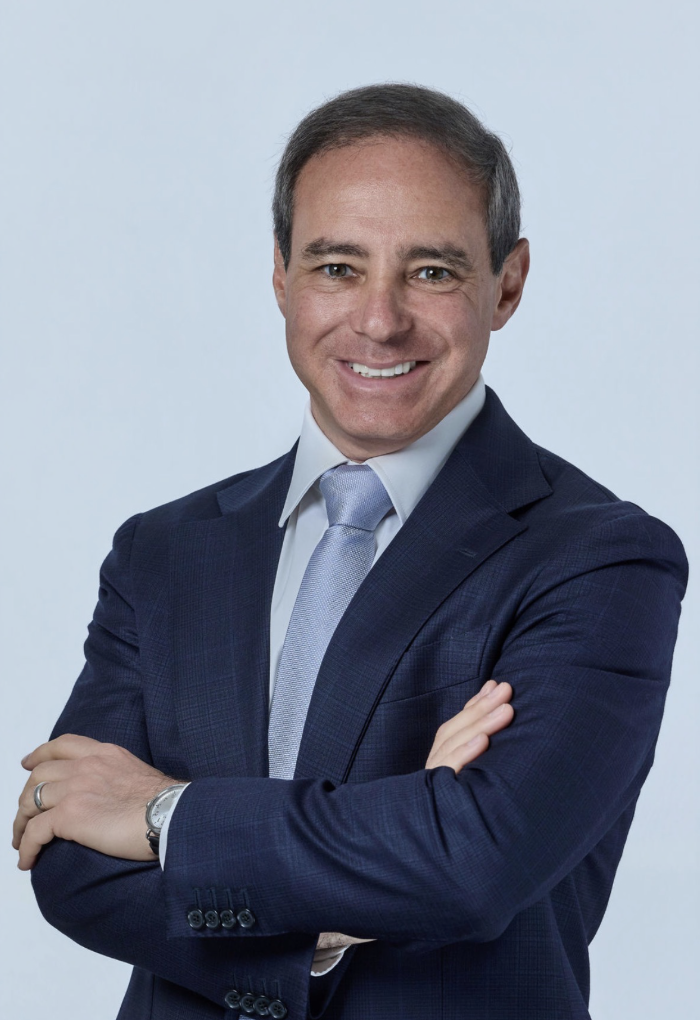
Gary Goodweather is a veteran and real estate developer running for office for the first time.
Goodweather is proposing a Housing Accelerator Office to plan housing projects, and would create “permanently affordable housing through community-owned land, mixed- income public social housing, more affordable workforce housing, and an Equity Map so every neighborhood does its fair share.” Goodweather has also committed to building 50,000 new homes by 2032 and to advocate for stronger protections for renters. He also proposed a Cooperative Conversion Program “to help tenants buy their buildings and create long-term stability” and provide a path to homeownership.
Goodweather said D.C. needs more low-barrier and non-congregate shelter options. He said he would advocate for a “full-service housing facility” includes medical, psychological, mental health, and skill training services.
In response to Street Sense’s questions, Goodweather wrote that he would not support encampment closures without connecting people with housing and storage services, adding his policy would be based on Maslow’s Hierarchy of Needs, with housing at number one. “It is the city’s responsibility to provide safe, appropriate housing or shelter, along with transportation, storage for belongings, ID replacement help, health care, behavioral health support, and case management. People should receive clear notice, repeated outreach, and options that meet their actual needs,” he wrote.
Goodweather said he “would not accept a budget that abandons new housing vouchers while thousands of residents remain unhoused or housing insecure.” With a limited budget, he said he would invest in housing vouchers, rapid rehousing, and eviction prevention, as well as social housing, community land, and cooperative ownership. Goodweather is also proposing a “Section 8 to Equity pathway that helps families move from vouchers toward ownership when possible.” Goodweather also committed to establishing paid advisory roles for people with lived experience of homelessness and requiring a dashboard to track the city’s progress toward its housing goals.
Read Goodweather’s full responses.
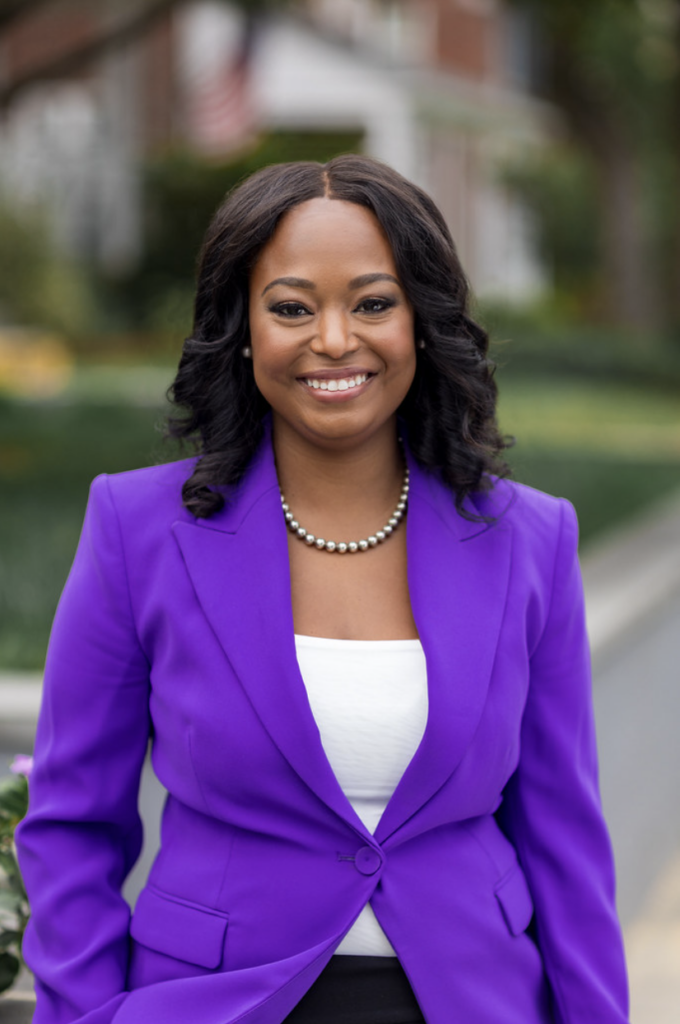
Janeese Lewis George is the Ward 4 councilmember, elected in 2020. Serving on the council, she voted for a law that increased taxes on millionaires to fund permanent housing and a bill that would have suspended encampment clearings during the winter. She voted against a bill advocates said would have weakened tenant protections, and a law that restructured the D.C. Housing Authority board. She’s the chair of the Committee on Facilities.
In her campaign, Lewis George has proposed creating 72,000 new units of affordable housing by 2030, arguing an ambitious mayor is best equipped to face the housing crisis head-on. “I will also launch Dignified Homes DC, a social housing program that builds publicly owned, mixed- income housing with permanently affordable units,” she wrote in response to Street Sense’s questionnaire. She said she would improve the Housing Production Trust Fund, defend and restore the Tenant Opportunity to Purchase Act, and expand the Safe at Home program, which helps seniors age in their homes.
Lewis George said the city doesn’t have enough shelter to meet the need, and she would support expanding low-barrier and non-congregate homeless shelter options. “Shelter should be a short-term solution. The goal is to make sure no one is stuck in shelter because the city failed to create enough permanent housing,” she wrote. She also argued that she has supported tenants rights in introducing the Do Right By Tenants Act in 2023, “so tenants are not left to enforce the law themselves.”
In terms of encampments, Lewis George said her administration would not clear residents “without a stable path to permanent housing.” Her approach to homelessness will be guided by Homeward DC 2.0, and her administration would work to connect people living in encampments with “shelter, healthcare, treatment, recovery, stable housing, and wrap-around services,” she wrote. “No encampment should be closed unless and until there is a plan for every encampment resident that meets their needs.”
Lewis George also said she would commit to funding enough housing vouchers to address chronic homelessness while also investing in other programs: “Critically, when residents move into housing, they must be connected to real support, including reliable mental health care, trauma-informed support, and wrap-around services,” she wrote. “Furthermore, we must protect our existing community. As we create more deeply affordable housing, we must also preserve existing affordable housing that is at risk of being lost and support vulnerable residents, like seniors, to stay in their homes and age with dignity.”
As a councilmember, Lewis George said she has benefited from learning from people experiencing homelessness. “As mayor, I will continue to listen to and focus on the voices of people with lived experience, particularly by ensuring strong resident voices on the Interagency Council on Homelessness,” she wrote.
Read Lewis George’s full responses.
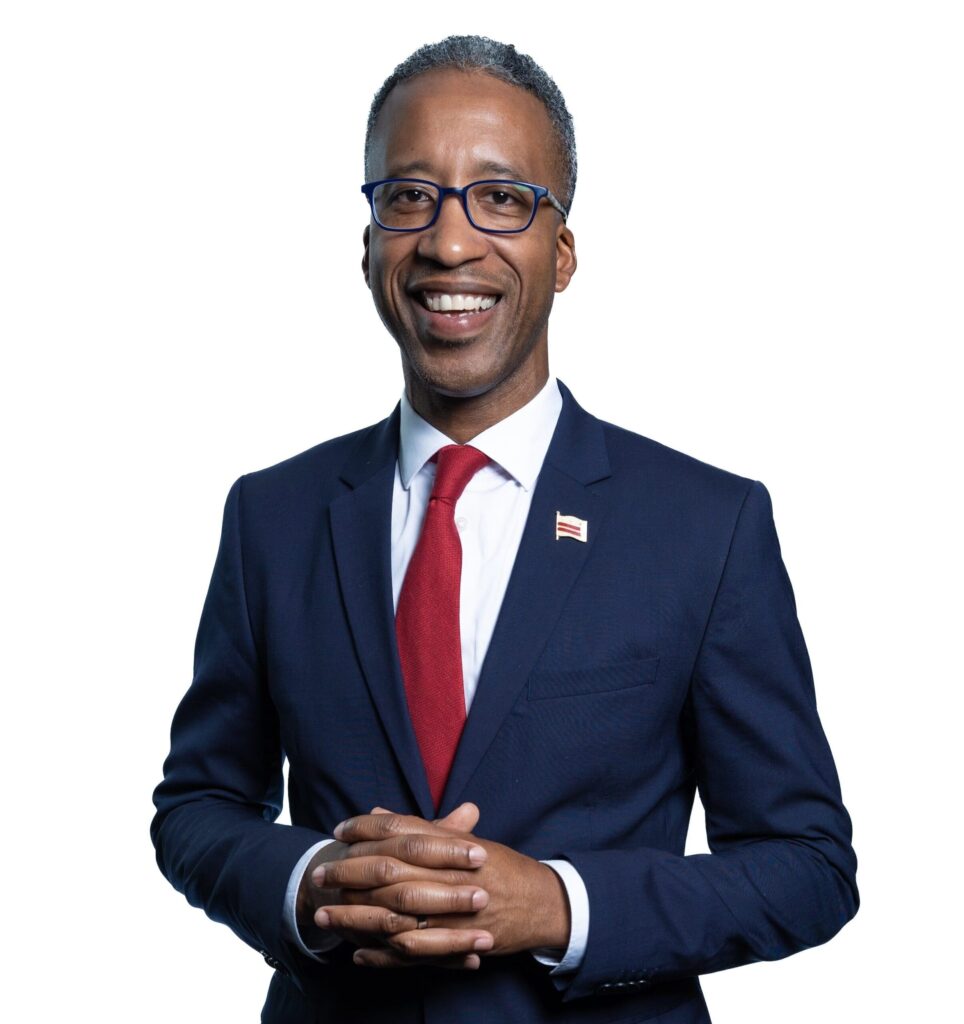
Kenyan McDuffie. Photo courtesy of Kenyan McDuffie for Mayor
Kenyan McDuffie was elected to the council in 2012, first representing Ward 5 and then the city at-large from 2022 until this January. While serving on the council, McDuffie voted for a bill that advocates say would have weakened tenant protections, and against bills that increased funding for permanent housing and would have suspended encampment clearings during hypothermia season. He has chaired the Committee on Judiciary and Public Safety and the Committee on Business and Economic Development.
McDuffie has spoken about the need for more affordable housing, but he has called his opponent, Lewis George’s housing goal unrealistic. “It is rhetoric. It is not reality. I’m delivering reality,” he said in a recent debate. McDuffie has proposed creating 12,000 new units in five years. In response to Street Sense’s questionnaire, he wrote he would work to streamline permitting and expand the use of the District Opportunity to Purchase Act for affordable housing preservation.
He also argued he’s been able to strengthen tenant protections, such as legal representation. “As Mayor I will pair those protection with the kind of supply growth that gives tenants actual leverage,” he wrote. McDuffie argued he has supported the expansion of advisory groups that bring lived experiences to policy, such as the D.C. Commission on Poverty. He said he would take this further by “giving residents who have experienced homelessness genuine decision- making authority over how homelessness services are designed and funded, moving well beyond consultative input to real power over program structure and resource allocation.”
For shelters, McDuffie said the city does not have enough beds, and wrote he would “shift away from large congregate shelter models toward smaller, trauma-informed, non-congregate facilities that provide privacy and dignity.”
When it comes to encampment closures, McDuffie argued Bowser’s administration has violated city law by not providing enough notice before closures. “My encampment policy will be grounded in dignity, legal compliance, and a Housing First commitment…As Mayor, I will require that every closure is preceded by meaningful outreach and followed by real housing and service options, including shelter referrals, behavioral health connections, and permanent housing pathways,” McDuffie wrote.
In terms of supportive housing, McDuffie told Street Sense he would protect Emergency Rental Assistance funding, expand the Local Rent Supplement Program, and reform Rapid Re-Housing to end arbitrary time limits so that families do not lose housing before they have somewhere else to live. “Keeping people housed costs far less than managing the downstream consequences of displacement across Medicaid, hospitals, and the criminal justice system,” he wrote.
Read McDuffie’s full responses.
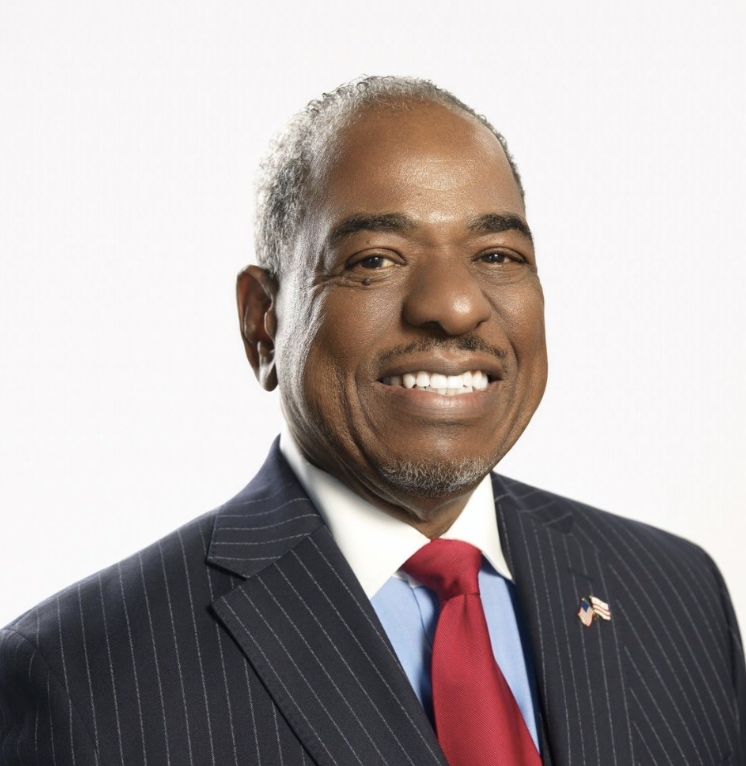
Vincent Orange represented the District as an at-large member on the D.C. Council from 2011 through 2016. He has worked as an attorney and accountant.
Orange has proposed building “at least 1,000 high- quality, small-footprint homes (not ‘tiny houses’) for seniors, working residents, and recent graduates, delivered by DC-based small businesses.” He said he would accelerate creating affordable housing with the Housing Production Trust Fund and prioritize units for low- to moderate-income families. “I will expand pathways to ownership and stability by strengthening rent support, leveraging public land, and requiring stronger affordability set-asides in new developments,” he wrote.
Orange said he would expand non-congregate shelter options and transitional housing, adding smaller sites for privacy in shelters. He said he would work to reduce overcrowding and shorten shelter stays. “Ultimately, the goal is not just more beds—but faster pathways from shelter to permanent housing,” he wrote.
For encampment clearings, Orange said he would only carry them out when “adequate housing or shelter options are available and clearly offered,” and that closures should include outreach, case management, options for storage, and placement opportunities. “We should measure success not by how many encampments we close—but by how many people we successfully move into stable housing,” he wrote.
Orange wrote that, given the city’s limited resources, he would prioritize vouchers for D.C.’s “most vulnerable residents.” He wrote that he would work to maximize federal funding for vouchers, improve the program’s efficiency, and ensure funded vouchers are in use. “At the same time, my broader economic plan—jobs, apprenticeships, and income growth — reduces housing instability at its root,” he wrote.
Orange said he has worked with people impacted by incarceration to design programs in the past, and that he would make sure input from people with lived experience is included at every step in the policy process.

Rini Sampath is a technology executive who has lived in D.C. for 10 years. This is her first time running for office.
In response to Street Sense’s questions, Sampath wrote she would work to expand affordable housing and that she would fully fund the Housing Production Trust and Local Rent Supplement Program. She said she would pursue zoning reform to encourage the construction of more housing and strengthen enforcement of housing code violations.
In terms of shelters, Sampath said she would conduct a shelter capacity audit upon entering office and prioritize expanding non-congregate options. She also said she would work with LGBTQ+ organizations to ensure that these shelter options are safe and supportive. “I will treat the shelter system not as a permanent solution but as emergency infrastructure — the goal is to move people through shelter and into stable housing as quickly as possible, which requires both adequate shelter capacity and a functioning housing placement system on the other end,” she wrote.
Sampath said the District should not close an encampment if there are not sufficient housing and shelter options. Before closures, Sampath’s team would work to ensure that people have “been offered a genuine, appropriate alternative” to living outside. She said that these clearings should not happen during extreme weather, and that she would ensure belongings in encampments would be placed into storage and not discarded.
“The Mayor’s decision to include no new housing vouchers in this budget while thousands of DC residents are on waitlists for housing assistance is a choice I would not make,” Sampath wrote. She said she would protect Emergency Rental Assistance and work to streamline the voucher process.
Sampath also said she would “establish a formal advisory structure for homelessness and housing policy that includes people with lived experience of homelessness.” She said this would include stipends for participation and decision-making authority.
Read Sampath’s full responses.
Two additional candidates, Ernest Johnson and Hope Solomon, will appear on the ballot. Neither responded to Street Sense’s questions. Johnson, a real estate broker, and Solomon, a former federal worker, both mention affordability on their websites, but neither specifically mentions housing or homelessness.
Delegate
Eleanor Holmes Norton, who has been D.C.’s non-voting delegate to the House of Representatives since 1991, is retiring. For the first time in over three decades, the District will have a new delegate. This delegate represents the D.C. in the U.S. House of Representatives, but cannot vote on bills, and has traditionally led advocacy for D.C. statehood. The Democratic nominee will run against Republican Denise Rosado. Councilmembers Robert White and Brooke Pinto are considered favorites in the race.
Trent Holbrook is an attorney who has worked for Congresswoman Eleanor Holmes Norton for the last eight years. There is nothing on his campaign website about housing or homelessness. He did not respond to Street Sense’s questions.
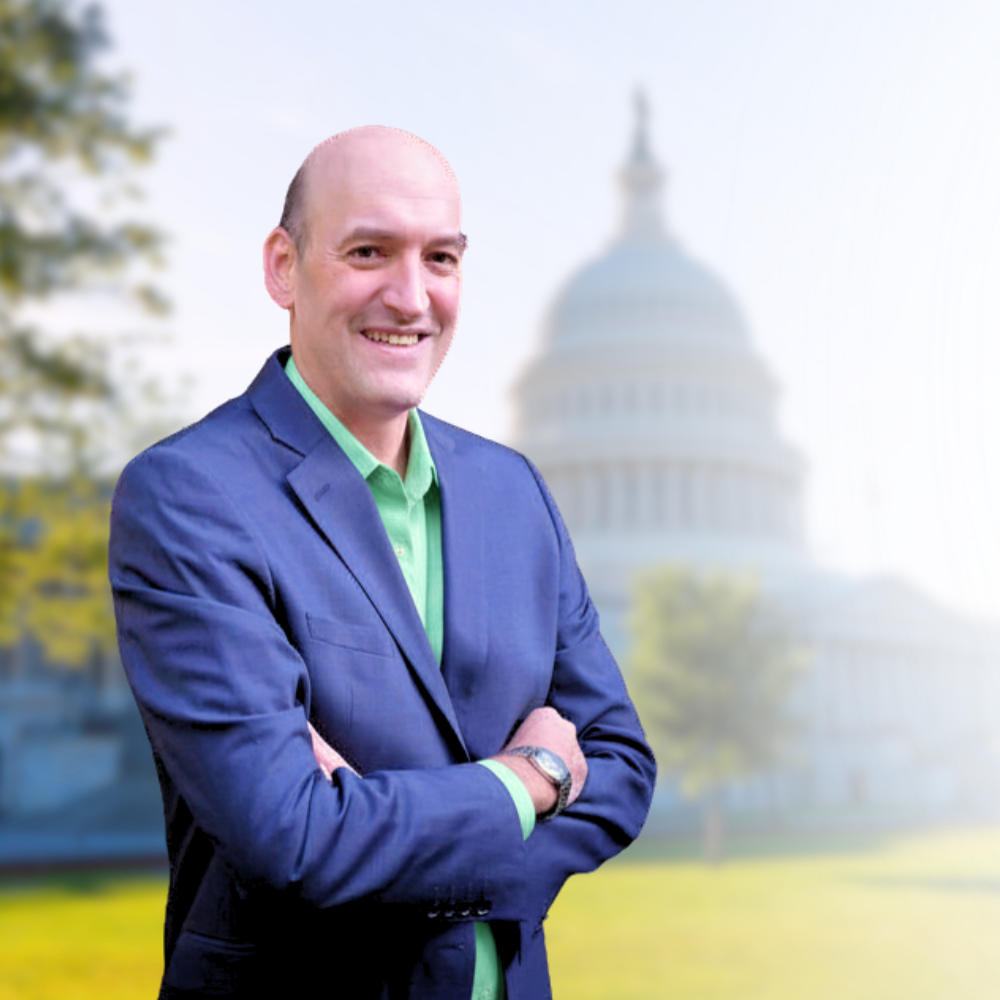
Greg Jaczko, a physicist, served as the chairman of the U.S. Nuclear Regulatory Commission during Barack Obama’s presidency and is a lecturer at Princeton.
In response to Street Sense’s questions, Jaczko said he would prioritize Housing First supportive housing models, “focusing specifically on expanding Permanent Supportive Housing and restoring the federal credit programs — decimated by recent administrations — that help first-time buyers and low-income residents bridge the gap to stability.”
Jaczko said he firmly opposes a national camping ban and called the Johnson v. Grants Pass decision, which allows cities to arrest people sleeping outside, a “policy failure…Instead of punishing individuals for a lack of options, the federal government should be accelerating the transfer of underutilized federal land to the District to create the permanent, service-supported housing that actually solves the root cause,” he wrote.
Jaczko pledged to have an open-door policy and promote engagement with unhoused D.C. residents. “By ensuring those with lived experience have a direct line to my office, I will ensure our policy decisions are informed by the reality on the ground,” he wrote.
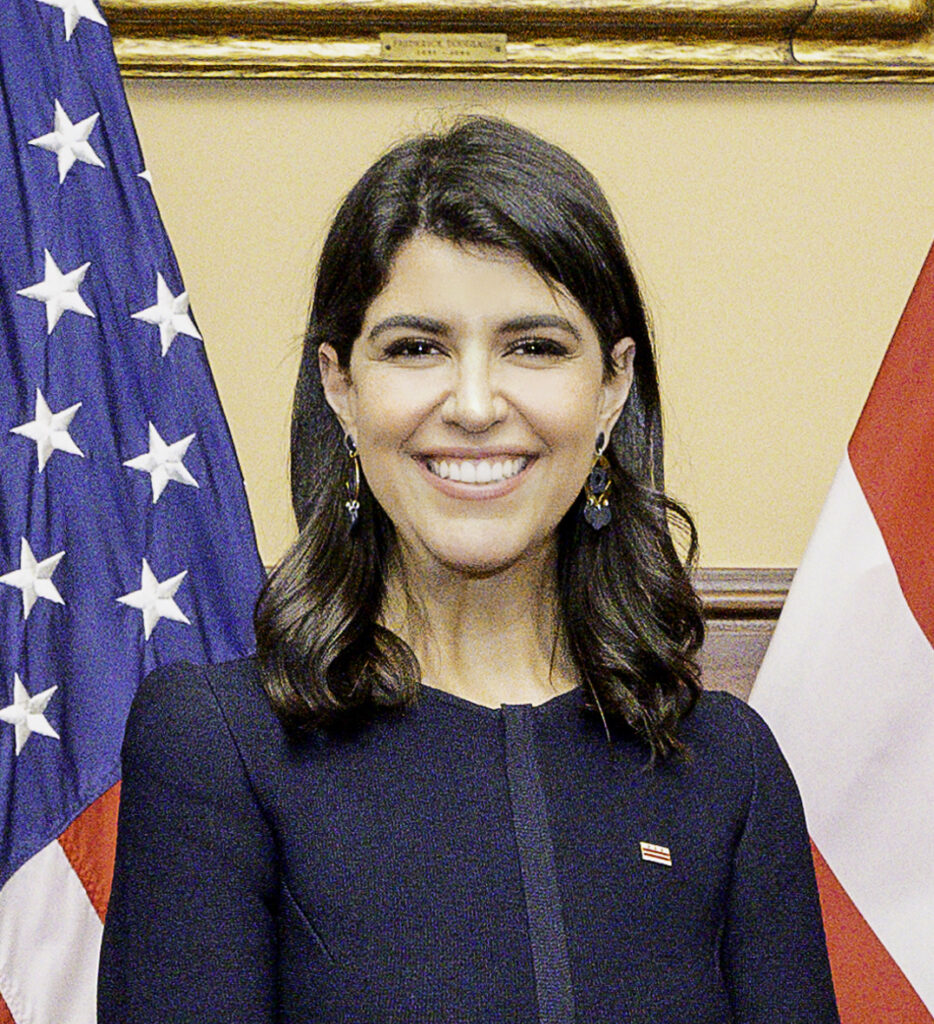
Brooke Pinto is an attorney who has worked in the D.C. Office of the Attorney General and is the Ward 2 councilmember and chair of the Judiciary and Public Safety Committee. As councilmember, Pinto voted for a bill advocates say would have weakened tenant protections, and against bills that increased funding for permanent housing and would have paused encampment closures in the winter. She has been involved with the opening of the Aston, the city’s first non-congregate shelter, which is in her ward, though some advocates have criticized her for supporting a lower cap on the number of people the shelter can serve.
On Pinto’s campaign website, she has a proposed housing plan for the District, calling housing the “fight of our generation.” Nationally, Pinto has proposed to make rent tax-deductible, similarly to mortgage interest for homeowners, and changes to the tax code and zoning laws to encourage developers to build more housing. She also supports the shift to non-congregate shelters, like the Aston: shelters that are “smaller, supportive, dignity-centered housing that gets people into stable situations faster and keeps them there. I will fight for federal capital to build additional noncongregate bridge housing models like the Aston, in neighborhoods across DC and America.”
Pinto responded to Street Sense’s questions after this guide was published, so they are not included in her profile, but they can be found here.
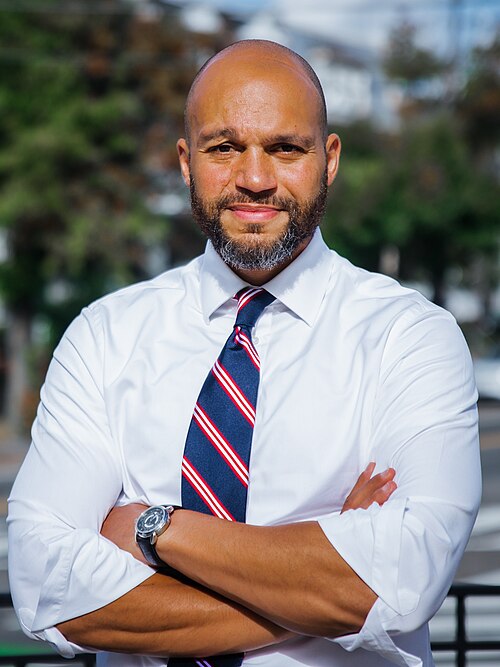
Robert White is an attorney who has served as an at-large representative on the D.C. Council since 2016 and ran for mayor in 2022. Serving as a councilmember, White voted for a law that increased taxes on millionaires to fund permanent housing and a bill that would have suspended encampment clearings during hypothermia season, and he voted against a bill advocates said would have weakened rights for renters. He’s been outspoken about issues around homelessness in the past, speaking to residents at the McPherson Square encampment before its closure in 2023 and asking for the closure to be delayed.
Since 2023, he has served as chair of the Council’s Committee on Housing, leading oversight of the D.C. Housing Authority as the agency transitioned to a new board and responded to federal audits. Investing in affordable housing will be a priority for White, according to his campaign website: “Lowering the cost of living and building economic mobility by launching a bold D.C. Forward Economic Plan to secure federal resources for affordable housing, workforce development, and jobs—particularly for residents without college degrees.” White also told the Ward One Democrats he would prioritize housing, childcare, and affordability, and pledged to address housing insecurity on his website. White did not respond to Street Sense’s questions.
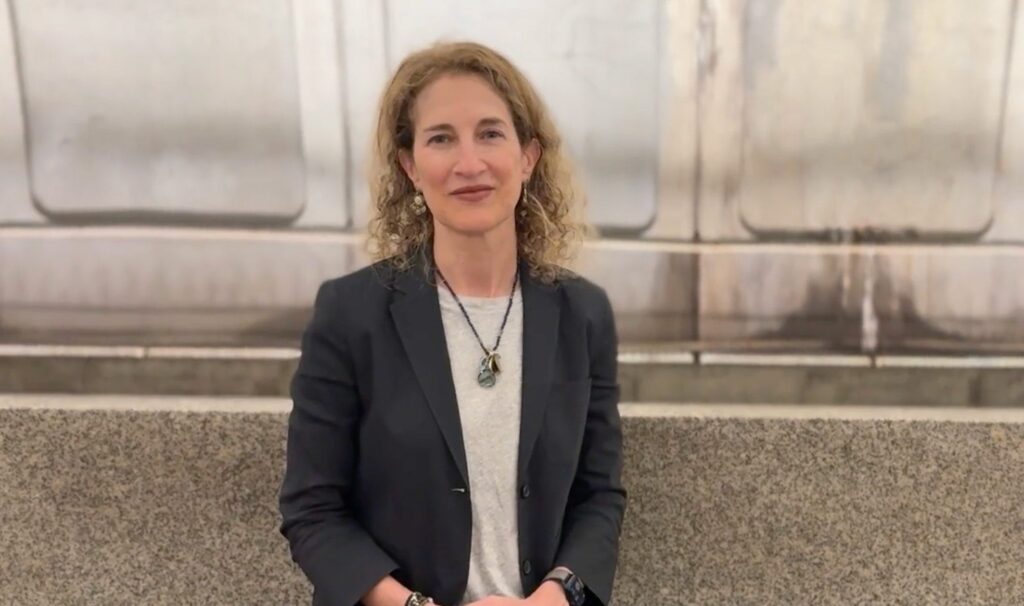
Kinney Zalesne has experience working in non-profit, business, and public sectors in D.C. Working for nonprofit Peer Forward, Zalesne worked with students experiencing homelessness to ensure they could attend college. “As delegate, I will ensure that my constituent services personnel conducts outreach to individuals in shelters and experiencing homelessness,” she wrote in response to Street Sense’s questions.
Zalesne said she would fight to protect national housing and homelessness funding. “The root cause of homelessness for most people is a lack of affordable housing,” she wrote. As delegate in the House, she said she would advocate for increased federal funding of affordable housing, “including expanding Low-Income Housing Tax Credits and supporting community land trusts that permanently protect affordability.” She also supports modifying the Height Act to allow taller buildings in downtown D.C.
She said she would also use her position to ensure the U.S. Department of Housing and Urban Development “is executing its mandate to the highest standards” when it comes to funding services dedicated to ending homelessness. Zalesne said she would not support the criminalization of homelessness or a national camping ban.
Read Zalesne’s full responses.
Attorney General
The attorney general is responsible for enforcing the District’s laws and for representing the interests of D.C. residents. The winner of the Democratic primary will run against Republican Manuel Rivera in November.
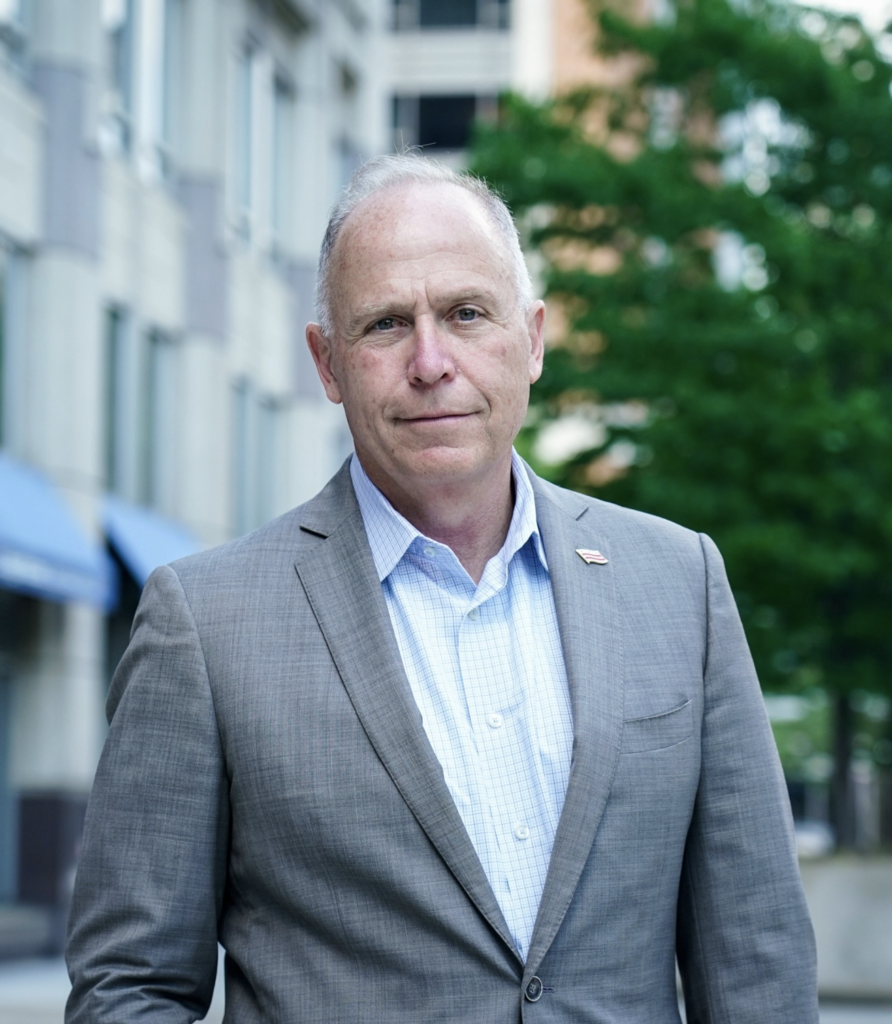
Brian Schwalb is the incumbent attorney general.
Since Schwalb took the position in 2023, the office has secured millions of dollars from landlords for tenants living in illegal conditions. This includes a $41 million judgment against the former owners of the Marbury Plaza apartment complex for inhumane conditions. The office won the judgment, which was one of the largest housing conditions judgments made against a landlord in United States history, in November. Schwalb’s office has also gone after landlords for housing voucher discrimination and exploiting the housing voucher system.
“In a second term as Attorney General, I will continue enforcing DC’s housing laws to protect tenants from exploitation, and ensure a fair, safe, and competitive housing market for all District residents and for law-abiding housing providers who are entitled to compete on a level playing field,” Schwalb wrote in response to Street Sense’s questionnaire.
When the Trump administration began to use federal troops to remove homeless encampments across the District, Schwalb’s office released an advisory about the rights of people experiencing homelessness. Schwalb said he would continue to publish accessible advisories. “And when those rights are violated, I will use the full authority of [Office of Attorney General for the District of Columbia] — through enforcement, litigation, and legal intervention — to protect vulnerable residents and uphold the District’s laws,” he wrote.
Read Schwalb’s full responses.
J.P. Szymkowicz is the advisory neighborhood commissioner for Foxhall. According to his campaign website, Szymkowicz will fight “for solutions that address the root causes of crime,” including affordable housing. He also says he will hold landlords accountable and enforce housing codes. Szymkowicz did not respond to Street Sense’s questions.