The Trump administration has begun its second attempt to shift federal funding for homelessness toward temporary housing and treatment programs, rather than permanent housing.
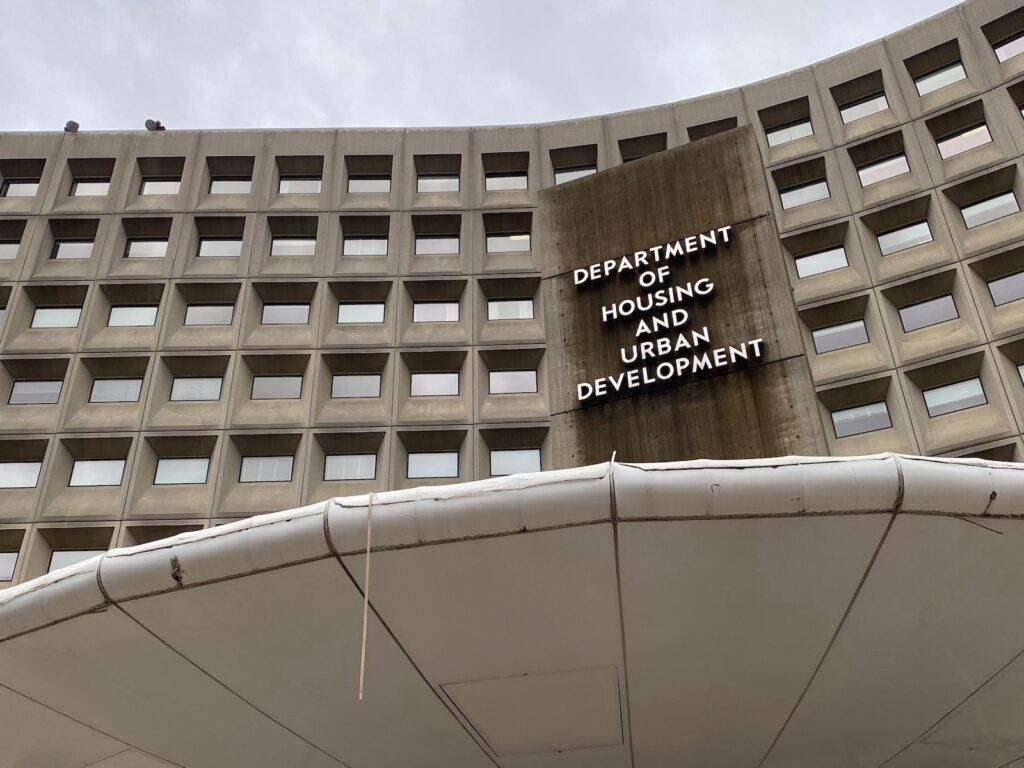
The U.S. Department of Housing and Urban Development (HUD) released its new guidelines for the largest pool of federal homelessness funding, the Continuum of Care (CoC) grant, on June 1. The agency had attempted to implement a different set of guidelines last year, but was temporarily blocked following a lawsuit. Despite rolling back some of its more stringent restrictions in this most recent set of rules, HUD remains skeptical of Housing First programs. The guidelines could put some programs applying for grants in a difficult position and potentially change the nation’s homeless services landscape.
Last November, when HUD released its updated fiscal year 2025 funding application for the CoC, a federal program that provides funding for nonprofits working to end homelessness, programs found themselves facing an unprecedented level of funding constraints. HUD planned to cap the amount of funding localities could receive for Permanent Supportive Housing (PSH) to just 30% of their total funding, effectively moving a large portion of the program’s $3.9 billion budget towards transitional housing and programs prioritizing work requirements and mandatory treatment. This shift would have potentially forced 1,500 people out of housing and cost D.C. housing programs approximately $22 million, according to advocacy group the National Alliance to End Homelessness (NAEH).
Those guidelines were blocked by the courts. Now, HUD’s new guidelines remove the cap on PSH, but implement other limitations that would shift money away from permanent housing, setting aside $1.3 billion solely for temporary and supportive programs.
What’s the debate?
Both sets of funding guidelines reflect the Trump administration’s dislike of Housing First programs, long considered a bipartisan, mainstream response to homelessness. Housing First is an approach to the homelessness crisis that prioritizes providing individuals with permanent, stable housing before other means of progress, such as treatment programs or employment. Most experts agree the method has proven many times over to benefit individuals and families.
Per Sam Tsemberis, the founder of Pathways to Housing D.C. and an architect of Housing First, 85% of people in Housing First programs are successful within their first year in maintaining housing, as well as achieving other progress milestones, such as recovering from drinking or drug use.
However, the Trump Administration has shown vehement resistance to Housing First, arguing it has not worked to reduce homelessness. In 2025, Trump filed an Executive Order ending “…support for ‘housing first’ policies that deprioritize accountability and fail to promote treatment, recovery, and self-sufficiency—and holding grantees to higher standards of effectiveness in reducing homelessness and increasing public safety.”
What happened to the initial funding guidelines?
Following the release of the first set of guidelines in late 2025, a group of states and the NAEH filed lawsuits challenging the restrictions. In April, a federal appeals court upheld an injunction blocking HUD’s funding plan. According to the Justia Opinion Summary, the court reasoned HUD’s actions were “…arbitrary and capricious, and would cause irreparable harm by creating funding gaps and service disruptions to vulnerable populations,” essentially accusing HUD of throwing a wrench by revising the guidelines in the middle of the grant cycle.
What are the new guidelines?
In the June Notice of Funding Opportunity, HUD clearly states its opposition to Housing First, calling it a “profound failure by any measure,” and claims to be “restoring the CoC program to its original goals of reducing homelessness and optimizing self-sufficiency by focusing on meaningful outcomes, expanding competition, prioritizing treatment, economic independence, and emphasizing law and order,” a description which points to the goals of temporary housing and supportive services.
HUD has taken back the initial restrictions imposed on how much funding can go toward permanent housing, but seems poised to give favorable funding to projects focusing on job training, education, and health care.
Perhaps the most significant update to the guidelines is the removal of the 30% cap on funding for permanent housing. Though there is no strict cap, in a quest for “balancing” between permanent housing and temporary housing and supportive services, HUD is making it likely money is awarded to programs that reallocate funding to the latter projects.
HUD, in another policy change, dropped the annual renewal demand for Tier 1 programs, which are nearly guaranteed to receive funding, from 95% to 60%. This leaves many existing programs in Tier 2 limbo, where they may not be funded. Within Tier 2, new transitional housing and supportive services programs will be prioritized. So, if a program were to be ranked as Tier 2, its transition into temporary housing and services could earn it an edge in the competition, effectively encouraging programs in this tier away from long-term housing and a Housing First model.
HUD has also outlined a variety of prescribed criteria that will factor into its funding decisions. These criteria, less prominent in NOFOs during the Biden-era, which focused more on Housing First, include meeting service requirements (20 hours of voluntary work for public benefit), and whether participants are achieving employment or returning to their housing programs.
How will programs move forward?
In a recent meeting of homeless service providers, leaders said D.C. will continue to prioritize permanent housing projects, but some programs may convert to transitional housing or supportive services.
The NAEH filed another lawsuit on June 22 challenging the new guidelines, citing the more than “97,000 formerly homeless people, including families with children, those with disabilities, older adults, and veterans at risk of losing their permanent housing.” The lawsuit aims to block the guidelines before they can take effect in the grant application process.
Representatives from the National Homelessness Law Center emphasized the stakes of these new guidelines in their press release on the new lawsuit: “Make no mistake, these changes mean more people will enter homelessness,” they wrote. Antonia Fasanelli, the executive director of the National Homelessness Law Center, demanded the administration’s cooperation while voicing her support of the lawsuit. “The Trump administration should focus on ensuring that everybody has the housing and support they need and want,” she wrote.
Applications for funding are due to HUD by Aug. 24, and award announcements are expected to be released by the end of December.
This article originally appeared in Street Sense’s July 1, 2026 edition.