“Thank Jesus God Almighty,” Barbara Pierce exclaimed from outside of her tent as the bright orange city-commissioned garbage truck rumbled away, empty, on June 16.
Pierce had successfully avoided an encampment closure, but she was an outlier. In the weeks of June 14 and June 21, the Office of the Deputy Mayor for Health and Human Services (DMHHS) completed full cleanups, biohazard removal, and closures at six other encampments, according to its website. Across May and June, DMHHS carried out at least 25 closures, according to its website and Street Sense reporting.
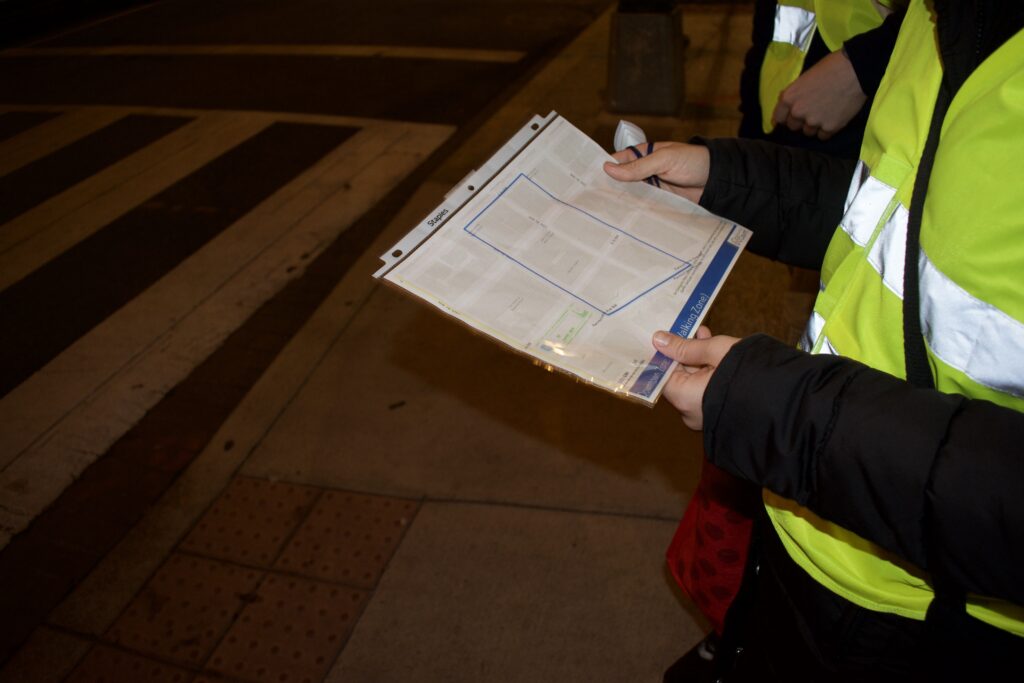
Around 9:30 a.m. on June 16, DMHHS officials, members of the Department of Behavioral Health Community Response Team, outreach workers, and an official tasked with biohazard removal arrived across the narrow street from Pierce’s tent in Langdon. An hour-long standoff ensued.
When DMHHS officials approached Pierce’s tent to issue a warning they would begin the cleanup in thirty minutes, they quickly learned Pierce would not comply. In fact, she had a new, novel strategy.
“I got a restraining order on them,” Pierce, 62, told Street Sense. “They’re not supposed to touch my stuff, period.”
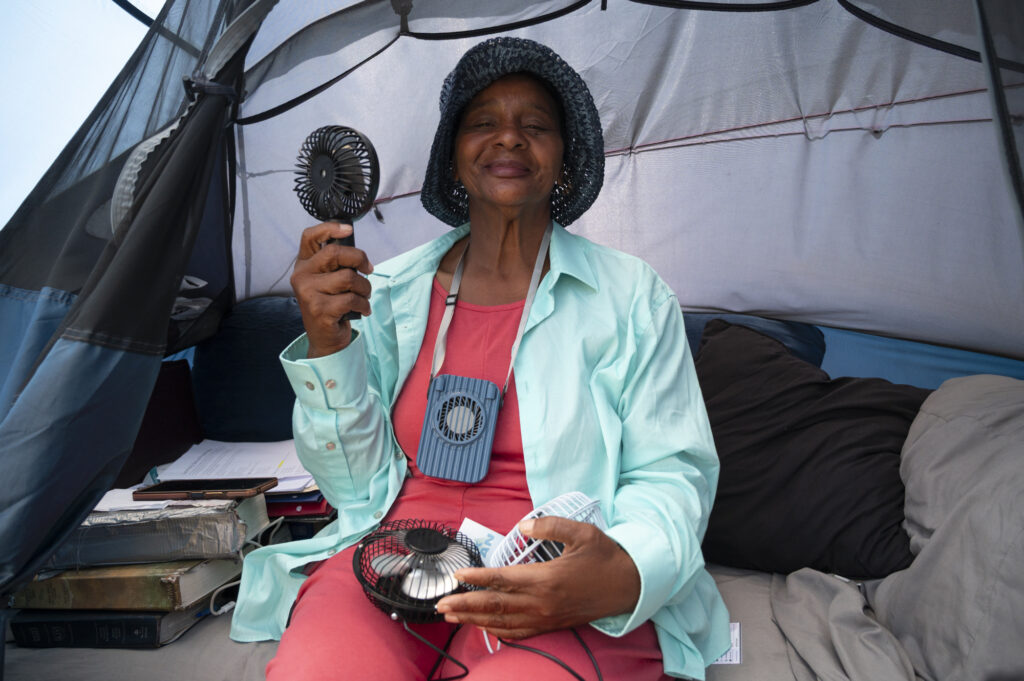
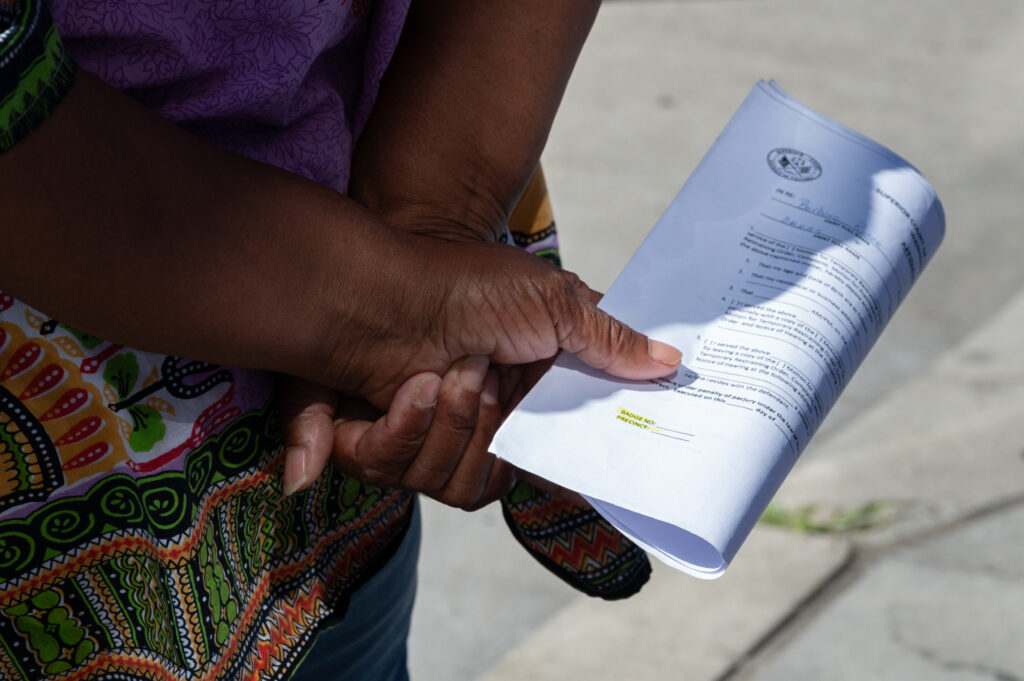
Pierce showed Street Sense a pile of documents, stacked neatly on a bin inside her tent. Pierce had filed a Civil Protection Order (CPO) against the entirety of DMHHS and another against the D.C. Department of Human Services (DHS). The documents indicated a court date on June 17, the next day. A CPO must be directed toward an individual and is intended to provide relief from physical harm or property damage. Pierce told Street Sense after her court date that the judge did not grant her CPOs, but they had bought her time.
Pierce said she filed a CPO against the agencies because of her longstanding tensions with the crews tasked with carrying out cleanups of her belongings. Pierce first arrived at her spot in April of 2025 after the closure of the seasonal women’s shelter, Eve’s Place. DMHHS has carried out five encampment clearings at Pierce’s location in 2026, according to notices she saved.
Thomas Wilson, who frequents the Adams Place Day Center near Pierce’s tent, told Street Sense he had witnessed DMHHS staff dispose of Pierce’s previous tent, and she has been “fighting them” since the Trump Administration ramped up its enforcement of encampments in D.C.
Pierce said she has been diagnosed with diabetes, lung cancer, and kidney disease, factors which make moving difficult for her. She spends most of her days in her tent, keeping an eye on her belongings and reading the Bible.
“Dealing with this tent and DHS and DMHHS it’s been really hard to really do anything, because me trying to get these restraining orders, it’s been a real run around. And I’m tired,” she said, adding she has been attempting to secure a court date for her CPOs since January.
“Instead of taking my stuff and throwing it away and making me go back and forth, aren’t they supposed to be helping me?”
On the morning of the closure, DMHHS offered Pierce relocation to a shelter and storage of important belongings, but she rejected the offer.
“I didn’t like the idea of the shelter because I’m avoiding the people in the shelter,” Pierce said. Along with concerns about a lack of privacy, she cites a number of “run-ins” and verbal altercations with residents and staff members at the nearby drop-in center as a reason why she did not feel safe trying to “dodge and duck everybody… to keep a bed.” Earlier this month, Pierce said she was temporarily barred from the center due to one such altercation.
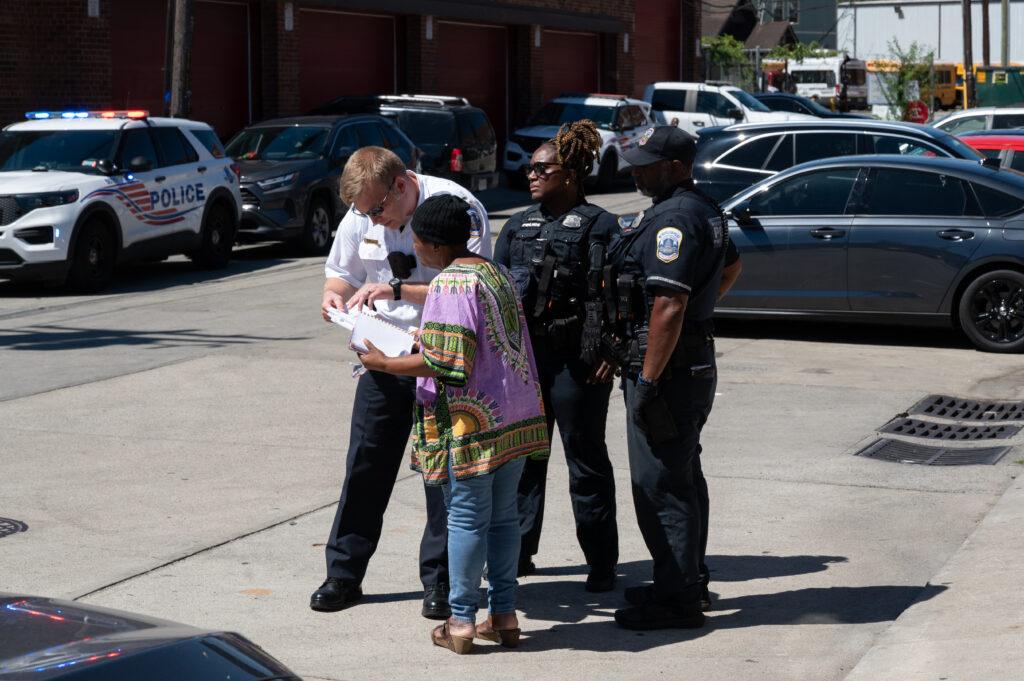
At 9:45 a.m., a DMHHS official returned to remind Pierce they would begin the cleanup at 10:00 a.m. She rebutted with a demand they call the police to serve the CPO. Eventually, she dialed 911 herself.
Two MPD officers arrived to speak with Pierce and the city officials. After reviewing the incomplete paperwork, they called in MPD Lieutenant John Sprague to clarify whether MPD was obligated to serve the order in the interim before the court date.
Soon after, the small crowd of officials and outreach workers across the street began to dwindle. Finally, even the garbage truck peeled away. Pierce rejoiced.
DMHHS did not respond to Street Sense’s request for comment about the agency’s response to the CPO. On the agency’s website, the cleanup is now listed as canceled.
The next day, Pierce says she attended her court hearing. She said the judge did not sign off on the CPO. Instead, representatives of DHS and DMHHS raised the prospect of bridge housing for Pierce.
Pierce said she is “not ready” to move somewhere in which residents live in a “community situation,” referring to bridge housing’s semi-private rooms. She also expressed concern that without the guarantee of eventually getting Permanent Supportive Housing, she would still end up “back on the street.”
After leaving Pierce on June 16, DMHHS officials traveled to a second site at 4th and New York Avenues NW. Two residents, Alfonso Black and his wife, were on-site.
Black complained that because DMHHS arrived “late,” just before 11:00 a.m., the officials “rushed” him and his wife as they moved their belongings. Black and his wife declined transport to a shelter but accepted the offer to store some of their belongings.
On June 17, DMHHS conducted a closure at the intersection of Georgia and Missouri Avenues NW, clearing one tent but leaving a neighborhood water seller, Alan.
Alan operates a free-of-charge water bottle service, Alan’s Oasis. He was initially unsure whether or not he was a target of the scheduled cleanup, and told Street Sense he only learned his business was not under threat of removal when DMHHS arrived.
Alan expressed frustration with DMHHS’s repeated visits, citing insufficient warnings. He argued that since he is not “panhandling” for money and instead relies on donations, there is “nothing” he should be written up for.
While Alan’s Oasis was left intact, DMHHS completed a full cleanup of a nearby encampment at the same address. The encampment’s sole resident was notified by an outreach team the night before, according to Eden Clark, an outreach manager at Miriam’s Kitchen. The resident was not present at the time of the removal. DMHHS disposed of their tent and various personal items left behind.
The week of June 21, Street Sense reporters went to the locations of two additional scheduled encampment closures. They did not see residents or city workers at either location, but both are listed on DMHHS’s website as having been closed. DMHHS did not respond to a request for clarification.
On June 25, Dieudonne Bessang packed his belongings and moved to a new spot across the street from 900 10th St. NW. The cleanup was originally scheduled for June 18, but it was postponed due to the weather. Bessang had lived at the spot, directly in front of the Embassy Suites, for about two years. Hotel staff watched as officials cleared Bessang’s belongings.
The same day, an encampment cleanup on the corner of 26th and L Streets NW was cancelled because the resident had already relocated.
The final scheduled cleanup of the month took place on June 30 on the sidewalk of the 5500 block of Southern Avenue, SE. The resident had already vacated the site but left behind a tent and other belongings, including a walker, which DMHHS workers disposed of.
Raina Pawloski and Alexandra Lalli contributed reporting.
This article originally appeared in Street Sense’s July 1, 2026 edition.