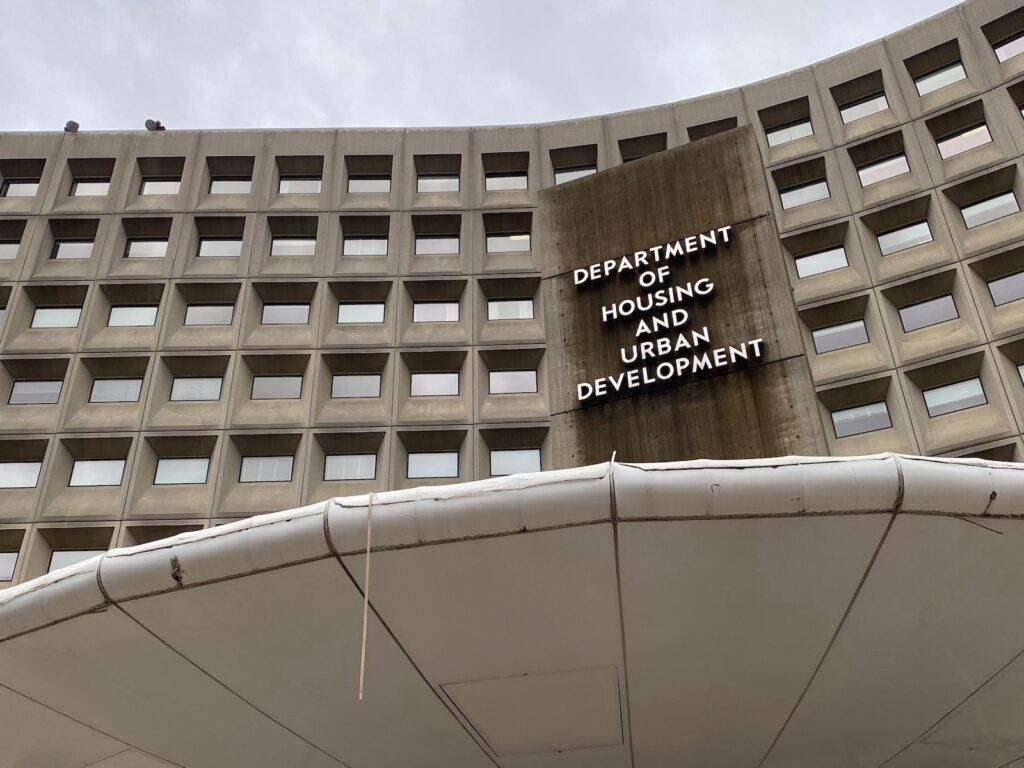
When the federal government reopened, the Department of Housing and Urban Development (HUD) quietly unveiled a major shift in how it plans to fund homelessness programs — a change that could reshape the housing options for hundreds of people experiencing homelessness or using HUD programs in D.C.
On Nov. 13, HUD released this year’s funding application for the Continuum of Care (CoC) program, the largest competitive grant the federal government uses to fight homelessness. For the first time, HUD is limiting how much money communities can spend on permanent housing programs, including Permanent Supportive Housing and Rapid Rehousing. These programs are the backbone of homelessness systems in the District and across the country, and have been supported by administrations for decades.
This is the latest indicator of the Trump administration’s shift away from the Housing First philosophy to one that centers on providing housing with strict treatment and sobriety requirements. The Housing First model, developed in the 1990s, provides people experiencing homelessness with immediate access to housing without prerequisites like sobriety or treatment.
Research shows stable housing dramatically increases the chances of long-term stability and success in voluntary treatment services. But conservative backlash against the Housing First model and the 2024 Supreme Court decision on Grants Pass v. Johnson paved the way for public policy criminalizing homelessness. That shift has only become more evident as Utah begins to build a 1,300-bed homeless “campus” where sobriety and drug treatment are mandatory, and a person’s stay is compulsory.
Normally, a vast majority of CoC funding goes toward renewing existing permanent housing programs that have proven effective at reducing chronic homelessness. However, HUD’s new rules would cap these programs at just 30% of a community’s total funding, and instead, put more money toward short-term or more restrictive models, such as transitional housing or programs tied to treatment or employment. This would effectively defund thousands of housing vouchers and programs that an estimated 170,000 people currently rely on, advocates say. Last year, D.C. won $33.66 million in CoC grants to fund dozens of local service and housing programs.
The shift follows months of turbulence around HUD’s approach to homelessness grants, including the agency’s “CoC Build” program, which prompted a lawsuit over politically-motivated restrictions. Now, with HUD capping permanent housing in the main CoC competition, D.C. homeless service organizations say the uncertainty has grown into a full-blown fear the stability residents fought hard to gain could be upended.
On Nov. 25, the District joined 20 states, including New York and Pennsylvania, in filing a lawsuit against HUD, arguing that the sudden and sweeping changes to CoC grants have caused “chaos.” The complaint now awaits hearing in a U.S. District Court in Rhode Island. The grant application is set to close on Jan. 14.
What changes at HUD mean for D.C.
Ann Oliva, CEO of the National Alliance to End Homelessness (NAEH), said the scale of HUD’s shift is unprecedented and will heavily impact the District. According to Oliva, the 30% cap applies to all forms of permanent housing, including rapid rehousing programs, which together make up about 87% of CoC spending nationwide.
In D.C., roughly $33.7 million is eligible for renewal in 2026, and about 95% of that supports permanent housing interventions. Capping funding for those programs at 30% would mean approximately $22 million worth of permanent housing funding would be cut or redirected, potentially affecting 1,500 people who rely on these programs, according to the NAEH’s state-level analysis. It’s possible providers could try to transition some permanent housing programs into transitional or treatment programs, but changes in rules could affect who is eligible and how long they could stay in the program.
It’s also possible D.C. could lose HUD funding for program types across the board, as the agency will evaluate localities based on their approaches to homeless encampments and housing first policies, two areas where D.C. often differs with the current administration. Depending on HUD’s specific criteria, which have not yet been released, this could put the entire pot of funding at risk.
Oliva warned the consequences could be severe. People currently in permanent housing could lose both their rental subsidy and supportive services over the course of 2026. Without that help, most tenants would not be able to pay the full cost of rent and would be evicted from their units, she said. Traditionally, people living in permanent housing programs are not eligible to then immediately enter other homeless services, like transitional housing, because they are not classified as “literally homeless.”
The threat of a reduction in CoC funding has raised alarms for providers like Christ House, which received a CoC grant last year for its Kairos House Program. The program, launched in 1992, offers permanent housing for 41 formerly homeless men with chronic health conditions, according to Dr. Lisa Purdy, CEO of Christ House. The sudden and far-reaching federal changes have intensified worries among providers that were already navigating a difficult year.
“Within Christ House, that broader environment, combined with this year’s government shutdown, has understandably created some anxiety among both staff and patients,” Purdy wrote in an email to Street Sense.
Purdy emphasized how critical stable funding is not only to the men they serve at Christ House, but also to all of D.C. as homelessness persists across the city. In recent years, D.C. has reduced the number of new vouchers it funds for people experiencing homelessness, including locally-funded permanent housing vouchers, and isn’t in a position to drastically increase funding for homeless services.
“Each year, thousands of residents experience homelessness in D.C., and many more depend on permanent housing programs to remain stable. Even with recent progress in reducing homelessness, the need in the District continues to outpace available resources,” Purdy wrote.
The case for permanent housing
The CoC program has long been stable and bipartisan, Oliva said, making the sudden changes even more jarring. HUD defended the changes in a Nov. 13 press release, saying the new guidance is intended to reduce people’s long-term reliance on government funds.
“This NOFO (notice of funding opportunity) restores accountability to homelessness programs and promotes self-sufficiency among vulnerable Americans. It redirects the majority of funding to transitional housing and supportive services, ending the status quo that perpetuated homelessness through a self-sustaining slush fund,” HUD wrote.
But Oliva pushed back on HUD’s characterization of the country’s homeless services system, saying it misrepresents how it actually works. The people served by these programs are often managing disabilities or have major barriers to affording housing without assistance, facts Oliva said HUD’s framing leaves out. Permanent supportive housing is designed for people with disabling conditions, many of whom work but still cannot afford rents without subsidies, she argued, while rapid rehousing is often used for families who need short-term help while stabilizing their income.
“The idea of this being just sort of a free-for-all is disingenuous, and it actually has quite a bit of accountability baked into it, for the grantees who receive these dollars,” Oliva said.
HUD’s changes have also alarmed providers at Sasha Bruce Youthwork, which received close to $1.5 million in CoC funding last year for its Thrive House program. Thrive House opened in June 2022 and offers transitional and rapid rehousing, along with mental health and financial literacy services, to unhoused D.C. youth ages 18-24, according to Deborah Shore, founder and executive director of Sasha Bruce.
CoC grants, Shore said, have been critical in developing and sustaining the services the Thrive House program is able to offer, including helping with rent until youth can cover it themselves.
“The CoC grant goes to transitional living, which then transitions into rapid rehousing, and we provide a lot of supportive services all along the way. It’s our most robust program,” Shore said. She emphasized the need for more permanent supportive housing (PSH) for youth experiencing homelessness, who research suggests are more likely than other age groups to have circumstances that make them need PSH.
“There’s almost no PSH for young adults, which is a serious problem because we do have a lot of young people who have disabling conditions,” Shore said.
Programs like PSH are also funded at a local level, meaning the federal shift wouldn’t affect all D.C. programs. But Shore said the proposed federal shift away from permanent housing and a housing first approach would leave many people with nowhere to turn.
“The idea that we would end permanent supportive housing is really a huge and very worrying change. It potentially puts an enormous number of people who have virtually no other support on the streets,” Shore said.
Charting a path forward amid upheaval
Oliva said national advocacy organizations are urging D.C. providers to take action and speak out against the new limits while pushing Congress for oversight. But with an application that closes on Jan. 14, they also have to start contingency planning, she said.
The short application window adds enormous strain to communities already scrambling to assess the impact, Oliva said, as the changes leave less than 75 days to restructure entire homelessness systems. She added that while administrations often introduce new priorities, the speed and scale of this shift are unlike anything she has seen.
“That does not give them enough time to do planning in a way that would help them to mitigate harm and displacement in their communities,” Oliva said.
Purdy said Christ House still plans to submit another application to the CoC grant, given the new terms, but the organization is still working to understand the implications of the new terms. While the District is exploring solutions, she said, local funds and assistance from the D.C. government can’t fully close the gap left by CoC funds, a concern echoed by local officials in recent meetings. At least some D.C. homeless service providers are exploring transitioning their permanent housing programs to transitional ones, so they can still be eligible for HUD funding, according to recent meetings between homeless services providers, and the local CoC is coordinating ahead of the application deadline. Funding decisions, which will reveal the full scale of the changes, will be released in May.
This article originally appeared in Street Sense’s Dec. 3, 2025 edition.