As of this January, more than 5,000 people in D.C. were experiencing homelessness. While people experiencing homelessness can be seen as one group, each person’s experience is individual and may depend on their identity, history, and situation.
Following the release of the 2026 Point-In-Time (PIT) Count in May, Street Sense is providing a breakdown of the various populations experiencing homelessness in D.C. It’s important — for both D.C. lawmakers and residents — to have an accurate picture of homelessness in the District.
This January, the PIT Count found 5,363 people experiencing homelessness on one night. This includes 1,574 people across 533 families and 3,789 unaccompanied individuals. The vast majority of those people, 87%, were in shelter or transitional housing on the night of the count. Compared to the most recent national numbers, which show closer to 60% of individuals are in shelters, D.C. has a relatively low percentage of people living outside.
PIT data comes from a variety of sources; it’s not all-encompassing, but it tries to provide as accurate a snapshot as possible. For those in shelter, the data is pulled from the Homeless Management Information System, or other databases for programs that are privately funded or faith-based.
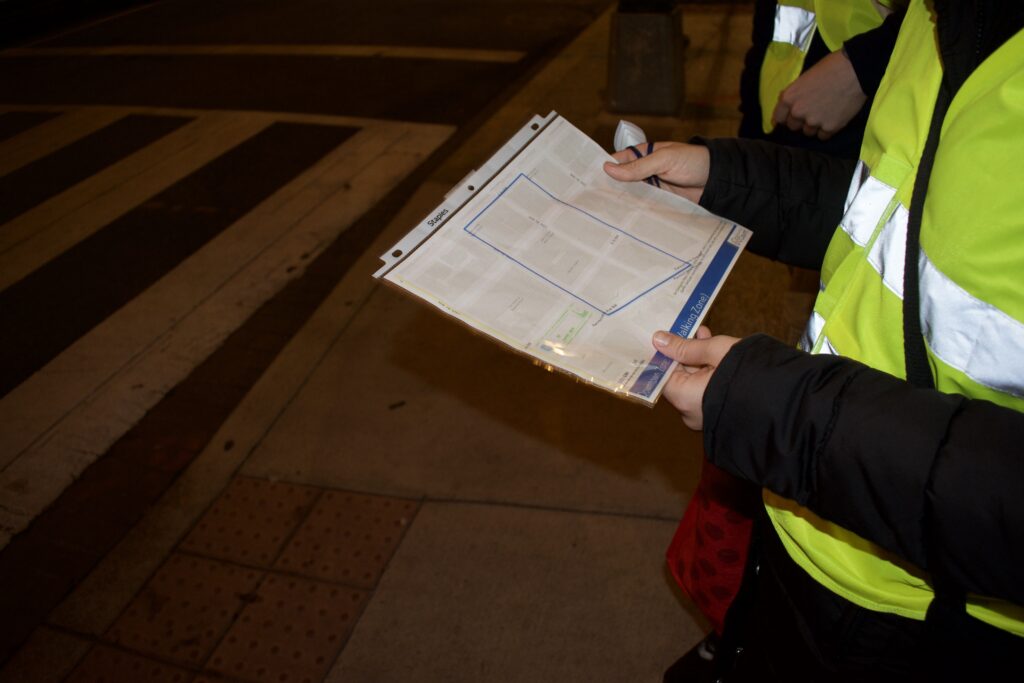
People who are unsheltered are ordinarily surveyed on the street the night of the PIT. However, due to severe inclement weather this year, the in-person count was cancelled. Instead, The Community Partnership for the Prevention of Homelessness, the nonprofit organization that collected the data, relied mainly on an estimate derived from averages based on previous years’ data. In any given year, the PIT is widely understood to be an undercount, so the true scale and shape of homelessness in the District might differ.
Where people sleep
The 2026 PIT found a 5% increase in homelessness from 2025, driven mainly by a 16% increase in family homelessness. There was also a five-person increase in unaccompanied adults and a 14-person increase in unaccompanied minors.
Of the more than 5,000 people experiencing homelessness, the data estimated 718 slept outside on the night of the count, a dip from the 792 counted in 2025. Nearly all of the people sleeping outside were single adults. Over half of this group is considered to be chronically homeless, meaning they have been homeless for at least one year, or several times over the span of three years. People who are chronically homeless generally qualify for higher levels of support, like permanent housing.
Still, the vast majority of single people experiencing homelessness are in emergency shelters or transitional housing. The number of those housed in emergency shelters increased by 4% in 2025, totaling 2,430 people. Transitional housing numbers for individuals remained flat, with 641 people.
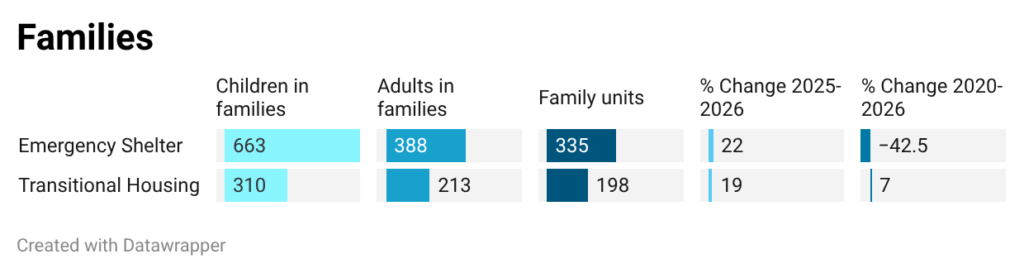
Meanwhile, the number of families in shelters increased by 20%, and the number of families in transitional housing increased by 13%. There were 388 adults and 663 children in emergency housing, and 213 adults and 310 children living in transitional housing.
This increase was actually predicted by a recent change to the Rapid Rehousing Program (RRH), which has been criticized for not helping people exit homelessness long-term. At an agency budget hearing in May, D.C. Department of Human Services (DHS) Director Rachel Pierre said DHS had shifted its policy to encourage families to remain in shelter longer to give them time to draw up an exit plan with case managers, rather than immediately exiting them through RRH, which doesn’t work for everyone. In order to ensure the families who exit through RRH are ready, DHS now requires families to be working or engaged with a provider to join the program.
Demographics
Identity plays a role in experiences of homelessness; for some individuals and families, it can make them more susceptible to homelessness and the barriers to support much higher.
Race: Black individuals are disproportionately affected by homelessness. The vast majority of people experiencing homelessness in the District, 91% of families and 79% of unaccompanied individuals, are Black. All other racial groups make up less than 10% of the entire D.C. unhoused population, according to this year’s PIT Count. For comparison, 41.6% of D.C.’s overall population is Black. This disparity can be seen across the country and can be the result of unequal access to wealth and education beginning in childhood. Beyond that, redlining practices, which dictate neighborhood formations and their subsequent wealth gaps, created hurdles to homeownership for Black families.
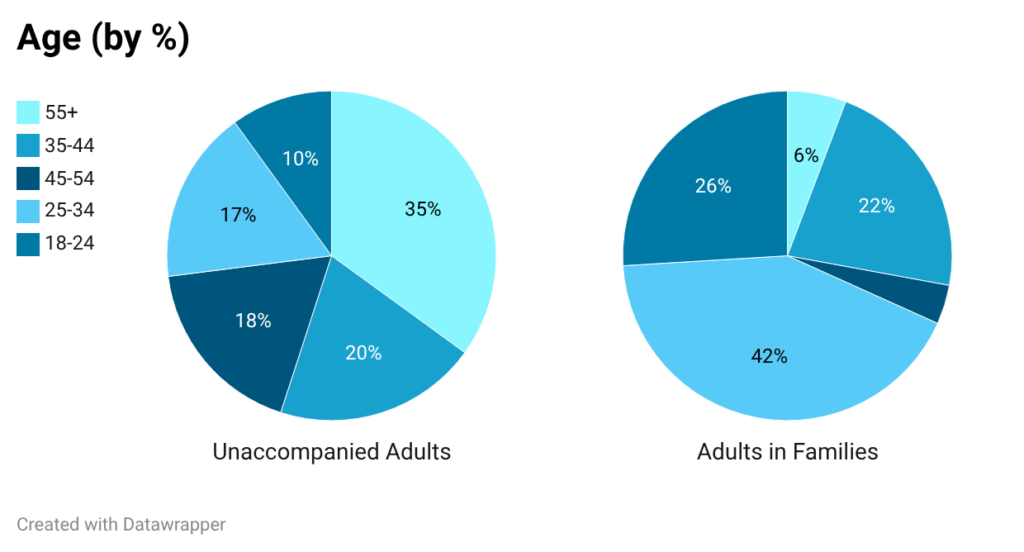
Age: Forty-four percent of adults in families are between 25 and 34 years old, and 27% are between 18 and 24, meaning the majority of individuals in families experiencing homelessness are younger adults. However, 35% of individuals experiencing homelessness are 55+, close to or at retirement age. The past few decades have seen a national rise in senior homelessness: in 2024, seniors made up half of the homeless population, making them the fastest-growing group.
On the opposite end, the number of unaccompanied Transitional Age Youth (TAY) — those between 18-24 years old — decreased slightly to 333. However, the number of households headed by a TAY has increased by 36%, reaching 117 households. Heading a family at a young age presents its own challenges, which become difficult to navigate when experiencing homelessness and without the built-in support of family.
Gender: Gender critically impacts those experiencing homelessness. Women make up nearly 90% of adults in family households experiencing homelessness, potentially because domestic violence and single parenthood can force women into a position where they can no longer afford the cost of living. For adults in families, 44% reported experiencing domestic violence. Unaccompanied women, who make up 32% of unaccompanied adults, are also impacted by domestic violence, as well as unique mental and physical health challenges, including menstrual health, physical and mental trauma from sexual assault, and pregnancy.
While women are more likely to experience homelessness in families, men make up the majority of unaccompanied individuals experiencing homelessness. Programs responding to family homelessness are more likely to receive funding and guaranteed support systems, like private rooms in shelters, which can mean single men have longer experiences of homelessness with less support.
Sexuality: Sexuality similarly presents challenges for those experiencing homelessness. The PIT Count found that 424 adults identify as LGBTQ+, making up 12% of people experiencing homelessness. Thirty-eight percent of unaccompanied 18-24 year-olds identify as LGBTQ+. LGBTQ+ individuals, especially youth, can face discrimination when it comes to seeking housing and support, including the threat of harassment in shelters. LGBTQ+ individuals can be turned away from shelters because of their gender identity, making it much more difficult to find stable housing, according to the National Coalition for the Homeless in D.C., according to the PIT count.
Life experiences: In addition to identity, those experiencing homelessness also face a variety of life circumstances that provide further challenges to their situation. Despite some assumptions homelessness is primarily a result of mental illness or addiction, these impact just a third of unaccompanied adults experiencing homelessness.
The leading disabling factor, mental illness, impacts 20% of unaccompanied adults. Unaccompanied women, in particular, grapple with mental illness, as 38% of single women have a history of it, compared to 26% of women (housed or unhoused) nationwide.
Other conditions that may impact one’s experience of homelessness include substance abuse (11%), chronic health problems (15%), developmental disabilities (2%), living with HIV/AIDS (2%), and physical disability (14%). Adults in families do not experience these conditions nearly as much, with only 10% of adults in families reporting a history of mental illness.
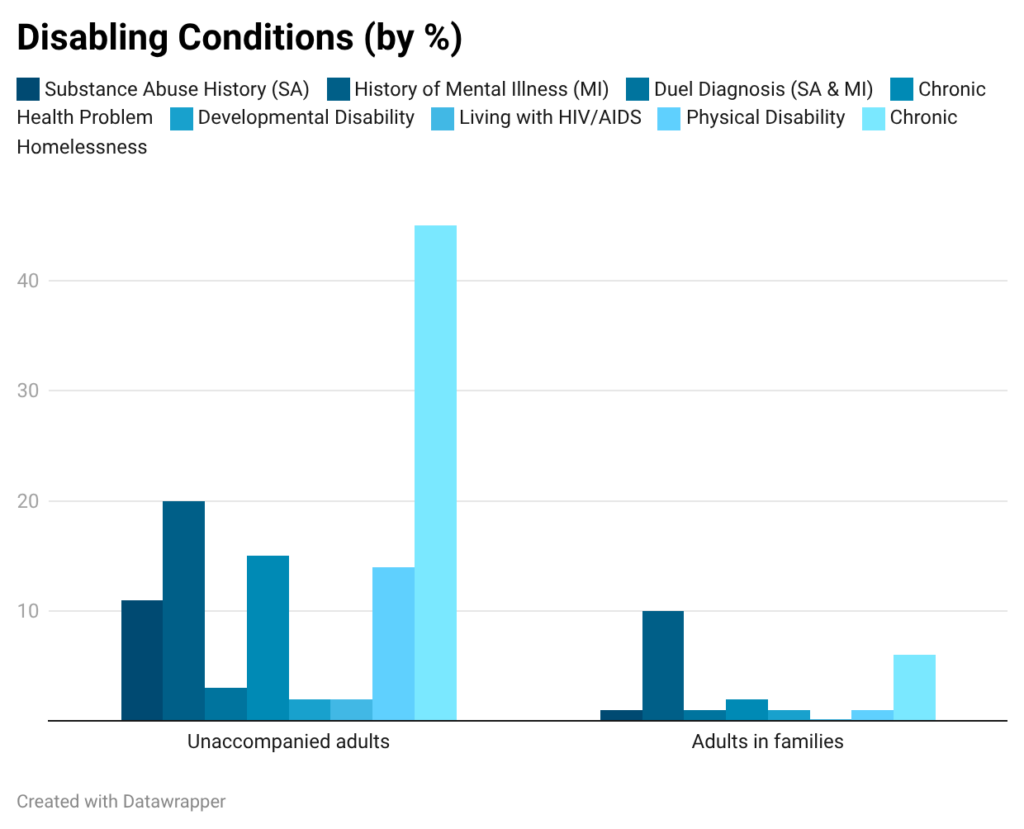
These conditions can make employment a challenge. Still, nearly half (48%) of unaccompanied adults and 81% of families report a form of income, including public assistance or disability. One-quarter of adults in families and 44% of individuals report having a job. And yet, even with that income, the number of families in shelters has increased this year — employment and income are not always enough to prevent homelessness.
Homelessness, like any other life experience, is a diverse and complex situation. But knowing these factors can broaden one’s understanding of the spectrum of homelessness beyond what is seen daily.
This article originally appeared in Street Sense’s July 15, 2026 edition.