The annual Point-in-Time (PIT) Count looked different this year as icy streets and freezing temperatures led the city to cancel part of the usual census of people experiencing homelessness in the District.
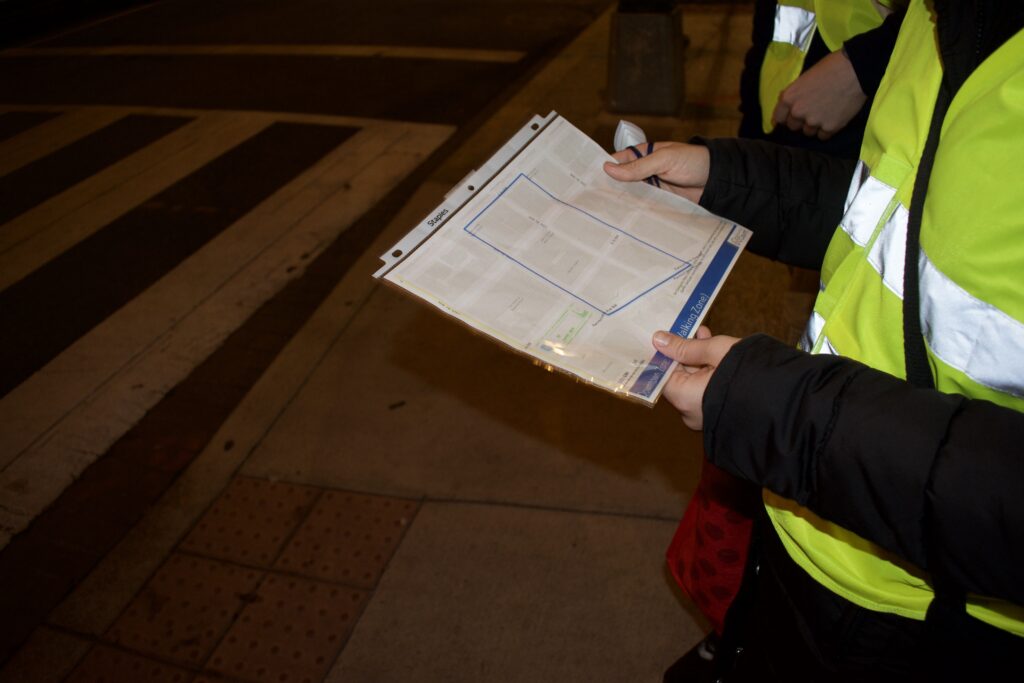
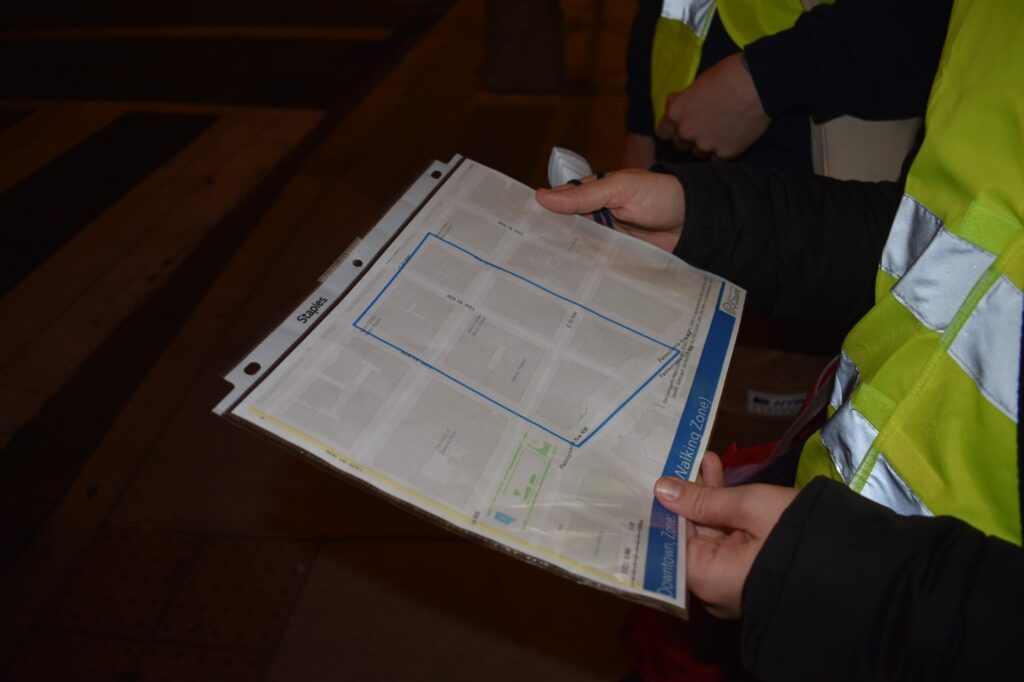
The PIT Count is a nationwide census to tally sheltered and unsheltered residents experiencing homelessness. Volunteers take to the streets annually each January to discover the state of homelessness on a single night, surveying each person they see sleeping outside.
But this year, D.C. did not conduct the outdoor canvassing portion of the PIT. Originally scheduled for Jan. 28, then moved to Feb. 4, the survey was ultimately canceled due to concerns about volunteer safety in freezing weather conditions, according to The Community Partnership for the Prevention of Homelessness, which coordinates the count. The city will instead use alternative collection methods, such as pulling data stored in meal programs, drop-in assessments, and the Homeless Management Information System, to estimate the total number of unsheltered residents. Indoor counts occurred Feb. 4 for people in shelters and temporary housing, who make up the majority of the city’s homeless population.
Tom Fredericksen, chief of policy and programs for The Community Partnership, told Street Sense he expects this year’s process to produce the same level of accuracy as outdoor counts in the past.
“I think it will continue to be the same. Every year we run into this, the colder the weather is,”Fredericksen said. “The weather will have a greater impact on just how many people are outside. I really think it’s more of the cold versus the changing methodology.”
The Metropolitan Washington Council of Governments (COG) has been coordinating regional PIT Counts since 2001. Approaches to this year’s PIT varied throughout the region, according to Hilary Chapman, housing program manager for the Metropolitan Washington Council of Governments. Some surrounding areas, like Montgomery County, Loudoun County, and Prince William County, hosted outdoor canvassing the night of Feb. 4.
Counties with smaller jurisdictions, like Prince George’s and Arlington County, will rely heavily on data collection because these areas attract fewer volunteers, Chapman said.
In 2024, homelessness in D.C. dropped by 9%, after rising for two years, according to a report from the COG. The 2025 PIT Count recorded 5,138 residents experiencing homelessness, 500 fewer than in 2024. Similar to D.C., many Democratic cities experienced a decline in homelessness in 2024 during former President Joe Biden’s last year in office, according to reporting from the New York Times.
But Trump’s Department of Housing and Urban Development has yet to release a national report of the homeless population in 2025, which the agency usually does each December.
This year’s count is the District’s first after the federal takeover last year. In an August 2025 memorandum, President Donald Trump directed Defense Secretary Pete Hegseth to deploy 800 D.C. National Guard troops in the District to combat what he described as “violent crime.” Under this crackdown, Metropolitan Police Department officers under federal control accelerated encampment closures in the District.
Imperfect but essential
While volunteer canvassing occurs at night to ensure a majority of homeless individuals can be accounted for, the PIT Count and its methods still may result in inaccurate reports of homelessness. Nationally, the survey is widely considered to be an undercount, missing people experiencing homelessness for various reasons.
Chapman said the changes to this year’s PIT Count are needed to make the count as accurate as possible, despite it being what she described as “a flawed instrument.”
Nationwide, cities including D.C. use estimations, street headcounts, and outreach coverage to quantify the unsheltered portion of the count. While useful, Chapman said these methods are “not the most accurate or the best way to estimate” the depth of homelessness in the District over one year.
“All of these methods are accepted by and are widely used across the United States. That means it’s ultimately the day,” Chapman said. “It’s difficult to consider these entirely apples- to-apples data sets to the information that we have.”
The homelessness measured in one day is far below that seen across a whole year. In fiscal year 2024, for instance, D.C’s homeless services system recorded serving 8,768 individuals and 1,431 families, far more than the 3,960 individuals and 539 families counted in the 2024 PIT Count. Other local data also suggest the PIT is an undercount. The number of D.C. students who experienced homelessness during the 2024-2025 school year nearly doubled the 5,000 residents tracked in last year’s PIT Count, as recorded by the District’s Office of the State Superintendent of Education. The office reported about 9,000 students experienced some form of homelessness during the school year, two-thirds of whom were aged 5-17 years old.
Many unsheltered adults may also be unaccounted for due to the count occurring in one of the coldest months of the year. Some may be forced to seek temporary shelter as freezing conditions continue, according to Chapman. People staying with friends or family, in hotel rooms, or in other temporary arrangements outside shelters are not counted in the PIT, even though they do not have permanent housing.
What’s next?
D.C. conducted the sheltered census on Feb. 4 and will collect data from outreach groups on unsheltered homelessness. Chapman said collecting data from organizations and outreach workers has been standard in past PIT Counts.
“There’s always follow up every year by all organizations in the region on the PIT Count. Relying on information from partner organizations, drop-in centers, shelters, and outreach workers was always part of the data collection process,” Chapman said.
She likened this year’s change to a similar one when outreach workers tallied residents by tracking the number of unsheltered residents previously staying indoors during a 2016 snowstorm, instead of conducting a volunteer count.
Similarly, Fredericksen said he expects this year’s process to be akin to a less formal census the city conducted last August in response to the federal takeover, which had fewer volunteer teams.
Chapman told Street Sense the replacement of volunteer canvassing with outreach data collection will have little impact on the expected accuracy and timing of the count, but will increase the burden on local outreach workers.
“The elimination of the volunteer portion of the count, unfortunately, just makes a bigger list for D.C. staff, providers, and outreach workers,” Chapman said.
Frederickson said there will be no change in pace for this year’s count, since further interruptions are not expected. The D.C. Department of Human Services said it expects results from this year’s PIT Count to be released this spring, as per usual.
This article originally appeared in Street Sense’s Feb. 11, 2026 edition.