How much notice should you receive that you may have to move out of an apartment? Three months, one month, fifteen days? And what about when the timeline changes from one week to the next, from the first of the month, to an indefinite date, back to the first again?
If this sounds confusing, even anxiety-inducing, add a 3-year-old into the mix, or three kids you’re the head of household for. Maybe there’s also mold on the walls, rodents in the kitchen, and uncertainty over whether you’ll get an extension for the government subsidy that’s helping pay your rent, knowing that if you don’t receive it, it’s likely back to a shelter with a new eviction on your record.
This is the reality for many leaving D.C.’s Rapid Rehousing (RRH) program, a short-term subsidy that pays a portion of a family’s or individual’s rent for a market-rate apartment for 12 months while the participant works on education, job training, or finding employment. While the program brings families out of homelessness, it can also perpetuate the cycle of going from a shelter to temporary housing and then back into the homeless services system. Most people exit the program having made little to no progress toward being able to afford market-rate rent; according to a D.C. auditor report, 79% of families exit RRH without increasing their income.
The program currently supports 654 families and 111 individuals, according to the city, but swelled to support more than 2,000 families due to the pandemic, since the start of the pandemic, when the city enacted a moratorium on evictions, which protected any families in RRH who were unable to take on the full rent for their apartments. In the years following, hundreds of families have exited, and many have been in a push and pull of rental assistance, going through multiple notices of terminationas the city tries to right-size the program.
Street Sense spoke to two participants about their experiences. Dionje Lebby, the mother of a 3-year-old, entered RRH in November of 2024 and said she faced confusion, and, ultimately, abandonment by her case workers. Tamara Davis, a mother of three, also joined RRH in October of 2024 and said she dealt with unsafe housing conditions and ineffective case management services.
In terms of income, neither made the financial gains RRH aims for. Lebby said she hasn’t been able to work because she is unable to secure childcare; since she doesn’t have her daughter’s birth certificate, no reputable daycare would care for her child. Although it would take just a few hours at an office in North Carolina, where her daughter was born, to get the birth certificate, having it mailed and ordered online can take between 110 and 115 days due to REAL ID requirements, and Lebby said she’s still waiting.
Davis, meanwhile, was employed with the Metro Transit Police when she began RRH, until she broke her ankle and couldn’t continue working. She’s currently rehabbing her ankle, she said, but tackling the housing issues along with health challenges has been difficult.
At the end of their time in the program, both families were near returning to homelessness.
Inside RHH
To even enter the RRH program, families experiencing homelessness face a catch-22: asking for help and telling a caseworker the details of their situation, and the challenges in remaining housed, could open them up to repercussions from Child Protective Services (CPS). Though the city does not remove children from families just because they are homeless, inadequate housing is one factor CPS can consider.
Lebby encountered this when she tried to get help at a family resource center to enter a shelter. “I was telling them that sometimes I wasn’t even able to sleep inside of a home with my child. And then the lady told me, ‘Do you know I can call CPS on you for reporting this?’” Lebby said. “So I got discouraged. Because I’m just like, I’m coming to you guys for help. It’s not like I’m neglecting my child. My child is with me. I’m telling you guys that I’m experiencing homelessness.”
After Lebby entered RRH, her issues stemmed from her case managers. Eventually, she requested a different person to assist her, but as she moved up the chain of command at the service provider, she said she received fewer and fewer answers. Once she was finally placed with a new case manager, she said they were worse than the first one and made her feel like “scum of the earth” for the challenges in her life. She said it felt like retaliation for complaining, and her worries fell on deaf ears, adding, “Who gets held accountable for these things?”
“I’m asking them, what am I to do from the beginning? I’m asking them, Is there any more resources that you guys have for me outside of Rapid Rehousing?” Lebby said. “Because what do I do once Rapid is over? And I’m telling you guys these problems.”
When Davis got into RRH, meanwhile, her immediate issue was the quality of her rental unit, which failed the first housing inspection. She eventually moved in, but the housing issues began piling up, including mold in the home, no heat in the winter or AC in the summer, and insect and rodent infestation.Situations like hers recently led D.C. Attorney General Brian Schwalb to sue a notorious landlord for subjecting low income residents and voucher holders to these kinds of hazardous housing conditions.
Although Lebby and Davis had very different issues during their time in RRH, a common thread was the lack of adequate resources they received when they were in need, including poor communication with their caseworkers. In Davis’ case, when she made her case manager aware of the building quality issues, she received responses, but said that rarely was any further action taken.
“My case manager came to my house, out of the whole time I was there, the 12 or 13 months I was there, three times, and every time she came, she wanted me to sign paper,” Davis said. “I was not signing nothing. You ain’t do nothing for me, so I’m not signing no paperwork.”
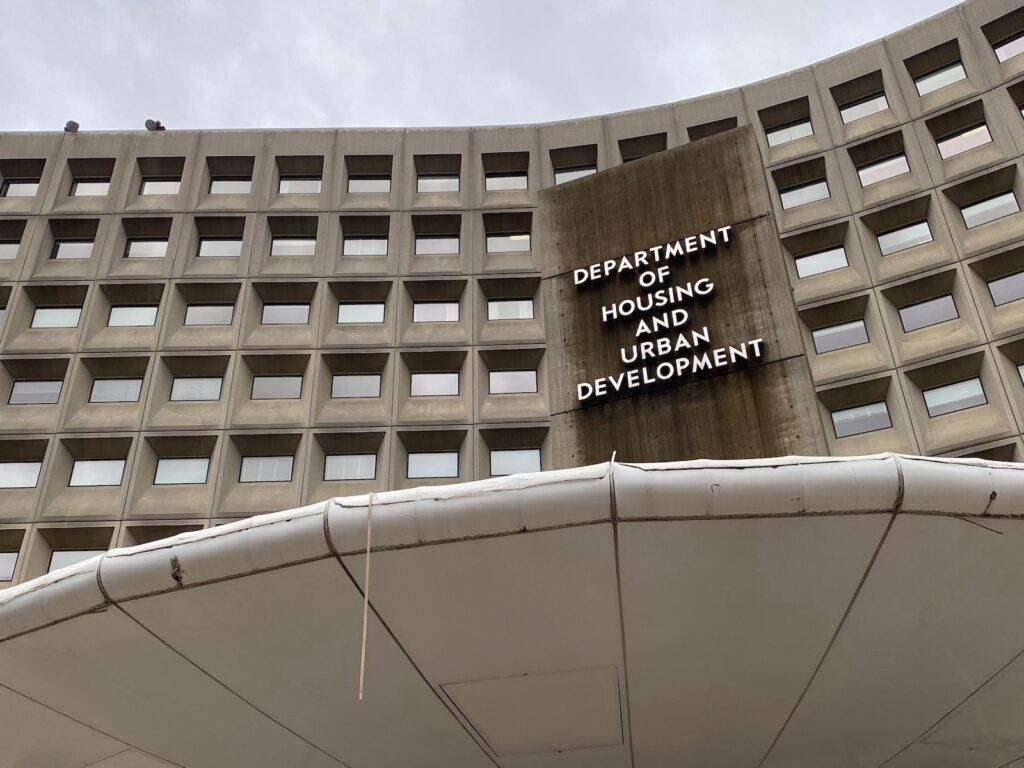
The U.S. Department of Housing and Urban Development rules in federal RRH programs require a social worker to meet with participants at least once a month. D.C.’s Department of Human Services (DHS), which oversees the program locally, requires clients and case managers to meet at least once a month in the city’s Permanent Supportive Housing (PSH) program, DHS officials said during a round a Nov. 6 roundtable discussion. In RRH, case managers must have at least four contacts with each participant every month, with two in-person meetings each month (one must be in the home) and two phone calls, emails, or texts, according to a statement from DHS.
Eventually, Davis was able to navigate her unlivable housing conditions with the help of a lawyer through the D.C. Children’s Law Center (CLC). As Davis was exiting the program, her lawyer also advocated for her to receive a Service Prioritization Decision Assistance Tool (SPDAT) test. Widely used by outreach workers to gather information about people experiencing homelessness and determine who needs the most urgent assistance, the SPDAT test is given every 90 days or if a life event that may impact the household’s needs occurs, according to a statement from DHS. The test is not required to be given to a participant at the exit of RRH, but it must be completed within 90 days of program exit. Because Davis’s CLC lawyer pushed for the test when she exited RRH, Davis found she was eligible for a PSH voucher, helping her afford housing long-term. If there was no CLC, however, she thinks it would have been a different ending for her.
“I would be homeless,” Davis said. “Even at the end, I didn’t know where I was going. The only thing I can do is pray and just kept on praying. That’s all I can do, because I knew I was gonna be homeless again with my kid.”
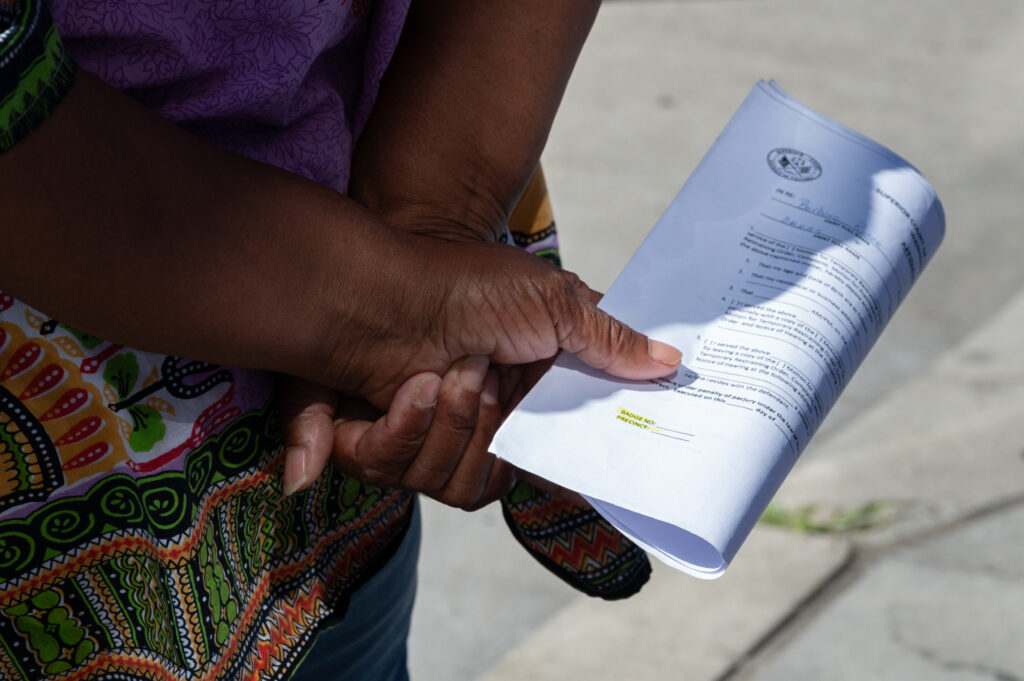
Lebby, on the other hand, was not so fortunate. By the end of her time in RRH, she had been told three different exit dates within the span of a month. The first date was Nov. 1, but when the government shut down in October, she was told her exit was on hold until further notice. Eight days later, she was told her exit would proceed as originally scheduled, on Nov. 1. An exit from the RRH program doesn’t mean someone has to move out of where they are living, just that the city is no longer paying a portion of their rent. But if participants can’t afford market- rate rent, the exit date is effectively a move-out date unless they choose to stay and have rent accrue until the landlord files for eviction.
Lebby’s not sure if it was because of the shutdown or the short time between the move-out and termination notice, but she was eventually informed by her caseworker that her November and December would be covered, but she would no longer receive case management services. According to Lebby, her case manager advised that once her subsidy ended in January, she should “stay in her unit if they don’t have anywhere to go, until they get an eviction notice, and then take the eviction notice to Virginia Williams.”
“Why would I stay in a unit until eviction people come to my home?” Lebby said.
In December, while trying to navigate her exit from RRH, Lebby was connected with Jewel Stroman, a formerly homeless advocate for people experiencing homelessness. Stroman joined with the constituent services of D.C. At-large Council member Robert White, and together they advocated for Lebby to be granted an extension until she could obtain a birth certificate for her daughter and begin work. The emails eventually made it to DHS Director Rachel Pierre, who, through the FY25 and FY26 Budget Support Acts, has sole discretion over RRH program extensions.
In the emails, obtained by Street Sense, Pierre responded that “due to a lack of available funding for extensions, the Department of Human Services (DHS) is unable to provide program extensions for families enrolled in the Family Re-Housing and Stabilization Program (FRSP) who have reached or exceeded 12 months in the program.”
D.C. has decreased funds for some programs like RRH, as Mayor Muriel Bowser has said these social service programs grew too large during the pandemic and need to be “right-sized.” In the most recent budget, city leaders cut nearly $17 million from RRH for families.
This left Lebby with the options her case manager had given her the last time they spoke.
“Once the eviction people come, and I go to Virginia Williams, the only thing they may do is put me in a shelter again, and then I’m just going to be sitting in the shelter for further notice because they don’t have any more resources, or the resources are not being funded anymore. That’s all she left me with, and that’s all she said,” Lebby said.
This article originally appeared in Street Sense’s Feb. 25, 2026 edition. It was updated to include comment from DHS received after print publication.