Benita has run out of options. In July 2023, she entered the Rapid Rehousing Program (RRH) to help her and her two children move out of a toxic environment in transitional housing. Two years later, as her subsidy ends, Benita is facing eviction, which could make finding stable housing even harder than before.
According to a new D.C. auditors’ brief on the Family Rehousing Stabilization Program (FRSP), D.C.’s name for RRH for families, Benita is far from the only person who has left the program unable to afford rent. While many families exit homelessness with the program’s help, the brief says only a fifth of participants increase their incomes, making it difficult to afford housing long-term.
RRH was created during a nationwide push for rapid exit programs for people experiencing homelessness amid the 2008 recession. It is a short-term subsidy program designed to help people experiencing homelessness increase their income, overcome temporary housing struggles, and afford safe and reliable housing. Participants are required to pay 30% of their monthly income towards rent and can use their subsidy at most apartments in the city. During the program, case managers help participants apply for benefits, further their education, and find new jobs.
Although Mayor Muriel Bowser’s administration has framed FRSP as key in combating family homelessness, lawmakers and advocates have said for years the program doesn’t ensure families can live in their apartments long-term. Now, the city is signaling a shift away from the program, removing some families and reducing the budget, partially due to feedback the program doesn’t work for everyone.
When families enter FRSP, the program can help them find an apartment. But to continue to afford their rent after the program ends, most households need a significant increase in income.
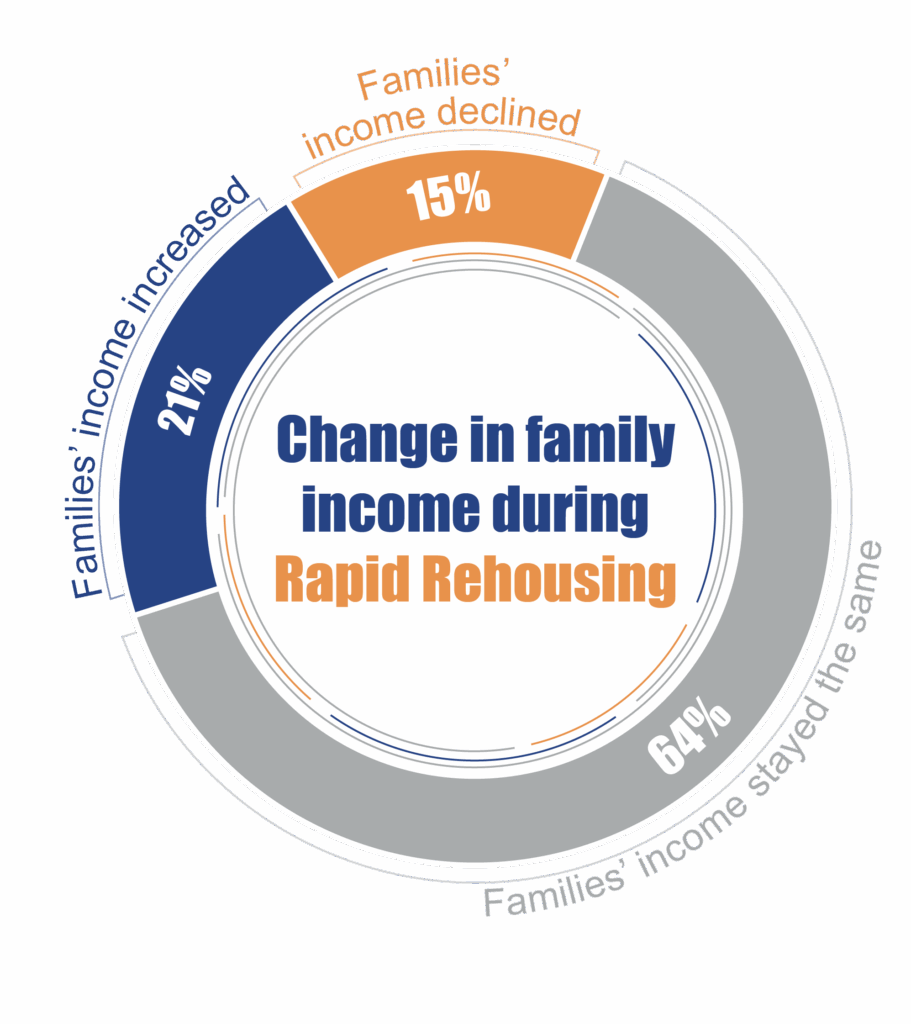
However, between fiscal years 2022 and 2024, income remained the same for 64% of families while they were in the program, according to the auditor’s report. Another 15% of families saw their income decline. Only 21% of families saw their income increase, far below the agency’s goal of 60%. Just 2% of families raised their income enough to no longer be considered ‘very low income.’ The brief, released June 18, included data from over 3,000 families.
For families raising their income, the change isn’t always significant. In FY2024, the average family’s monthly income rose only $25.65, according to the brief, though an attached response from DHS said the average increase was closer to $100. Either way, income rose less than in past years, at $124.72 in FY2023 and $132.45 in FY2022.
“Everybody knows people can’t afford rent at the end of the time period,” said Amber Harding, the executive director at the Washington Legal Clinic for the Homeless, which works with families in FRSP.
Benita, whom Street Sense is identifying by only her first name due to her concerns about unstable housing, knows this firsthand. After her initial 12-month subsidy expired, she applied for an extension, and then an appeal. This enabled her to stay in the program until this spring, but now the subsidy has ended, and she said she still can’t afford rent.
“I was just let go of the program and basically told to figure it out,” Benita said. “And there’s not much to figure out when rent is $2,800 and you only have a certain amount of time to work if you have children.”
She currently works as an esthetician, but her job does not pay enough to cover the rising rent costs in D.C., she said. Redfin reported last year that, out of the 50 most populous metropolitan areas in the U.S., D.C. rent prices rose the most.
For Dominique Anthony, RRH lasting only one year is a significant obstacle. Anthony was enrolled in the RRH program for singles, which was not included in the auditor’s report. Her one year of assistance ended in March, which she said hasn’t been enough time.
Anthony works part-time at HIPS and is a student at the Academy of Hope, studying project management in a two-year long program. RRH has helped her get her own place while she studies, paying for a portion of her rent and sometimes utilities and her phone bill. According to Harding, many people use the program to get their GED or enroll in a training program to help them increase their earning potential. But these programs can last longer than the subsidy.
“I feel that they should give people at least two years in this program so they could try to save more money and better themselves,” Anthony said.
Benita shared this sentiment. She said it was positive for her to have stable housing and access to case management services for a while, but it just wasn’t long enough.
“A year pretty much goes so fast that it’s not enough time to fix generations of poverty,” she said. “From probably not having a job, or coming from domestic violence, or coming from a $0 income, to be able to afford apartments to live in for $3,000 a month is not realistic.”
The city doesn’t know how long people remain housed after leaving the program, but some families do become homeless again, according to the report. Over half the families leaving the program earned less than 10% of the area’s Median Family Income (MFI), or $15,470 for a family of four. Only 387 families, or 12%, had annual incomes between 20% and 30% of MFI, the income bracket that puts them just on the cusp of being able to afford housing with the lowest rent in the city. But the Department of Housing and Urban Development still considers anything below 30% MFI to be an “extremely low income,” a category fewer than 10% of families escaped.
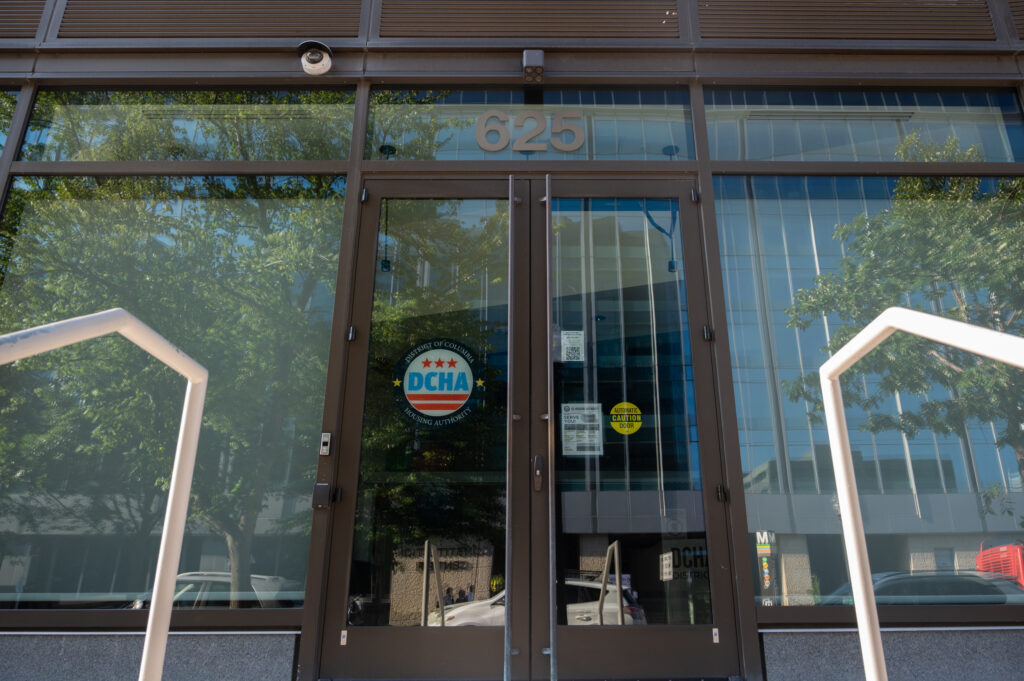
This year, D.C. is beginning to roll back its reliance on RRH, partially due to concerns it doesn’t help families afford housing long-term. In July, Rachel Pierre, interim director of D.C.’s Department of Human Services, told the Washington Post the city hopes to diversify options for families because it received feedback the program was not working for everyone. RRH will now be targeted to people who have experienced a temporary crisis, Pierre said, instead of being offered in most cases.
On July 28, the D.C. Council approved a fiscal year 2026 budget with a 27.8% cut of $16.8 million to FRSP funding, reflecting this policy shift. This follows a $34.6 million decrease in funding from FY 2024 to 2025. The city is instead giving more funding to other programs that serve families experiencing homelessness, such as D.C. Flex.
The reductions mean fewer families will enter RRH, and some who have relied on it for years, like Benita, will no longer be able to get extensions to give them more time to get on their feet.
“For my case, I was removed off of Rapid Rehousing due to lack of funding. So because there’s no more funding, I was not able to stay in the program, and I was not offered any permanent housing options either,” Benita said.
Although RRH has long faced criticism, some advocates and participants are concerned the cuts could make things worse, as people lose access to support.
“This budget increases homelessness because it allows for terminating people from their housing. It terminates more people from their housing than it serves with housing,” Harding said.
Benita now doesn’t know what she is going to do. “The fact that I need it because I don’t have any options and it’s not available is what breaks me, because this is not something that I want to take advantage of or anything like that, but it’s something that’s needed for me and my children to survive,” she said.
Editor’s Note: Dominique Anthony is also a Street Sense artist and vendor.
This article originally appeared in Street Sense’s July 30, 2025 edition.