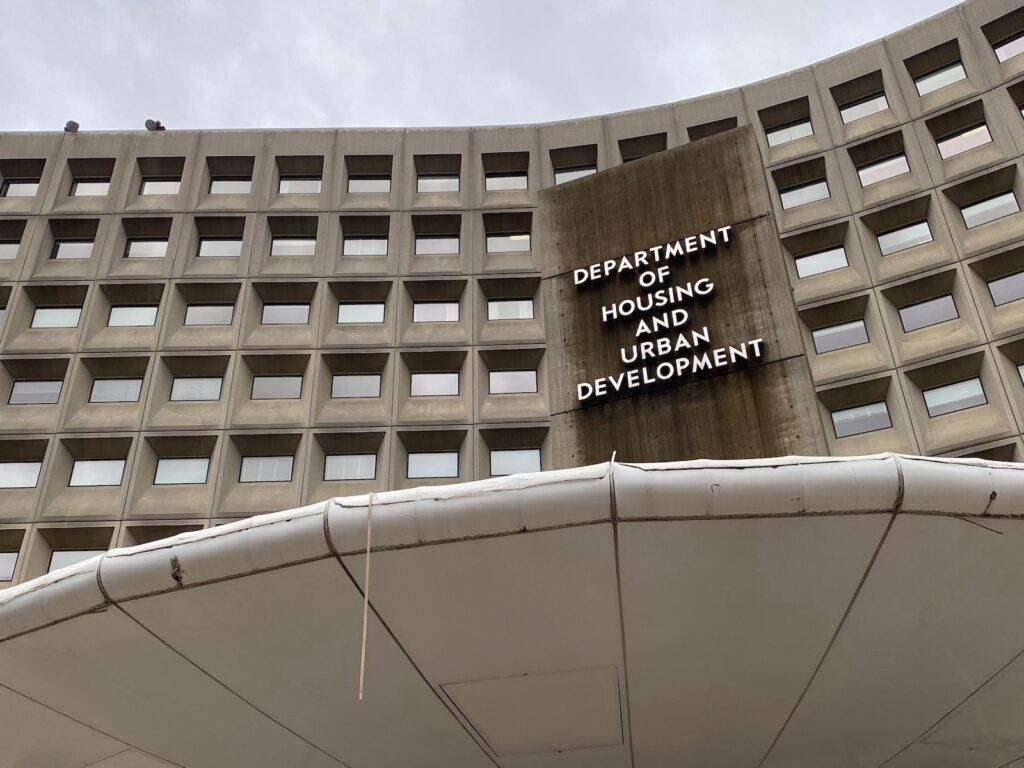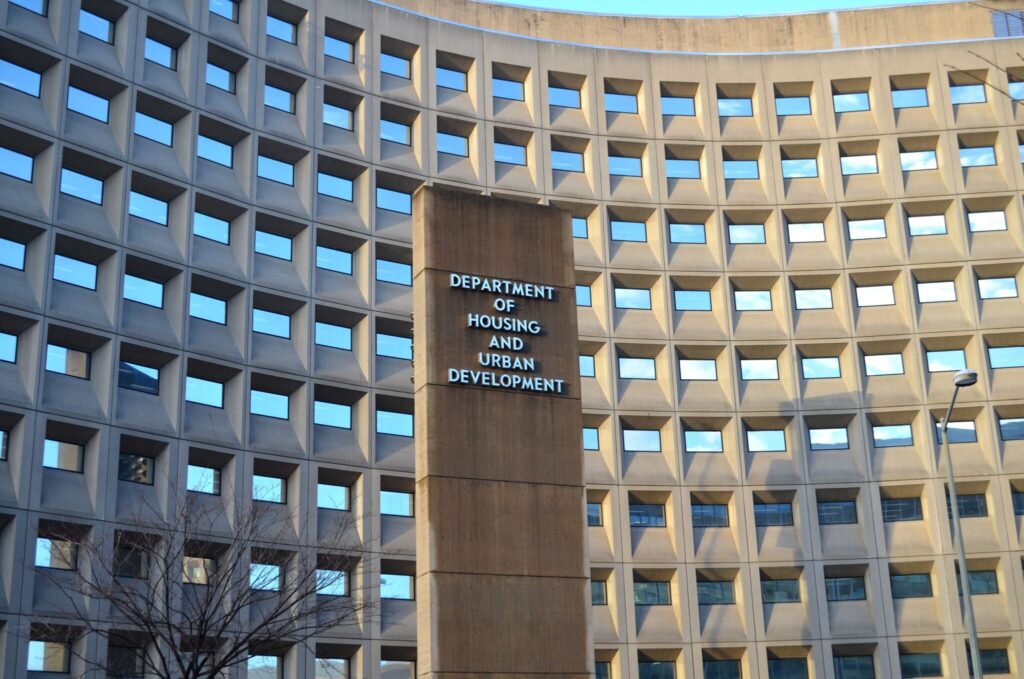
An ongoing lawsuit over the future of federal funding to end homelessness is leaving D.C.-area organizations with uncertainty as the year gets underway and some grants begin to expire.
Late last year, the U.S. Department of Housing and Urban Development (HUD) announced an overhaul of the federal program allocating funds to organizations providing housing to people experiencing homelessness. The policy would have limited the department’s awards to permanent housing programs and stripped funding from historically bipartisan Housing First programs, redirecting money to temporary housing and treatment programs, and potentially leaving thousands of Americans without support.
In December, a federal judge temporarily blocked the changes after a coalition of state attorneys general and a separate group of nonprofit organizations and local governments each filed lawsuits against HUD, arguing the new funding guidelines were “unlawful and unreasonable.”
The judge’s temporary order requires HUD to return to the status quo, renewing most programs funded in the last year, though not yet actually distributing the funding. If HUD prevails in the lawsuit, however, the department could return to something similar to its November plan, potentially destabilizing the local programs that rely on the funding.
The debate is over the $3.9 billion awarded to community organizations providing housing under the Continuum of Care (CoC) program, which pays for the housing of hundreds of thousands of formerly homeless people across the country. In fiscal year 2024, HUD awarded more than $77 million of this funding to programs in the DMV, according to HUD figures and local officials.
Since President Donald Trump took office in January 2025, he and his administration have sought to criminalize homelessness and end federal support for Housing First programs, which provide individuals with housing without imposing requirements such as sobriety or treatment. Most experts believe Housing First is the best approach to help people exit homelessness, according to the Urban Institute in 2024.
With federal funding for this year still up in the air, some programs in the DMV are scrambling to find the money to continue operations and provide housing services through the first few months of 2026. Advocacy organizations have warned that nationally, large changes to the CoC program could put more than 170,000 people at risk of losing their housing again.
“When that funding is delayed or disrupted, it creates immediate operational risk for providers and immediate stability risk for people who depend on those housing services,” Christine Hong, chief of services to end and prevent homelessness in Montgomery County, said at a Jan. 14 meeting of the Metropolitan Washington Council of Governments(MWCOG), during which the body discussed the region’s HUD funding.
What are the details of HUD’s proposed changes?
HUD announced Nov. 13 that it would cancel its existing funding opportunity, which was supposed to last through this year, and implement a new funding competition, with new rules.
HUD’s proposed plan would have significantly stripped funding from two common housing programs, Permanent Supportive Housing and Rapid Rehousing, capping these services at 30% of total funding. This change would cut federal funding for long-term housing programs by about two-thirds, shifting money to “short-term, punitive models,” according to a December fact sheet by the Public Rights Project.
A state-level analysis by the National Alliance to End Homelessness (NAEH) found that under the proposal, $22 million would be cut or redirected from permanent housing in D.C. alone, where almost 1,500 people rely on these programs.
The policy would also have drastically reduced the percentage of a locality’s dedicated “Tier 1” funding from 90% to 30%. Jurisdictions can usually rely on this funding, which is generally protected year-to-year, to maintain the continuity of CoC-funded programs. Under HUD’s November proposal, most funding would have instead come through competitive, merit-based “Tier 2” programs, making it harder to guarantee stability. According to the NAEH, prioritizing competitive funding “could lead to major funding losses.”
The proposed guidelines would also have given HUD the ability to deny funding for programs that do not comply with the Trump administration’s agenda, including those that acknowledge the existence of transgender and nonbinary individuals, Politico reported.
Where does the case stand?
On Nov. 25, a coalition of state attorneys general and governors, led by New York Attorney General Letitia James, filed a lawsuit against the HUD policy change. On Dec. 1, the NAEH, the National Low Income Housing Coalition, and co-plaintiffs filed a similar lawsuit against HUD in the same court. Judge Mary McElroy, of the U.S. District Court of Rhode Island, is considering these cases together.
On Dec. 19, McElroy granted a preliminary injunction, temporarily preventing HUD from implementing its proposed changes while the case continues.
The court found HUD’s actions were likely unlawful and harmful to the plaintiffs. “Continuity of housing and stability for vulnerable populations is clearly in the public interest,” McElroy said in issuing the injunction.
Under the injunction, HUD must reinstate, for now, the original funding plan, which would carry over many programs funded last year, and begin processing eligible renewals. On Jan. 8, HUD announced it was opening applications for this funding from Jan. 9 to Feb. 9. In the announcement, HUD confirmed projects funded in fiscal year 2024 may not have to apply for renewal. According to the announcement, HUD will decide these awards by March.
However, funding will not actually be given to localities until the court issues a final ruling on the lawsuit. Even then, if McElroy were to rule against HUD, the department could potentially appeal and prolong delays. If the court rules in HUD’s favor, it will likely move forward with a proposal it released in late December that is similar to its November plan, but is also paused due to the ongoing litigation.
What does this mean for programs in the DMV?
Providers across the D.C. area offer programs that serve thousands of residents every day. With grants expiring and no official ruling yet from the lawsuit, programs face uncertainty about having the funding to continue services.
In fiscal year 2024, Washington, D.C. and surrounding counties received $77.4 million in CoC funding, Hong, from homeless services in Montgomery County, said in the MWCOG’s January meeting. Nationally, an estimated one-third of CoC funding is associated with grants expiring between January and June, Politico reported.
Local programs are currently operating under “severe uncertainty on timing and steps for continued funding,” Hong said at the meeting. “The problem isn’t whether federal funding is available for CoCs. The problem is whether those dollars are obligated in time to match local grant terms that expire on fixed dates. Even a short delay creates a real risk of a funding gap.”
In Montgomery County alone, CoC grants fund 12 permanent housing programs that provide housing to approximately 800 people. Funding for one of them expired Jan. 1, Hong said.
One program affected was Montgomery County Coalition for the Homeless’s(MCCH) Home First Permanent Supportive Program, whose HUD grant expired in January, according to Montgomery County Media. St. John’s of Norwood Episcopal Church in Chevy Chase donated its Christmas collection money, approximately $15,000, to the program; the Rev. Anne Derse, the church’s deacon and minister for community engagement, told reporters the money would cover the January rent of 11 households.
According to Hong, funding for two additional programs will expire in the first three months of 2026, another six programs will expire on July 1, and three more are set to expire later on in the calendar year. Montgomery County has found some grant funding to help cover these lapses for the first six months, Hong said, though in D.C., officials have suggested they would not be able to cover gaps.
Gaps in funding could mean contract expirations, delayed payments, emergency financial decisions, staff reductions, service interruptions, decreases in move-ins, decreases in availability of housing, longer shelter stays, fewer available beds, and an increase in unsheltered homelessness, Hong said.
At the Jan. 15 Arlington County Housing Commission meeting, Maureen Coffey, vice-chair of the county board, briefly discussed the local impact of the funding drama. “The not knowing is in and of itself a budget impact…We’re not going to not find a way to cover it at the end of the day,” she said. She suggested the board could prepare to keep funding in reserves, though it’s not clear how much.
Following the Jan. 14 meeting, the MWCOG board letters to HUD and to Congress, urging them to prevent service interruptions and to maintain continuity while the court case is ongoing.
Receiving this funding “means everything” for individuals and families who receive housing from CoC programs, Hong said at the meeting. If funding is delayed, the risk of people returning to homelessness is real.
“Without stable funding renewals, it becomes much harder to sustain housing, maintain services, and make the improvements we know are needed,” Hong said.
This article originally appeared in Street Sense’s Jan. 28, 2026 edition.