As D.C. enters its coldest months, thousands of homeless residents prepare for another winter without housing.
City leaders didn’t fund new individual housing vouchers in this year’s budget, stripping away the hope of housing support for single homeless residents. For the hundreds of people who have been matched to a voucher but not yet moved in, processing times still average over 200 days, which forces some to give up the housing search altogether, exacerbating chronic homelessness across the District.
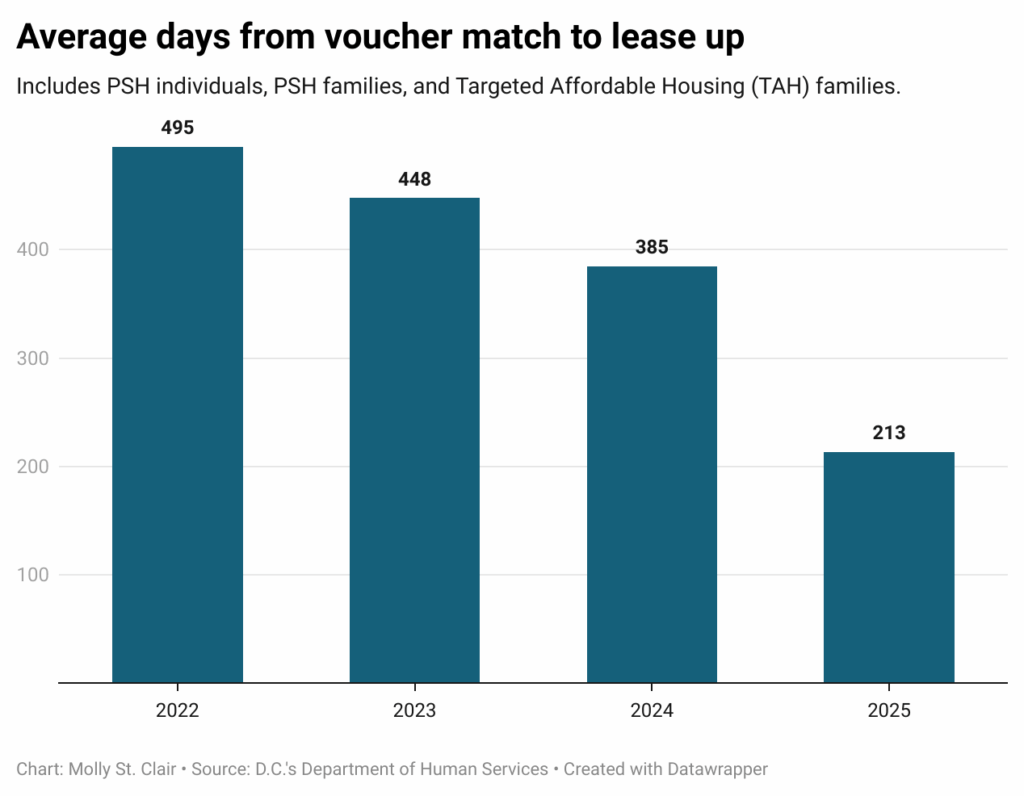
In July, the D.C. Council approved the city’s fiscal year 2026 budget, which, in its final form, appropriated no new funding for Individual Permanent Supportive Housing (PSH) vouchers — a long-term housing subsidy program for those experiencing chronic homelessness. This was the fourth consecutive year the city reduced new voucher funding for single residents experiencing homelessness, and the first in many years with no new vouchers for homeless individuals. Meanwhile, those who received a voucher funded in previous years face improving, but still lengthy, wait times to reach the final stage of moving into a unit, according to residents and housing advocates.
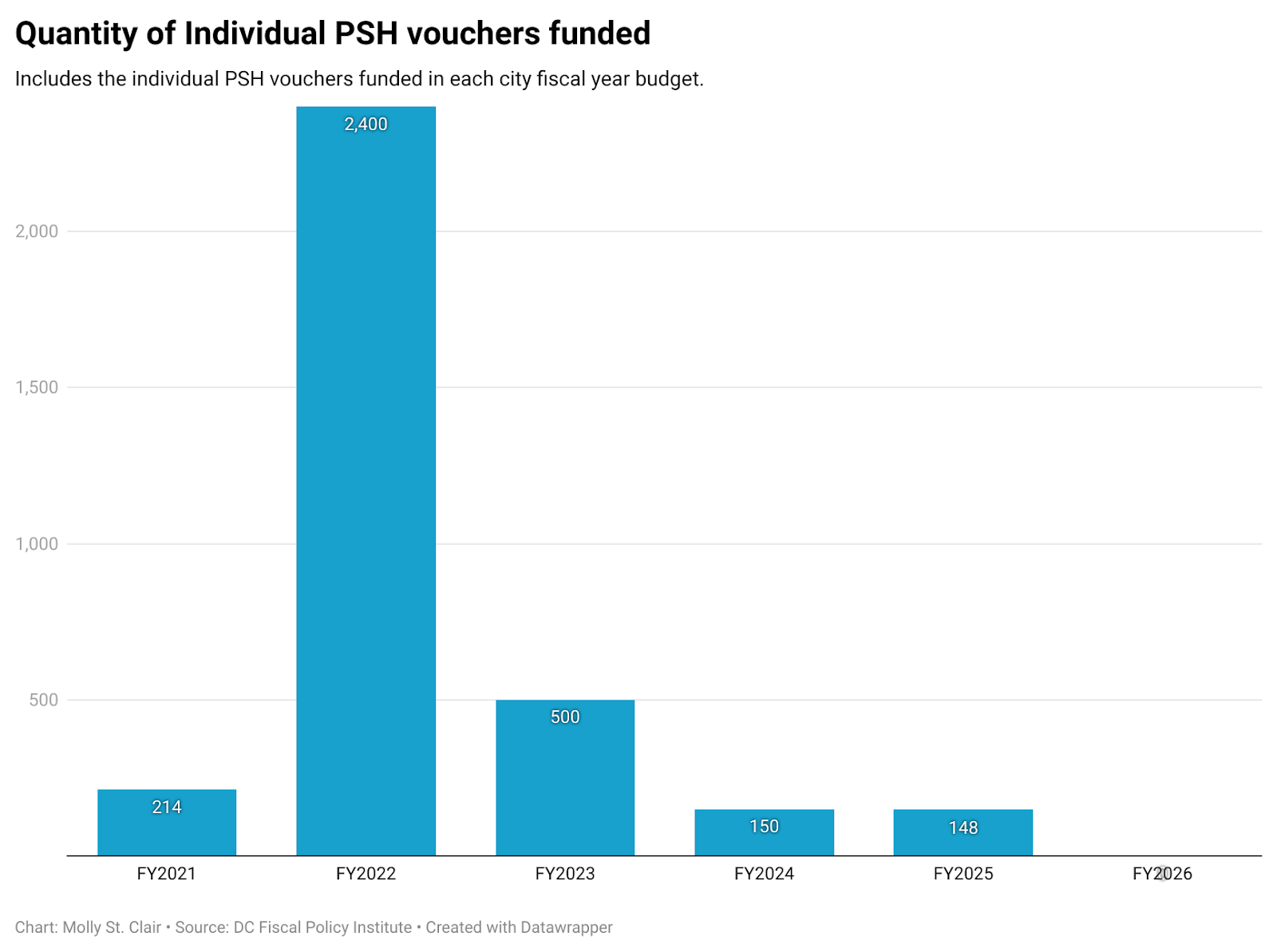
D.C. funded an influx of housing vouchers for homeless individuals in 2022 and 2023, when the budget created an estimated 2,400 and 500 new vouchers, respectively. But the past few years have seen a sharp decline, as District officials funded just 148 new vouchers for individuals in the fiscal year 2025 budget.
The reduction in voucher availability coincides with frequent encampment clearings of sites with single residents, according to Street Sense’s observations at recent clearings across the city.
Over the past year, District officials have taken steps to shelter individual homeless residents through opening two dormitory-style shelter programs at The Aston and E Street. The non-congregate facilities are meant to act as a bridge toward a more permanent option. But some advocates say they lose their intended purpose if there are no vouchers available for residents to leave the shelter and access permanent housing.
“It’s a bridge to nowhere without any vouchers,” said Kate Coventry, deputy director of legislative strategy at the D.C. Fiscal Policy Institute. “What’s going to happen is it’s going to fill up, and there’s going to be no way to exit, so all it means is people will be homeless for longer and likely become more and more vulnerable.”
Even for those who do exit, the process isn’t easy. In fiscal year 2024, it took an average of 294 days for people with vouchers to move into housing, according to data from the Department of Human Services (DHS), which administers the program along with the D.C. Housing Authority (DCHA). This is still much faster than the average wait of 495 days in fiscal year 2022, an improvement the city credits to having more case managers to work with voucher applicants.
On Nov. 13, the D.C. Council’s Committee on Human Services held a roundtable discussion where advocates from affordable housing providers, homeless services, and voucher recipients convened to suggest ways to speed up the voucher process.
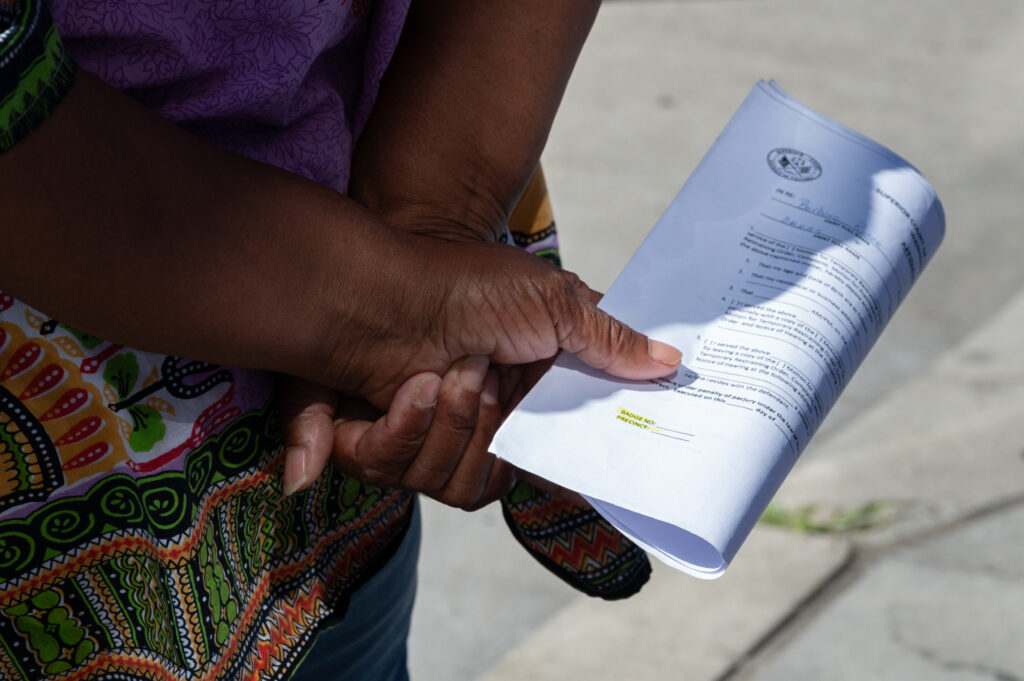
Community members highlighted issues with one step of the process, which requires residents using a voucher to submit paperwork detailing information about the apartment they’d like to rent. DCHA’s Request for Tenancy Approval (RFTA) form determines a unit’s eligibility under rent reasonableness standards — a process DCHA introduced in 2023 to assess whether the unit’s rent is fair compared to the larger rental market. The new RFTA process was part of DCHA’s response to the 2022 HUD report, which criticized the agency for being too lenient and overpaying landlords.
But some affordable housing advocates and residents say the process has only increased confusion about what information voucher holders need to submit and which agency residents should communicate with throughout the process.
Elizabeth Butterworth, a staff attorney at the Legal Counsel for the Elderly, said her work to aid elderly voucher recipients in securing housing with their subsidy is significantly delayed due to a lack of communication from DCHA about the status of RFTA packets.
“The responses are neither timely nor transparent, and we are left guessing what needs to happen to complete the RFTA, which often results in egregiously delayed or missed housing opportunities,” Butterworth testified.
DCHA mainly communicates with landlords, Butterworth said, leaving residents in the dark about the status of approval for their chosen unit. She said one of her clients, Ms. F, has submitted three RFTA packets to DCHA, all of which have been rejected without a clear reason or path to remediation from the agency.
“Ms. F is on top of her paperwork and communicates with her landlord. If from the beginning DCHA had given us access to the same information the landlord had, I have no doubt she would be using her voucher today,” Butterworth said.
Brittany Gibbs, a PSH housing case manager in D.C., has worked in the field since 2019 and said she believes the level of customer service and accountability from DCHA has worsened. Gibbs also blames the lack of clarity surrounding RFTA requirements and additional rent reasonableness measures for delays.
“With most cases in DCHA, you got to go there to pull teeth, or you got to go there with an attitude, or you have to go there angry to get something done,” Gibbs said. “When a client escalates or the case manager goes up there and tries to escalate, it gets done. But it shouldn’t have to be like that, right?”
Government witnesses from DCHA and DHS said increased collaboration and communication between the agencies could aid in speeding up response times. DCHA Executive Director Keith Pettigrew said the agency is trying to implement an “open facing” online dashboard for residents to check the status of their paperwork by next summer.
“That will help a lot going forward, because we do want to be forward-facing,” Pettigrew said. “We don’t have anything to hide.”
Pettigrew said DCHA is actively working to update its online systems, which he said are often set up as internal federal software, so they can function as a usable resident interface. He added this process requires negotiation with the software developers, which is time-consuming.
Following the hearing, D.C. Councilmember Robert White issued a release stating the council will release legislation aiming to improve long voucher processing times, but did not specify what issues the bill will address or when it will appear in front of the council. White’s release also noted some of the administrative issues in the voucher system cannot be resolved with legislation.
“Some of the most persistent gaps: slow rollout of digital recordkeeping tools, uneven staff knowledge of program rules, and unclear lines of responsibility are best solved through administrative leadership and operational reforms,” the release read.
This article originally appeared in Street Sense’s Dec. 3, 2025 edition.