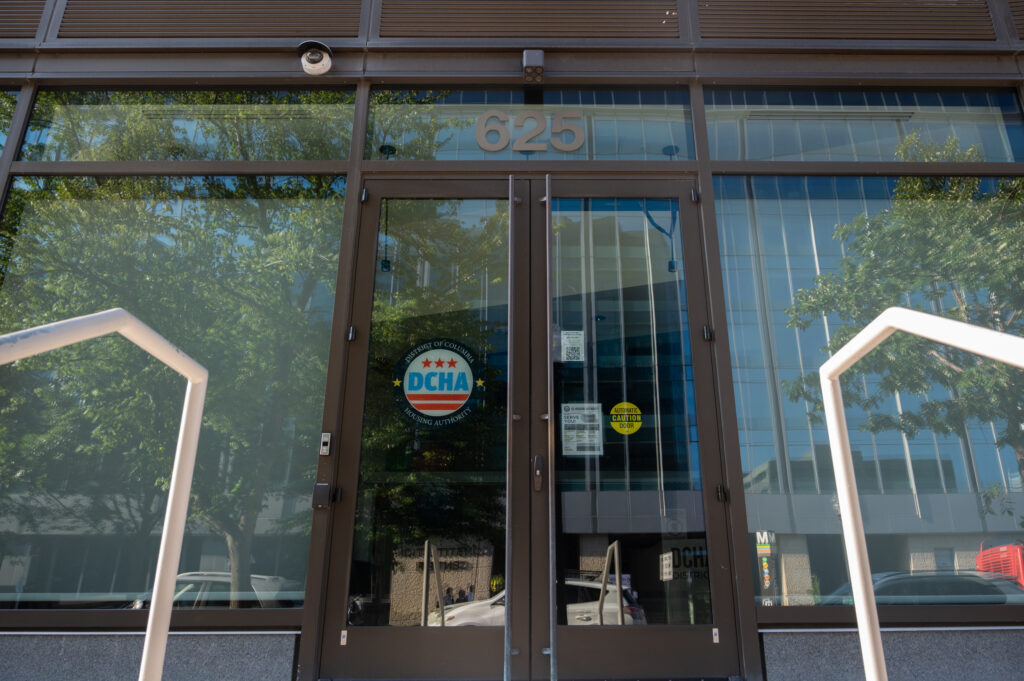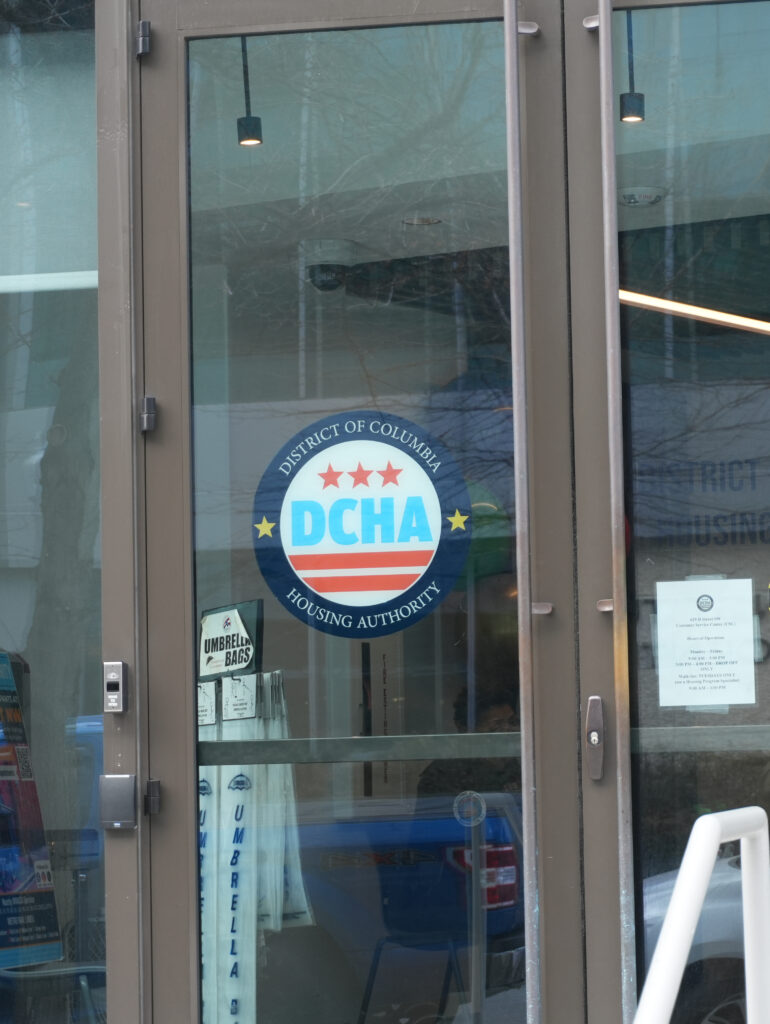
For several years, the D.C. Housing Authority (DCHA) has been under fire for violations of federal policy, slow auditing, and a lack of communication with tenants and landlords. The agency, which runs both public housing and the voucher programs that supply thousands of low-income D.C. residents with housing, has been working to resolve these concerns, but many residents say they remain unsatisfied with the agency.
On Feb. 25, the D.C. Council hosted an 11-hour annual oversight hearing on DCHA. The event gave the agency the opportunity to respond to these continued concerns, laying out the groundwork for how DCHA plans to improve its services to low-income tenants. Here are four key takeaways.
1. Failures in communication with tenants continue, leading to a struggle to find and keep housing
A recurring theme across the seven hours of public witness testimony was inconsistent communication from the agency, particularly when addressing questions raised by people it serves. Witnesses said communication with DCHA could take months, as evidenced by pages-long email chains. Residents said they felt out of the loop about the status of their public housing complexes, especially those facing remodeling or other large-scale updates. Sometimes, those communication breakdowns threaten people’s housing.
“I put everybody — their mother, father, uncle, aunt — on the email to see that we are in need of help. Nobody threw a raft in to save me,” Velle Perkins, a witness who said she recently lost her voucher due to her landlord’s failure to submit proper paperwork, said. “I could be evicted any day.”
Residents like Perkins reported issues with both their landlords and agency-assigned housing specialists, particularly when it comes to paperwork submissions and response rates. This can cause vouchers to be delayed or declined, leaving people without reliable housing.
“I wanted to find out why I was denied, because it was not explained to me. They told me, ‘Because your landlord did not upload certain documents,’” Perkins said. “I did not know this was going to be a nightmare.”
According to DCHA, when voucher holders are moving in or recertifying their eligibility for the program, landlords must submit some parts of the voucher paperwork. When this paperwork is not submitted, tenants should notify their landlord to fix it, though the agency said it has had issues getting in contact with some landlords.
Voucher holders may also work with DCHA housing specialists, who are the primary point of contact for tenants in the housing voucher program. But the specialists are understaffed and overworked, according to the agency and its union. There are currently 57 housing specialists covering nearly 20,000 units, leaving oversight of 300 units to a single specialist, which can delay responses.
Anton Shaw, director of the Housing Choice Voucher Program, said he has worked to improve response rates through weekly reports and an accountability document, signed by staff.
“That accountability document requires them to do their jobs,” Shaw said. “And to understand what their requirements are.”
In response to broader concerns about communication, DCHA Director Keith Pettigrew said the agency has received customer service training, though he plans to increase training in response to the testimonies. The agency is also working to reorganize its website to better communicate building updates and clarify proper channels to get help.
“We’re not perfect. Our executive director has given us the charge to improve our customer experience, not just customer service. And to do that, it’s just going to take some time,” DCHA Director of Customer Engagement Cheryl Robinson said. “But at the same time, we’ve made some significant improvements in my opinion.”
2. The agency is addressing allegations of financial mismanagement
Housing Committee Chair and At-large Council member Robert White pressed agency representatives for updates on findings that allege the misuse of millions of taxpayers’ dollars, discussed at a Jan. 27 roundtable.
Since that hearing, DCHA has established an interim chief of the Office of Audit and Compliance (OAC), Randy Sherard, to review the findings of alleged financial mismanagement.
Sherard reported his office is still working on the allegation of stale checks, but has closed seven other allegations, including unsupported bank transfers, though he did not describe the findings. The OAC is continuing to address the failed distribution of penalties under the Davis-Bacon Act, which the agency said was due to difficulties finding the people owed money.
The timeline for closing the last issues should be a few weeks, according to Sherard. However, a final report on the allegations is not expected until June, as DCHA must first complete its audit for fiscal year 2025 first. Sherard said that the agency is putting in its utmost effort to comply and complete the process.
3. There’s still tension over rent reasonableness
Witness testimony raised concerns regarding rent reasonableness, a process through which DCHA ensures the rent for voucher holders is fair with market prices and the state of the unit. This process is legally required, but it can cause the agency to reject apartments voucher holders want to rent and slow the process. Susan McClanahan, the fair housing director at the Equal Rights Center, who testified at the hearing, said the agency deemed 55% of units in 2024 to not be rent reasonable, delaying the process for tenants and landlords, who also raised concerns.
“What we were told as of last week was we could not move forward to the inspection until the rent reasonableness is done. And I don’t understand why we need to revisit a rent reasonableness when literally three weeks earlier, two weeks earlier got a rent reasonableness,” Maria Reddick, a real estate broker whose prospective tenant is waiting for an apartment, said.
DCHA said a rent reasonableness determination should take as little as 15 to 20 minutes, while the appeals process can take multiple weeks. The agency said the process should not take months, and it will work to address cases when it does. DCHA also said unit denials due to failures in the inspection process of a unit, such as poor housing conditions, “far outpaced” denials due to rent reasonableness, but the agency must comply with market standards for rent costs.
4. And a few other policy shifts
As of Jan. 9, DCHA no longer covers security deposits for voucher holders moving into apartments. This is the first time the program has run out of funds after 2,000 voucher holders moved in in the past year, according to the agency. Moving forward, families will have to pay their security deposit out of pocket.
Rent increases for landlords renting units under the voucher program have also been indefinitely paused, as the agency awaits its budget from the Department of Housing and Urban Development (HUD). DCHA expects to receive its budget in May and has been operating with only a few months’ notice on available budget amounts.
Last year, HUD also mandated a review of the immigration status of all residents in federally funded programs to verify units were occupied by families eligible for housing assistance. This includes citizens and eligible non-citizens, as well as some mixed-status families. Documentation from all properties has been submitted, and the agency has no concerns any units will be denied eligibility.
The Committee on Housing will hold a budget hearing with DCHA in the coming months, where the agency and committee may have updates on progress regarding the financial audit findings and improving issues like customer service and communication. More information can be found at https://lims.dccouncil.gov/hearings/.
This article originally appeared in Street Sense’s March 11, 2026 edition.