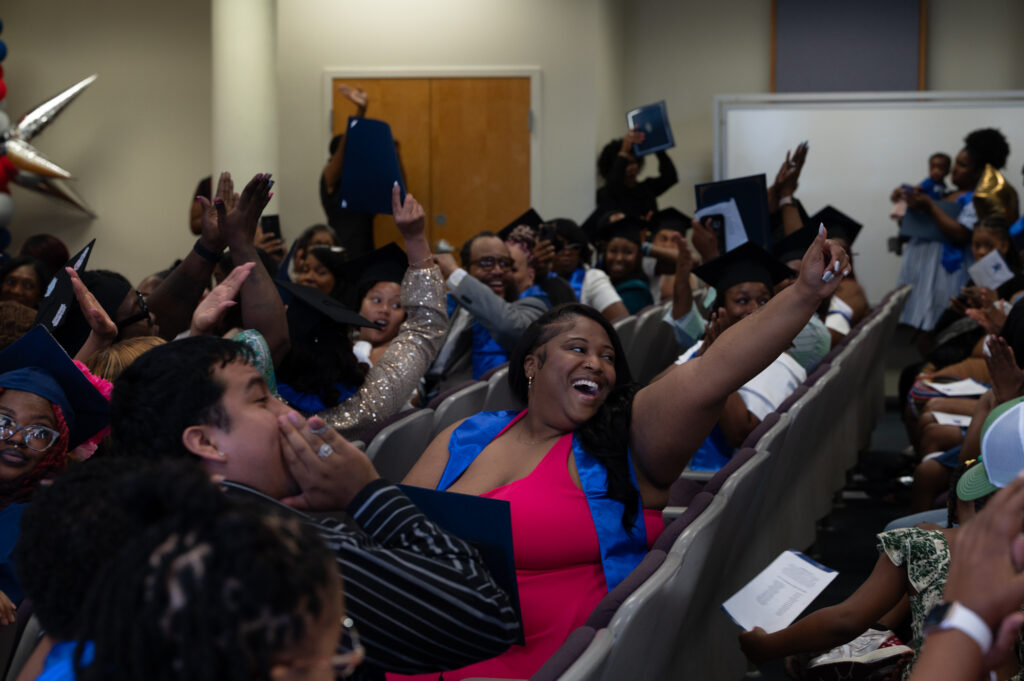
Blue graduation caps, flowers, and balloons dotted the Howard School of Social Work’s auditorium on June 26, as a class of 33 case managers who have themselves experienced homelessness gathered to celebrate finishing a one of-a-kind D.C. program.
First established in 2024, the Peer Case Management Institute (PCMI)’s mission is to address the growing social worker shortage by training individuals who have experienced homelessness in case management skills, with the aim of providing them pathways to employment in homeless services. This year was the program’s third cohort. Thirty-three participants graduated from the competitive 11-week program, which combined seven weeks of classroom education with four weeks of training in the field, working with local service providers.
PCMI is part of a broader movement to include people with lived experience in policymaking and homeless services. The program has three primary goals, said Miati Taliaferro, a program analyst with the D.C. Department of Human Services (DHS) and PCMI facilitator: to create careers for those who have experienced homelessness, to encourage them to apply their experiences towards the social work field, and to “create a new pipeline of quality case managers.”
All three goals rest on the idea that someone “…who knows the system best [is] probably someone who has had to work it for themselves,” Taliaferro said at the graduation.
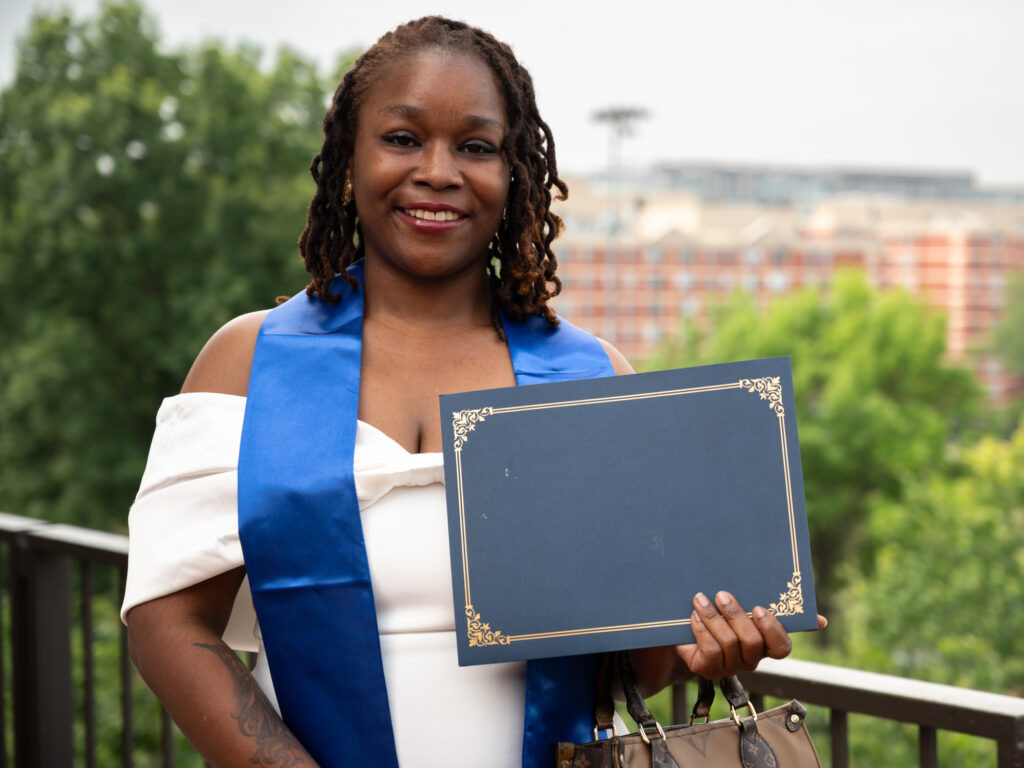
That’s true of Shaquita Williams, a graduate of the third PCMI cohort who has lived in D.C. her entire life. She initially felt isolated trying to access resources to “keep afloat” while experiencing homelessness, she said, especially after her son was born.
“It’s something that a lot of people in the community go through,” Williams said about homelessness. “I’ve always had the innate passion to help people, that put me in a position where I was like, let me take the educational route and do what I need to do to make sure I’m in a position where I can help people in a way that I know will benefit them in the long run.”
For years, D.C. has grappled with a shortage of social workers and attempted to facilitate pathways towards employment in the field. Because social workers are responsible for connecting clients to resources and supporting them through the often arduous process of securing housing, a shortage can leave clients in vulnerable positions.
The PCMI is a collaborative effort between the Howard University School of Social Work, DHS, The Community Partnership for the Prevention of Homelessness, and Pathways to Housing DC. Working groups from the D.C. Interagency Council on Homelessness, the Consumer Advisory Working Group, alongside its Youth Working Group, both of which have several members with lived experience of homelessness, spent “almost a whole year in developing the curriculum and programming” for the PCMI, ICH Executive Director Theresa Silla said.
“There is no greater form of reparation, restoration, like this one, where we are working together to empower all of us. Nothing for us without us,” Silla said in her speech at the graduation.
On June 26, Sheara Jennings, dean of the Howard University School of Social Work, opened the graduation ceremony, praising the graduates’ contribution to a “legacy of change agents and healers.”
This year, the program received 500 applications and only accepted 35 students, Jennings said. 33 completed all of the requirements. Candyce Coates, the chief of contracting and procurement for the Community Partnership for the Prevention of Homelessness, emphasized the rigor of PCMI’s application pool and curriculum.
“We are daring you to press forward,” she said. “No one promised you an easy road. It will be hard, but you were selected to do this hard work.”
During their time in the PCMI, students learned skills including trauma-informed care, de-escalation techniques, and practical and field-based training, according to Taliaferro.
Communication, empathy, and compassion are critical for any case manager, said Williams. The PCMI helped instill those values in a professional context. More importantly, though, Williams said that successful case management means “being able to change perception, understanding that not everything someone brings to you is personal.”
Andres Meza, a graduate from the cohort, already had three years of experience in social work when he applied to the PCMI. During his time as an outreach specialist at the H3 Project, he was inspired by the unique contributions of a PCMI alumnus he worked alongside.
“[The H3 Project] had people who had degrees, they had people who had experience. But the peer specialist, he had something that you couldn’t train, you couldn’t teach,” Meza said.
Meza said that watching a PCMI graduate at work made him realize that, despite his self-doubt about lacking a degree, “what I had was my lived experience with housing instability, with substance use disorder.”
Meza is currently working as the program manager for bilingual outreach at SMYAL.
While the PCMI’s professional development was important to him, in his eyes, “the most important piece about the PCMI is it confirms something that we feel, but we’re unsure about: It’s like, do we deserve to be in this space? And we do.”
Graduate Nikila Campbell was living in a tent when she first learned about the PCMI. She had worked in case management through the People for Fairness Coalition but did not have formal certification. Once she secured stable shelter, she decided to apply.
Campbell agreed mentors like Taliaferro instilled confidence in participants. “Even some women that didn’t think that they had it in them to speak and say what they could do, they were very articulate. So good. And they didn’t see it,” she said. “If they could just look and see what they could do, they [could] move so far in life. That’s all it is, it’s support.”
District officials hope PCMI graduates can instill a similar sense of hope and enduring connection for their future clients.
“There are going to be moments when someone sits across from you who has stopped believing that anyone can help them,” DHS Deputy Administrator Anthony Newman said to the graduates. “They may have already worked and moved through other systems and dealt with other providers. But then they’ll meet you. Someone who has been exactly where they are.”
Julia Robinson, an alumna from the PCMI’s second cohort in 2025, told the audience she first became unhoused when she moved to D.C. from Ohio and struggled to adapt to the high cost of living. Robinson said she appreciated the PCMI’s unique emphasis on the “Black perspective” during her time in the program. She explained the “Black perspective” — a tenet of both the PCMI and the Howard School of Social Work’s curricula — is “a special sensitivity to the experiences of all oppressed and underserved groups in American society.” Social work as a field has historically perpetuated legacies of exclusion based on class and race. Robinson said the Black perspective plays an important role in the process of becoming housed and mentoring others through the process.
Through the PCMI, Robinson began her field training in the dining room of Miriam’s Kitchen, where she collaborated with team members and connected with clients.
“I have been able to network and build professional relationships and connections that can support my future employment and career growth,” she said. Robinson is now employed as a Bridge Housing case manager for Miriam’s Kitchen.
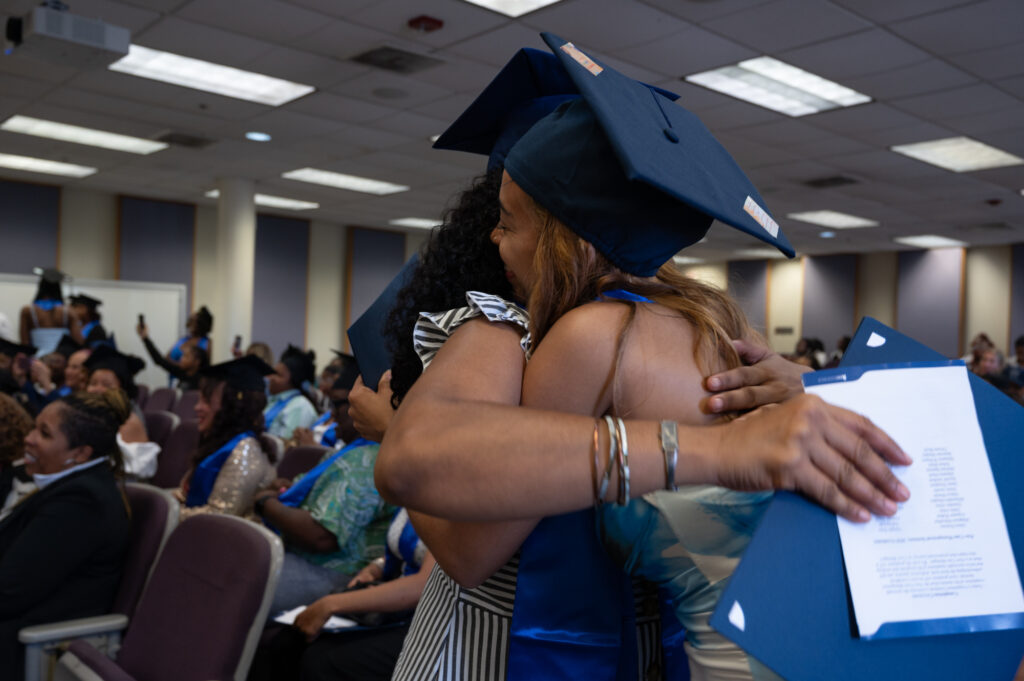
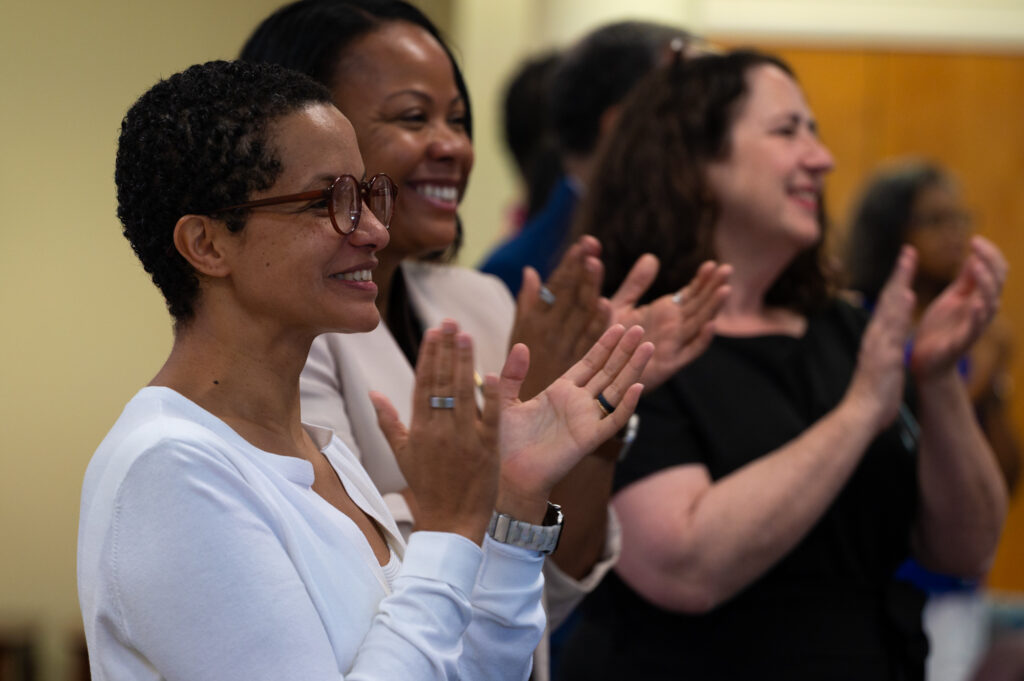
Following the speeches, graduates walked the stage to receive their degrees. As each name was called, the audience erupted into cheers. Graduates embraced each other as they funneled back into their seats. Some fought back tears.
Then, graduates were invited to turn and acknowledge their friends and family in attendance. Another round of cheers and tears commenced.
Tracy Whitaker delivered the final remarks to close the ceremony, entering to perhaps the loudest cheers of the night. Whitaker served as the former associate dean of the Howard School of Social Work, and she was the principal investigator for the PCMI’s inaugural class.
After thanking the individual staff members and logistics workers who make the program run, Whitaker spoke to the graduates directly.
“…we aren’t family until we laugh together, and we have laughed together over these past few weeks,” she said. “We will always have hills in our lives, and we have to remember that for every hill, we will find the strength to climb.”
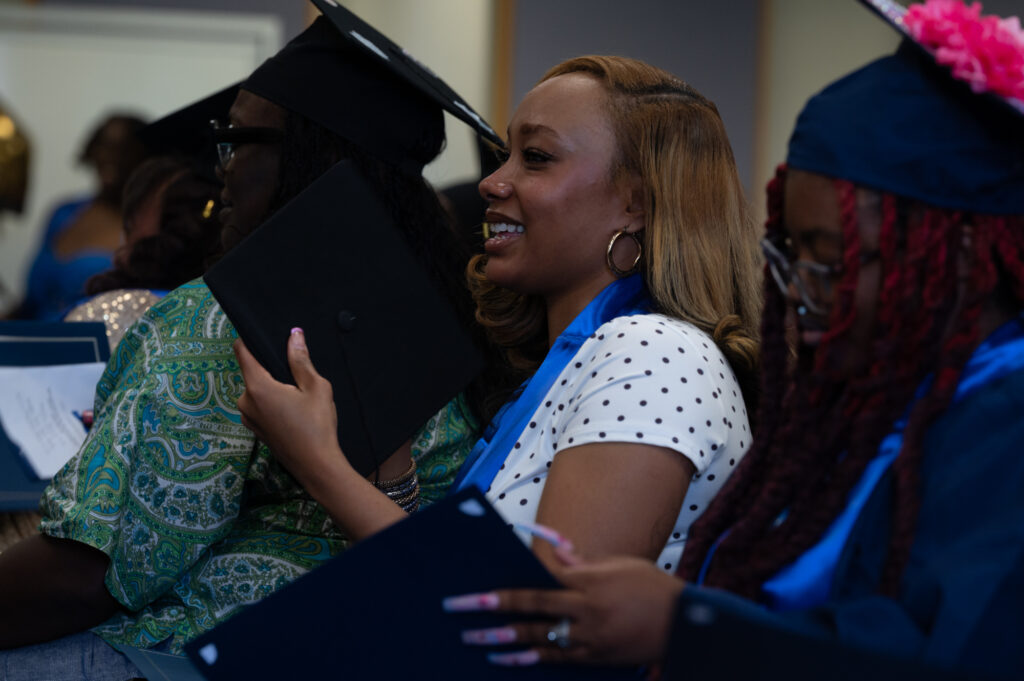
Campbell says her cohort of PCMI graduates are extending peer support to each other beyond the case management context. They are still in touch through an active group chat and share information about resources and opportunities. Campbell described the group’s ethos as: “So what you learn, tell me, and I’ll tell you.”
After the ceremony, graduates and guests gathered for a reception with food, photos, and further congratulations.
When asked what she would say to someone considering applying to the PCMI, Williams said, “If it came across your mind, don’t stop thinking about it. It came across your mind because it’s probably a mission that is for you to take on.”
“If you want to help people, do it. Don’t hinder yourself,” she finished.
Editor’s note: Nikila Campbell is also a vendor, artist, and vendor program assistant with Street Sense.
This article originally appeared in Street Sense’s July 15, 2026 edition.