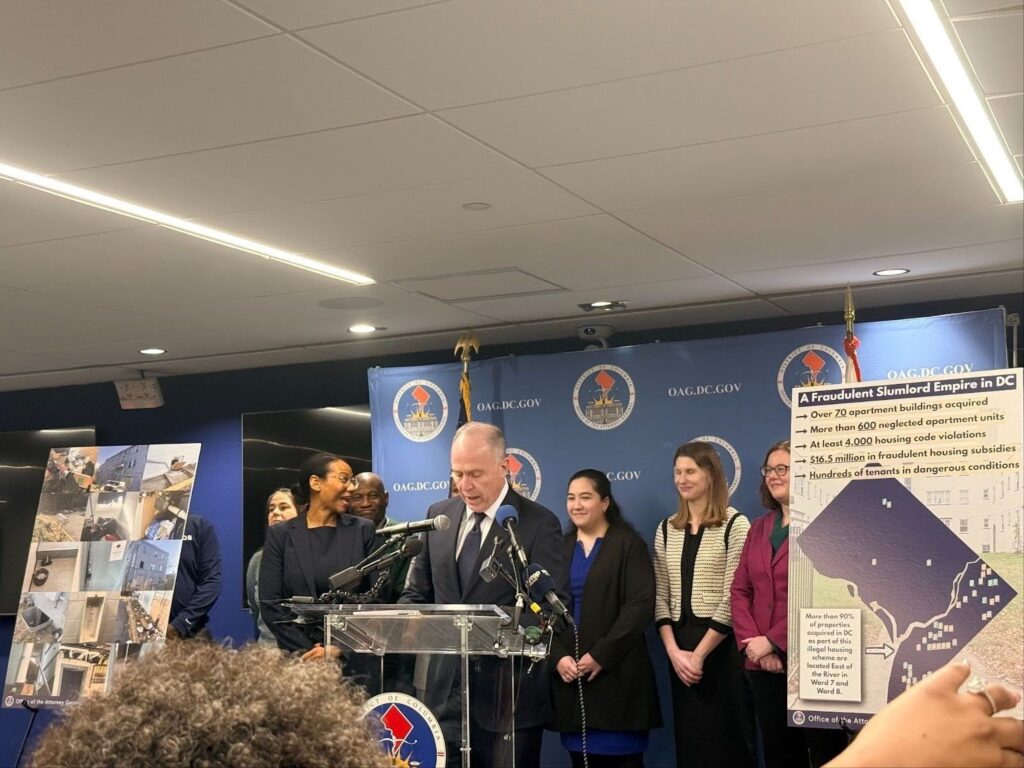
D.C. Attorney General Brian Schwalb announced a lawsuit against a landlord family empire his office says purposefully left properties damaged and tenants homeless.
At a Feb. 12 press conference, Schwalb announced his office is suing members of the Razjooyan family enterprise under the Racketeer Influenced and Corrupt Organizations (RICO) Act. The lawsuit seeks to ban the family, which has been the subject of years of reporting, from owning residential properties in the District, while relocating and securing restitution for harmed tenants.
D.C. landlord Ali “Sam” Razjooyan is alleged to have led a 10-year scheme of pocketing renovation funds received from banks and private investors while letting over 70 buildings become uninhabitable. Sam, along with his brother, Eimon Razjooyan, and their mother, Houri Razjooyan, used the funds to acquire new buildings and settle previous property loans, according to a press release from the Office of the Attorney General of the District of Columbia (OAG).
Schwalb said the Razjooyans also abused the District’s housing subsidy programs, defrauding the city of $16 million. Residents enter the program to access affordable housing; without it, many risk homelessness. Tenants were left to experience gas leaks, rodent and insect infestations, electrical hazards, trash buildup, and flooding, among other “heartbreaking” conditions, Schwalb said. “Despite being one of the wealthiest cities in our country, our abundant resources are not shared by everyone who lives here,” Schwalb said.
More than 90% of rental properties controlled by the Razjooyans are located in Wards 7 and 8, according to the OAG. East of the Anacostia River, low-income Black tenants lived in moldy, mice-infested units without heat during freezing winters, according to Megan Browder, legal director of the systemic advocacy and law reform program Legal Aid DC.
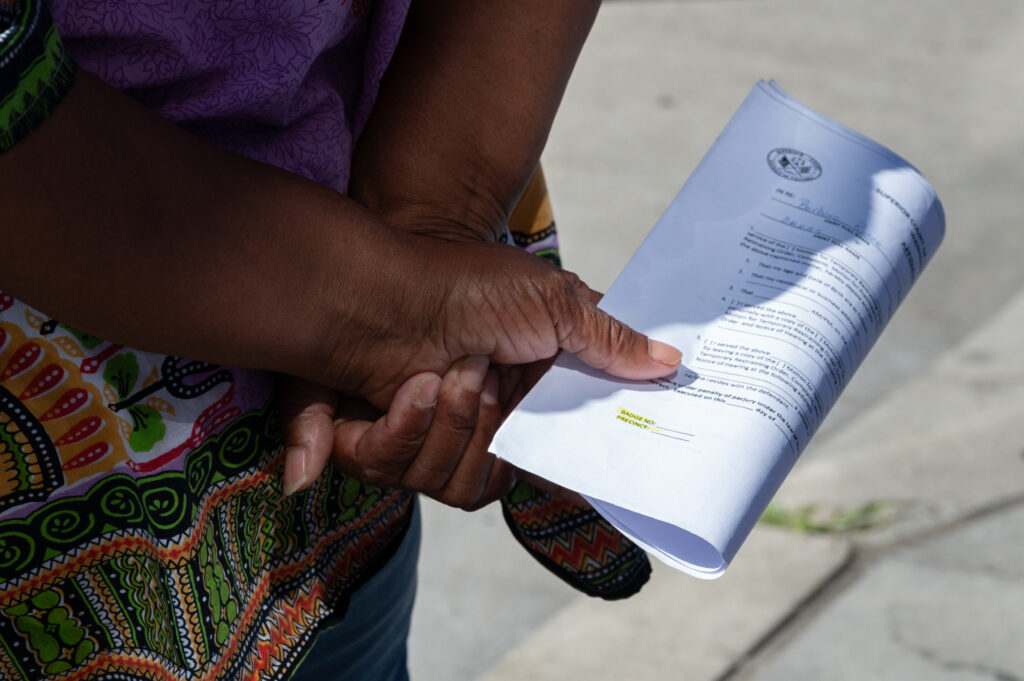
“There are some where the property is so unsafe that the [Department of Buildings] has condemned the property, and they’re no longer able to live there,” Browder said.
At-large Councilmember Robert White said property owners should be providing safe housing for low-income families who receive assistance instead of having them reside in unsafe units.
Razjooyan is just one of the landlords the city has accused of exploiting the voucher program, illegally renting mainly to voucher recipients, who they can charge above the building’s rent-controlled rate.
“This lawsuit sends a clear message: exploiting tenants while missing public resources meant to preserve affordable housing will not be tolerated in the District of Columbia,” White said.
The RICO Act is designed to combat criminal enterprise operations. This is the first time a civil lawsuit under the RICO Act has been used to take on a slumlord enterprise in the District, Schwalb said. The lawsuit also includes D.C. statutes, including the False Claims Act and the Consumer Protection Act.
Schwalb said he is committed to using civil enforcement to hold the Razjooyans accountable since the District lacks jurisdiction to criminally charge adults because it is not a state. The only entity in the District that has the capacity to federally prosecute adults is the D.C. Office of the U.S. Attorney.
Despite most properties facing abandonment and condemnation, the Razjooyan family still controls at least six properties in the District as of February.
The condemned properties remain untouched because it’s difficult for the District to find new buyers to repair them in such poor condition, meaning fewer affordable housing units for all residents, according to Browder.
“This is their home,” Browder said. “They’ve had to fight often for years to have what we’re all entitled to — a clean place to live that’s up to the housing quota.”
This article originally appeared in Street Sense’s Feb. 25, 2026 edition.