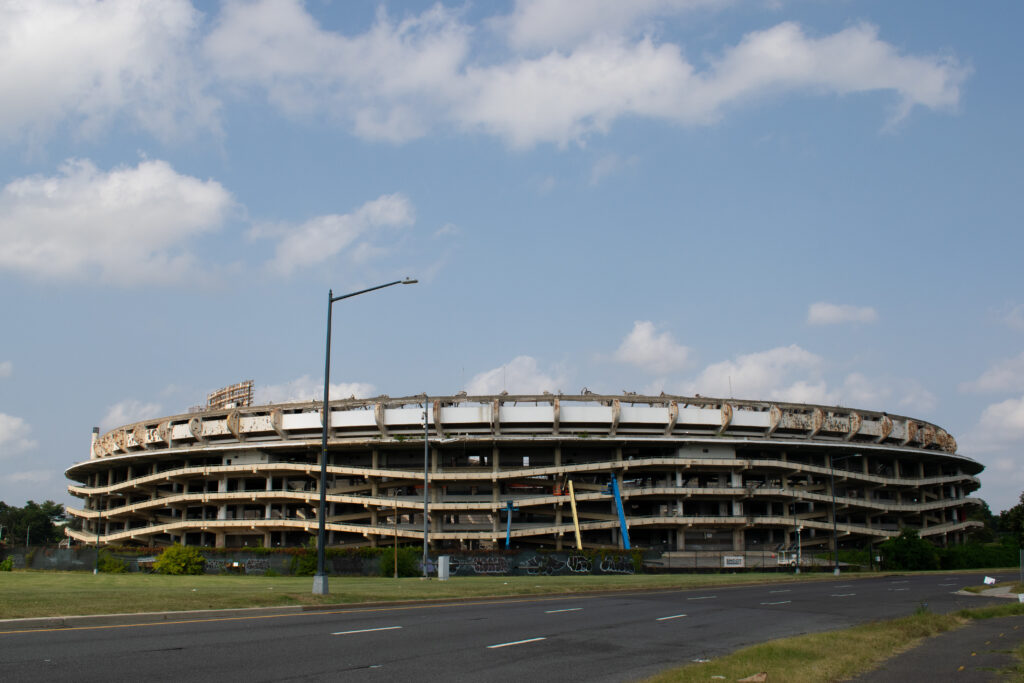
The D.C. Council gave initial approval to a deal with the Washington Commanders to revitalize the RFK Stadium campus and build affordable housing and amenities in the surrounding area. The deal comes on a fast-tracked timeline amid pressure from both the federal government and D.C. residents eager to see their football team return to the city.
The $3.7 billion deal passed 9-3 on Aug. 1 and includes over $1 billion in public funds and $1 billion in tax breaks to the Commanders, who will build the stadium by 2030 and add hotels, housing, and other amenities to the surrounding area by 2040 if the deal is finalized. Before the vote, councilmembers got the football club to make a series of last-minute concessions that made holdouts like Ward 4 Councilmember Janeese Lewis George, At-large Councilmember Christina Henderson and Ward 6 Councilmember Charles Allen comfortable with voting for it, including guaranteeing more union jobs on the project, adhering to stricter environmental guidelines, and directing additional tax revenue to the city.
The tension over the RFK stadium deal can be summed up as a fight between two camps: those who feel the stadium itself will juice city revenue and revitalize the surrounding area, and those who feel the deal caters to billionaires at the expense of the District’s poorest residents, especially in the context of a city budget that cut social services and a need for more affordable housing in a city with scant available land.
The vote came after two days of public hearings during which hundreds of residents and advocates spoke both in favor of and against the deal. The president and House Republicans publicly called on the council to vote on the stadium before their August recess.
“Today, I stand in strong support of the RFK campus redevelopment, because I know what this space can mean to our city once again, if we get it right,” Ward 8 resident Ramona Barber said at the July 29 public hearing.
Among those testifying against the deal at the public hearing was Kris Furnish, organizer of the “Homes Not Stadiums” campaign, which has advocated for the RFK campus to be used primarily for housing. The group has filed ethics complaints against the Commanders with the Board of Ethics and Government Accountability for failing to disclose alleged lobbying activities with the council.
Furnish believes the land would be better used to build affordable housing because people are being “pushed out” of the city due to rising rents. Rent prices have steadily increased since 2020 in the District, hiking 12% from 2023 to 2024 — the highest rent increase among all major metropolitan areas during that time. As a Ward 3 resident, Furnish said she has seen the inequalities in D.C., and cuts made by the council in the recent budget cycle will only exacerbate existing problems.
“It’s just this trend of our elected officials ignoring the needs of the people to cater to billionaires who exploit the system in a way that benefits only them,” Furnish told Street Sense.
Bringing the Commanders home has been a longtime hope for Mayor Muriel Bowser. It became feasible once Congress passed the Robert F. Kennedy Memorial Stadium Campus Revitalization Act in December 2024, giving the District permission to use the land. Bowser and the Commanders announced a preliminary deal in April, though the version voted on this month largely stems from Council Chairman Phil Mendelson’s revised deal with the team reached in late July.
Mendelson’s deal enables the city to receive sales tax revenue garnered through parking garages and merchandise sales, and creates a $50 million community benefits agreement where the team agreed to build a grocery store and youth sports academy in the area. The deal also promises 6,000 new housing units, with a third expected to be affordable, and sets deadlines in the 2040s for when that housing has to be built and penalties if the Commanders fail to deliver.
However, some advocates and council members felt the additions to the deal weren’t sufficient, with Ward 1 Councilmember Brianne Nadeau, Ward 3 Councilmember Matthew Frumin, and At-large Councilmember Robert White voting no on the deal, partially because of concerns it doesn’t do enough to create affordable housing.
In late July, the Council Budget Office released its analysis of the deal, finding that without the stadium, the area could support 5,000 additional housing units, with 1,500 being affordable, an alternative some advocates latched onto.
Nadeau cited recent cuts to housing and social safety net programs as a key reason why she could not support the deal. She said the council could not say the city doesn’t have enough money to support the District’s most vulnerable residents, and then provide a large subsidy to a wealthy football club to build a stadium.
“The juxtaposition of us funneling tax dollars into this real estate project to subsidize billionaires when we are simultaneously cutting services to people experiencing homelessness, immigrants who need health care, child care facilities, for me, that doesn’t work,” Nadeau told Street Sense.
White voted no for similar reasons. He expressed concerns before the vote about the deadlines for building housing not being firm enough, and families possibly being pushed out of the area surrounding the stadium due to higher property taxes as it becomes more developed.
“How can we say we don’t have enough for our residents on Monday and then turn around and say we found a billion dollars for a billionaire franchise on Friday?” White said at the hearing.
Other council members believed the concessions the Commanders made before the vote and in Mendelson’s revised deal were sufficient. The Commanders agreed to ensure 51% of the construction jobs go to D.C. residents, provide $15 million in contracts for local small businesses, and implement traffic mitigation measures, including leaving space for a potential Metro station near the stadium.
Henderson, who voted for the deal, originally had doubts about it, largely concerning transportation. She said the mayor’s original deal had an “overreliance” on parking and not enough plans for transit infrastructure, and needed firmer deadlines for the Commanders to deliver affordable housing.
However, she said the deal should not be seen as precluding affordable housing development. Building the additional 5,000 units of housing the budget office report mentions without the stadium would be a significant investment the District couldn’t fund, even if it redirected all the money from the deal towards housing, she argued. The Commanders’ making a private investment is the best bet for bringing housing to the area.
“I understand that everybody has their criticisms, but to suggest that if we don’t build a stadium, we would somehow be able to deliver 5,000 units of affordable housing, that’s just not accurate,” Henderson told Street Sense.
In a statement after the vote, Henderson said she felt comfortable voting for the deal due to the improvements to the transportation plans for the stadium and increased labor protections.
“From the outset, I strongly believed this deal could and should be improved with respect to parking/transportation, labor protections, and additional revenue for the District,” Henderson wrote. “Together, along with my colleagues, the hundreds who testified, and the thousands who emailed – we’ve improved what is before us today.”
The council will take its second vote on the deal when it returns from recess on Sept. 17.
This article originally appeared in Street Sense’s Aug. 13, 2025 edition.