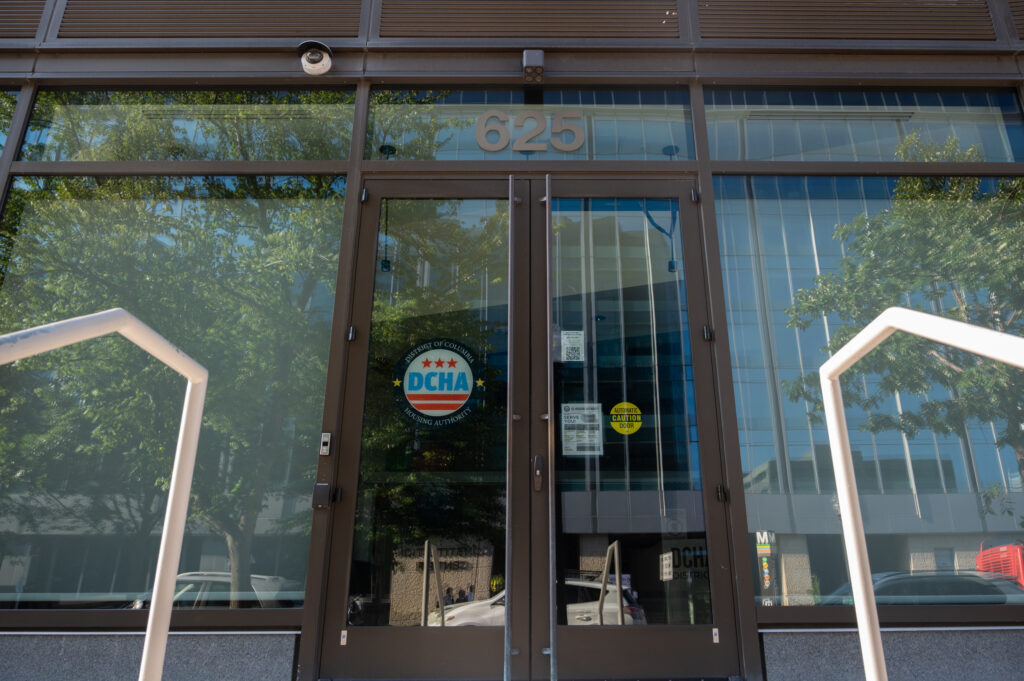
In January, a shortage of funds caused the D.C. Housing Authority (DCHA) to suspend its security deposit assistance for local and federal voucher housing holders. Some voucher holders say the pause in assistance has left them with no way to afford to leave poor living conditions.
When people move into housing with vouchers, they pay up to 30% of their income to rent, and the voucher covers the rest. But costs outside of rent, like security deposits, can fall entirely on the tenants. To help people move in, DCHA has previously provided funding for security deposits, though that money ran out earlier this year. The D.C. Council is poised to fund another pool of assistance in the upcoming budget, which will be available in October.
In theory, suspending the assistance this year could make sense, because the waitlist for vouchers is closed, and few new vouchers were funded for this year. But the security deposit assistance also helps people who are already renting a home with a voucher and may want to live somewhere new or live in poor enough conditions the city says they have to move. Without the assistance, they’re obligated to pay the equivalent of 100% of their rent to secure a new apartment.
Organizations like the Children’s Law Center and Bread for the City say they have seen an increasing number of voucher holders stuck in situations where they have a voucher and should be able to move into long-term housing, but can’t because of the inability to pay a security deposit. Since the well of funds ran dry in January, housing advocates and voucher participants alike have been demanding that the council find room in the budget to provide security deposit assistance.
Quiana Mallory moved in in January of 2025. Since then, her housing has failed five housing inspections and three Department of Buildings inspections, she said. Her landlord declined to do the sixth inspection, and the contract through which the city pays for her housing was terminated in May, according to Mallory. Since an October 2022 audit by the U.S. Department of Housing and Urban Development, which identified 82 deficiencies in the agency, DCHA has been vigilant about housing conditions for its tenants. The agency will cancel payments to a landlord not meeting the standards and issue a transfer voucher to a tenant to help them get to better conditions.
Mallory received her transfer voucher in April, but says she is unable to move unless a landlord waives the security deposit or she deals with the financial burden of a payment plan for the security deposit. But Mallory is frustrated she’s in this predicament to begin with.
“The things that are wrong with this house, unless I am an electrician, a plumber, a heating and air specialist, there is no way I would have been able to know that when I came to view this house,” Mallory said.
Mallory doesn’t know exactly which issue caused the failed inspections. She had no hot water, and the refrigerator was broken when she moved in. Eventually, inspectors found electrical hazards due to issues with the breaker box. But by far the biggest issue was a persistent rodent infestation so extreme Mallory and her two children found rats in their bed. The lack of response by the landlord was the primary reason she called for the first inspection in June 2025. It didn’t occur until August.
“How is it possible that the place is crawling with rodents, but they’re extending him all these inspections and waiting months in between to do them?” Mallory said.
In oversight hearings, DCHA officials have said the agency is doing its part to get inspections done, and not many participants go through what Mallory has. But Mallory’s personal experience says otherwise, as she’s had to move due to poor housing conditions every year since she entered the voucher program in 2019. In fact, an emergency transfer brought her to her current housing predicament.
What’s changed this go around is DCHA is no longer providing a security deposit to move into a new home, and Mallory can’t afford to pay the deposit herself. That leaves her stuck. Worse still, vouchers work on a use it or lose it system. She has six months, if she doesn’t receive any extensions, to find new housing, or she loses the voucher and returns to living in a shelter.
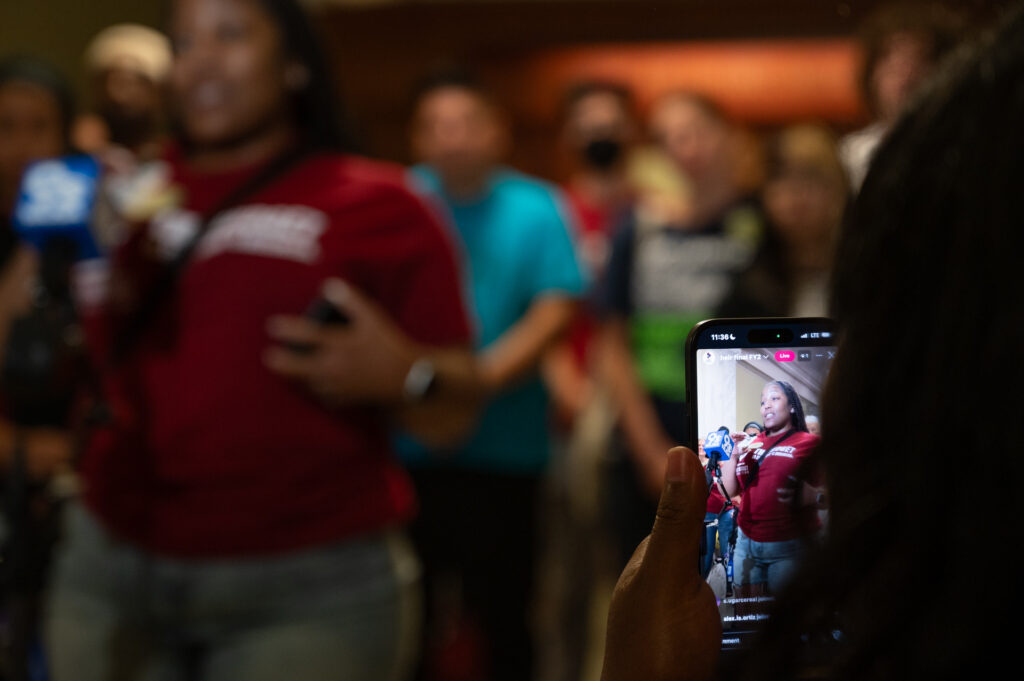
This is a predicament not just for Mallory but other D.C. voucher holders, as many testified at a budget oversight hearing for DCHA on April 29.
Tara Martin, who needed to move because her pipes burst and the unit was deemed unlivable, said she had to go on a payment plan for her security deposit. She has to pay an additional $400 on top of her rent each month for the next year and a half to pay off the $7,200 security deposit.
“They said the money just disappeared,” Martin said of the city’s security deposit assistance during her testimony.
Martin now lives in the Columbia Heights area. Because of the time constraints in her moving process, she moved to a place she says is too dangerous for her two sons. She’s cowering on the floors of her home due to gunshots.
“[DCHA] say one thing and do another,” Martin said. “When they testify that they’re doing this great job and they need more money, no, they need to maintain the money that they have and do right by the people.”
DCHA used $2 million towards security deposit assistance last year, according to testimony from DCHA Interim Executive Director Nicole Wickliffe. Although federal money was set aside for security deposits in previous fiscal years, the expectation is that there’ll be less money coming from the Department of Housing and Urban Development this year, due to no increases in the budget to account for inflation.
“Right now, 100% of those [HUD] dollars need to be going to the vouchers,” Wickliffe said during her testimony April 29.
The D.C. Council Housing Committee, in its budget report, recommended allocating $1.7 million to security deposit assistance in FY27, $1.3 million in FY28, and $296,000 in FY29. In the council’s first pass of the budget, security deposit assistance received the one-time funding of $1.7 million, but not the recurring funding of FY28 and FY29.
D.C. At-large Councilmember Robert White’s office expects interim funds of $700,000, coming from the $1.7 million in FY27, to be in the supplemental budget. This will fund security deposit assistance for people like Mallory, who are in danger of losing their voucher before October, when the funding from the new fiscal year kicks in.
White’s office of constituent services asks voucher participants who need assistance to reach out so the office can connect them to community-based organizations that can help with security deposits.
This article originally appeared in Street Sense’s June 17, 2026 edition.