When Lilly Evans, 77, entered into an “equity share agreement” in 2018, she didn’t know she was signing away most of her home’s value.
In 2012, Evans, a lifelong resident of D.C., purchased her white single-story home in the Burrville neighborhood. By 2018, she was struggling to keep up with expenses and had accumulated thousands of dollars in debt.
“When Unison offered me money to catch up on my bills, I thought it was a no brainer,” Evans wrote in a statement to Street Sense. “I had no idea that in exchange they would take 70% of the equity in my home.”
Companies like Unison, which offered to help pay off Evans’s debts, often work with elderly homeowners who live in gentrifying areas and have limited wealth outside their home. This makes D.C. a “hotspot,” according to Bryony Coiner, a staff attorney at the Legal Council for the Elderly (LCE). Older adults are the fastest-growing demographic of those experiencing homelessness, with rising costs and fixed incomes from pensions and Social Security putting many at risk of losing their homes.
These companies offer homeowners an upfront payment in exchange for a portion of their home’s equity, the amount they would receive if they sold their home. Often, the value of equity the company receives is significantly greater than the payment to the homeowner.
A “predatory and unlawful mortgage”
Unison calls its financial product an “equity sharing agreement.” Other companies in the growing industry refer to similar models as “shared appreciation agreements,” “home equity sharing contracts,” or “equity investment options.” The four biggest companies in the industry are Unison, Point, Hometap, and Unlock.
The National Consumer Law Center (NCLC) is leading a national advocacy effort on the issue of home equity investments, which it argues are “high-cost, high-risk mortgage loans” marketed as opportunities for homeowners “to tap their home equity without taking a loan.”
“Their structure creates unpredictable balloon payments, encourages equity-stripping, and exposes homeowners to foreclosure without the protections that apply to traditional mortgages,” according to a brief issued by the NCLC in November.
In February, LCE and the AARP Foundation filed a lawsuit against Unison and its affiliates with Evans as plaintiff, arguing Unison is operating as an unlicensed mortgage lender in D.C. while failing to comply with local and federal laws regulating mortgages. The same month, the National Association of Consumer Advocates, represented by lawyers from AARP, filed a similar lawsuit against Unison, also arguing that Unison’s marketing is misleading about its product, which the lawsuit claims is in fact a high-cost mortgage.
In 2018, Unison agreed to pay Evans almost $57,000, according to the lawsuit. In return, Unison purchased 70% equity in Evans’s home, which had a total value of $227,500 at the time. According to the lawsuit, the company advertised its product was not a loan, involved no debt, and carried no interest.
LCE argues this transaction is essentially a reverse mortgage. Under a reverse mortgage, homeowners 62 or older can take out a loan in exchange for giving a company partial equity in their home. Because of the especially high risk associated with reverse mortgages, states, including D.C., have protections in place for consumers. For example, D.C. requires homeowners to attend a counseling session before taking out the mortgage.
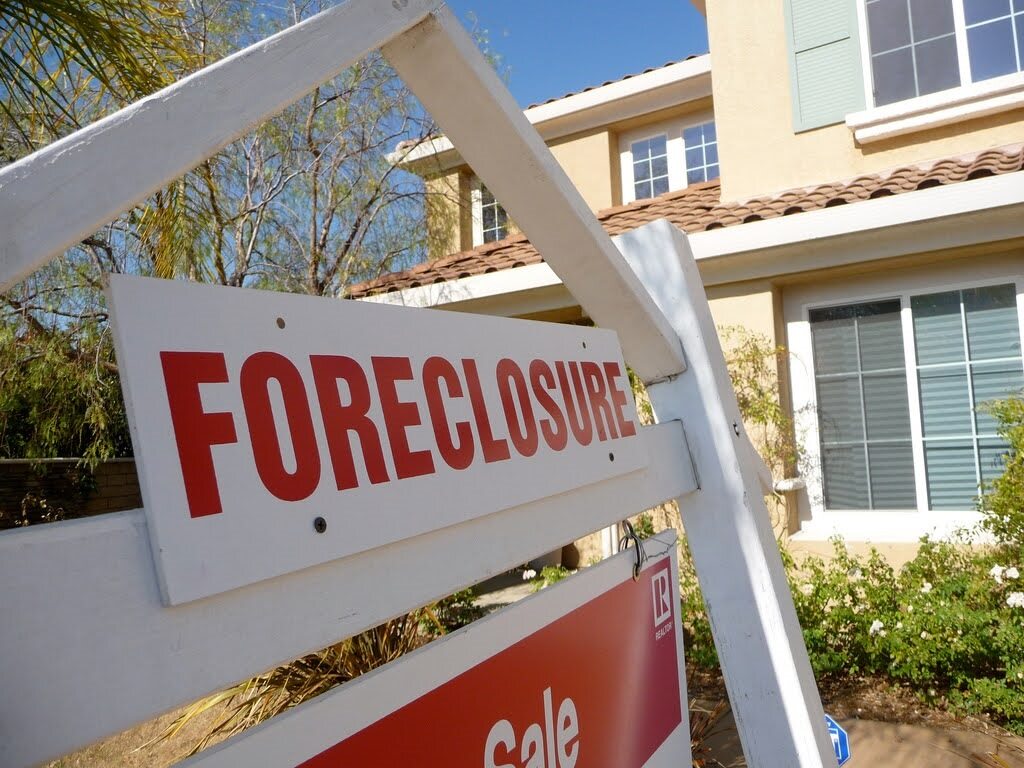
According to the lawsuit, entering the transaction with Unison brought a high level of risk, which Evans was not fully aware of. For instance, Coiner said that when Evans fell behind on another loan, she was unable to refinance — as would be typical for a mortgage — due to the equity sharing agreement. Now, she faces foreclosure.
“She really has no option, because if she sells the home, Unison takes all the equity,” said Coiner. “And so unless she can catch up on her mortgage all at once in cash, which is not an option for her, she sort of has no other way of saving her home with this Unison product on the property.”
Similar cases exist around the country. A Washington state court ruled in 2025 that Unison’s home equity investments amount to reverse mortgages under state law.
Unison did not respond to Street Sense’s request for comment in time for publication. In 2024, Unison argued in court its product was not a reverse mortgage, since there is no obligation for homeowners to repay the company.
Predatory practices harm generational wealth
Evans’s story fits in with a broader issue of wealth inequality. In D.C., where the median home value is $700,000, the value in somebody’s home might surpass their everyday means. LCE’s lawsuit argues that companies like Unison target these “house-rich, cash-poor” homeowners.
The result of these practices is “even more rapid gentrification, because the people who are perpetrating scams are operating off of the desperation of a low-income person facing foreclosure. They’re really investors in that,” said Coiner. “They’re trying to buy cheap properties to sell for more money to richer people.”
Pressures to sell or refinance a home are compounded by the rising cost of living, especially for older people relying on fixed incomes and Social Security. Some retirees are returning to work, or “unretiring,” due to financial pressures. A study conducted by the National Council on Aging found 80% of Americans over 60 could not withstand a serious financial shock like the death of a partner, divorce, or serious illness and the need for long-term care.
Over a third of homeowners in the United States over 75 years old are cost burdened, meaning they pay more than 30% of their income on housing. Unaffordability further exacerbates existing inequalities. For example, 46% of older Black homeowners and 47% of older Latino homeowners are cost burdened, while 38% of white peers are cost burdened.
“For most people who own homes, in general, the home is the biggest asset they have or ever will have, Coiner said. “It’s also a way to ensure that generations after the homeowners have access to some sort of asset to build financial freedom.” This is especially true for older homeowners of color. Home equity accounts for over 80% of the net worth of Black and Latino homeowners, compared to 47% for white homeowners.
But homeownership does not ensure this wealth stays within families and communities. Losing home equity through reverse mortgages or scams can strip families of this generational wealth.
“I’ve been seeing a pattern of us losing our homes in our communities, and those people that built our communities are no longer to age in the same communities that they built,” Cornelle Smith, founder of Elevation Legacy Counseling, which works to inform older homeowners before they make decisions about their homes, said at the organization’s kick-off event on Feb. 28.
“Tight deadlines and desperation:” Identifying and avoiding scams
Coiner said the impact of Unison’s product is similar to the impact of “foreclosure rescue scams.” In these cases, somebody might offer to be an investor to help a homeowner catch up on mortgage payments, in exchange for partial home ownership. “Once you add someone to your deed, you can’t remove them without their consent, and then they basically force a sale, and then the person no longer has the home,” Coiner said.
Repair scammers, meanwhile, will find houses in need of renovation and offer free repairs in return for being added to the deed. Sometimes, they will encourage somebody to sign paperwork without realizing they’re signing away part of the house. “We buy houses” companies offer to purchase homes quickly, often for far less than they are actually worth, Coiner said.
Predatory practices depend on “tight deadlines and desperation,” Coiner said. “Anyone could be a victim of these scams, but I think that the people who perpetrate them intentionally look for older people in gentrifying neighborhoods, because those are the people who… may struggle with the financial upkeep, but the house is extremely valuable, so there’s a big pot of gold.”
Scams can also prey on renters. One will send letters advertising a fraudulent “Emergency Rental Assistance Program,” and obtain personal and financial information from renters. Another is fraudulent eviction notices, tricking people into paying scammers under the threat of eviction.
Scams are always evolving. As an attorney, Coiner will usually only see a scam once it’s been around for a while, often years after it began. As a result, there is little public information or warnings about these scams, forcing individuals to rely on their own judgment.
However, it’s not impossible to avoid scams. “It’s important to take your time before you make any rash decision,” Coiner said. In contrast to the rushed deadlines that scammers often provide, many “legitimate products” will give people time to discuss with a family member or a financial advisor, she said. AARP’s Fraud Watch Network also provides guidance on how to avoid scams, actions to take for people targeted by scams, and support to families.
In her time practicing law in D.C., Coiner said she has seen predatory practices and scams be “extremely devastating” for her clients. Owning a home can ensure safety, community, and building generational wealth, but losing it puts these in jeopardy. “It’s shame, displacement from your community, “said Coiner. “It really devastates their whole life.”
This article originally appeared in Street Sense’s March 25, 2026 edition.