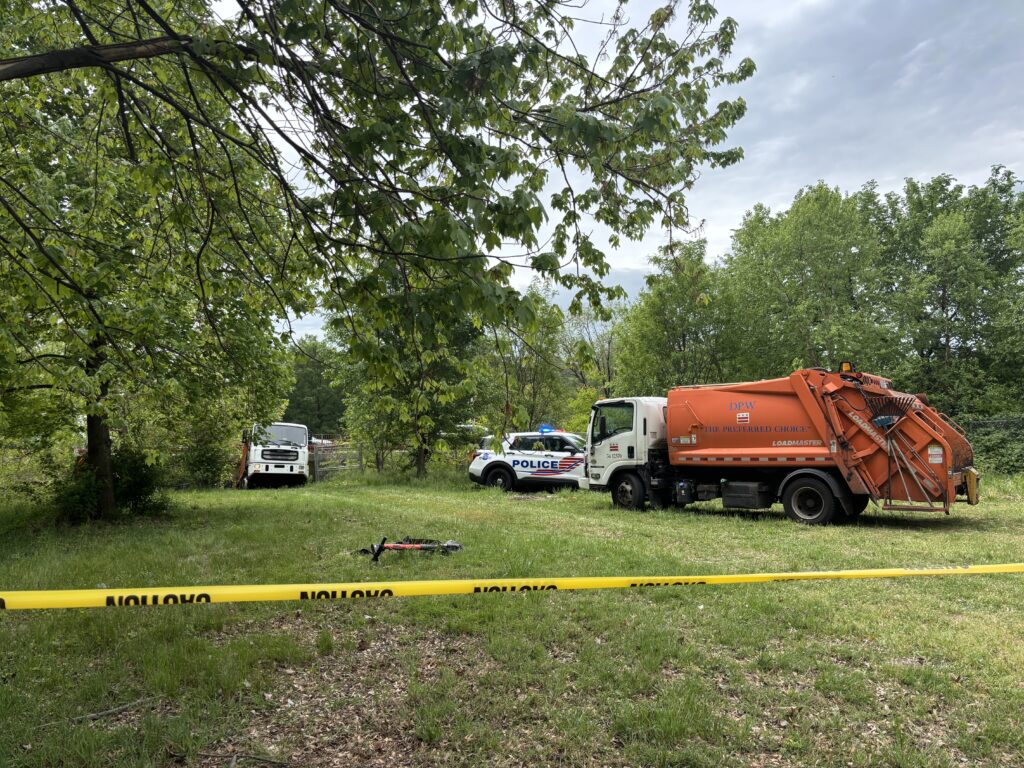
D.C. cleared 16 encampments of people experiencing homelessness between March 25 and the end of April. Most of these closures were at encampments with only one resident, and in many cases, residents left before the scheduled closure.
This marks a shift to smaller, more scattered encampments around D.C., as opposed to larger encampments with more residents. During the federal takeover in August, President Donald Trump directed law enforcement to “remove” homeless encampments, and the city cleared many encampments without prior notice. In the aftermath, many residents experiencing homelessness dispersed into smaller encampments, a trend that has continued since.
A spokesperson for the Deputy Mayor for Health and Human Services (DMHHS), which oversees encampment closures in D.C., told Street Sense the agency has observed a “gradual decrease” in the average number of residents per encampment since September 2025, after the federal takeover but before the start of hypothermia season.
As of March, DMHHS estimated there are 56 encampments in D.C., with only 14 of them having two or more residents. DMHHS defines encampments as “a set-up of an abode or place of residence of one or more persons on public property or an accumulation of personal belongings that is present even when the individual may not be.”
Between March 25 and April 30, D.C. scheduled 24 total encampment closures, 16 of which were completed and eight of which were canceled or postponed. Of the completed closures, half, or eight, had residents present during the closure. In two of these cases, the encampment had multiple residents, but in the remaining six, there was only one encampment resident.

In the other eight completed closures, there were no residents present at the scheduled time, and city workers discarded belongings left behind. In some of these cases, encampment residents may have already taken what they wanted with them, but in others, residents may not have known about the clearing or expected their items to be thrown away.
Separately, there were also seven scheduled closures that were canceled because residents had relocated and taken all of their belongings with them. The last scheduled closure was postponed.
The DMHHS spokesperson told Street Sense that through “consistent interagency coordinated outreach” — involving the city encampment team and its contracted outreach providers — many encampment residents move before scheduled encampment closures, taking any belongings they wish to keep with them.
In addition to the scheduled encampment closures, the city has conducted four immediate dispositions since late March, according to the DMHHS spokesperson. In immediate dispositions, the city closes encampments with little or no notice due to what it identifies as an imminent health or safety risk. Two of the recent immediate dispositions took place in Cleveland Park, while the remaining two were in NoMa and Chinatown.
Frustration with encampment closures
At the scheduled encampment clearings that had residents present, many residents told Street Sense they were frustrated with the clearings.
On April 14, the city closed one encampment in the Navy Yard. The resident, Josh, who introduced himself by his first name, said he plans to continue living outside in the area. Outreach workers and the city encampment team helped him move his belongings down the block.
Josh said encampment closures create inconveniences for people experiencing homelessness without helping get people into housing. “When they move a camp to another spot, it just spreads the destruction, it doesn’t resolve anything. It’s ludicrous, in my opinion,” Josh said.
Josh, who has stayed in homeless shelters before, prefers living outside because it gives him more control over his possessions and because he can prepare food at a local Whole Foods food court, helping him manage his diabetes.
On April 21, the city cleared an encampment in front of the Martin Luther King Jr. Memorial Library, which has been the target of frequent clearing in recent months. The library was one of only two encampment clearings in the last month where more than one resident was present.
By 9:45 a.m., a few minutes before the clearing was scheduled to start, most of the individuals who had slept in front of the library had packed up their things in preparation. Andre Juste, who had slept outside the library the night before, said he planned to come back to sleep there again once the clearing was over.
Juste said he enjoys sleeping by the MLK Library because of all the people he gets to meet.
“You get to know each other. Sometimes people buzz, sometimes people get into arguments and later, at the end of the day, you still sleep next to each other,” Juste said.
Eric Sheptock, a formerly unhoused man who advocates for D.C. residents experiencing homelessness, said the encampment clearings conducted by the city are not effective at getting people off the streets. He said residents often move from an encampment that is being cleared, only to come back later or set up an encampment elsewhere.
“It’s been a game of Whack-a-Mole,” Sheptock said. “I’ve seen them pick up their stuff from one encampment, go two blocks and set up again somewhere else.”
When the clearing began, most residents were sitting with their belongings around the corner from the library or watching in the street. Two residents had left their items and were not present to claim them, so they were thrown away.
At 11:00 a.m., one resident was still packing up items and refused help from the officials and advocates present. The clearing team allowed the resident to pack their things and move them across the street before finishing the clearing.
Confusion over closure locations
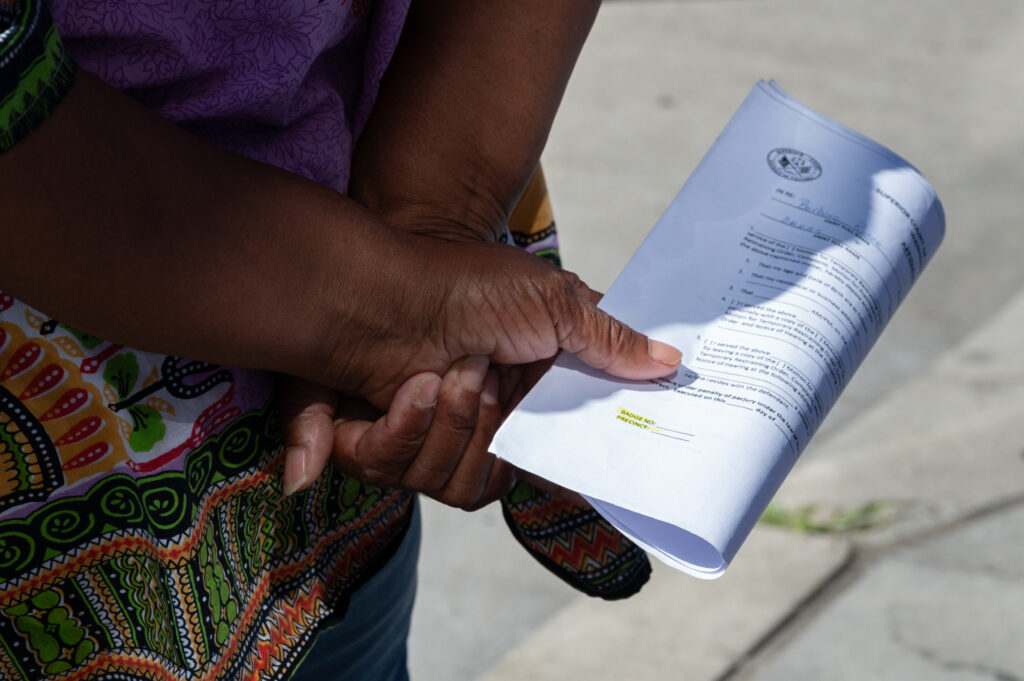
At a few recent encampment closures, residents were confused about whether their encampment would be cleared due to unclear closure notices and information.
At one closure, scheduled for March 31, residents were surprised when the city encampment team never showed up. The DMHHS spokesperson told Street Sense the first closure was canceled because the resident at the intended location, which was in Navy Yard, had moved. However, the notice for this closure was posted directly above a setup belonging to Bernard and Darnell, cousins who introduced themselves to Street Sense by their first names. The morning of the closure, the two were still set up at the spot, expecting the encampment team would force them to move — but the city team never showed up.
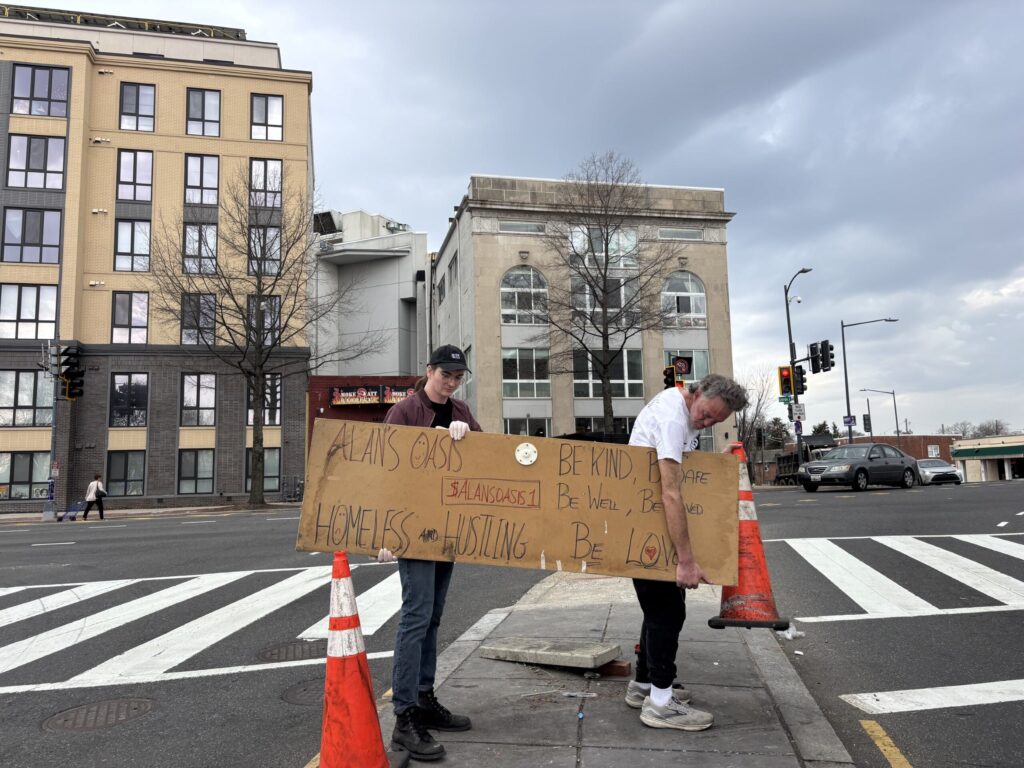
Bernard and Darnell spend their days panhandling at the intersection by their encampment. That morning, Darnell’s sign read, “Peace and blessings, please help.”
At an encampment closure scheduled for April 15, the city encampment team posted the wrong address on the DMHHS website. This encampment was listed as 50 F Street NE, but the correct location was the same street address, in Northwest D.C., a few blocks away, near Union Station.
When the city encampment team arrived at the northwest encampment, the resident was not present, though many belongings were left behind, including a shopping cart, two bikes, a chair, suitcases, and other bags. City workers tossed away all but one bag worth of items, saying the majority of the belongings were wet, soiled, or could not be stored.
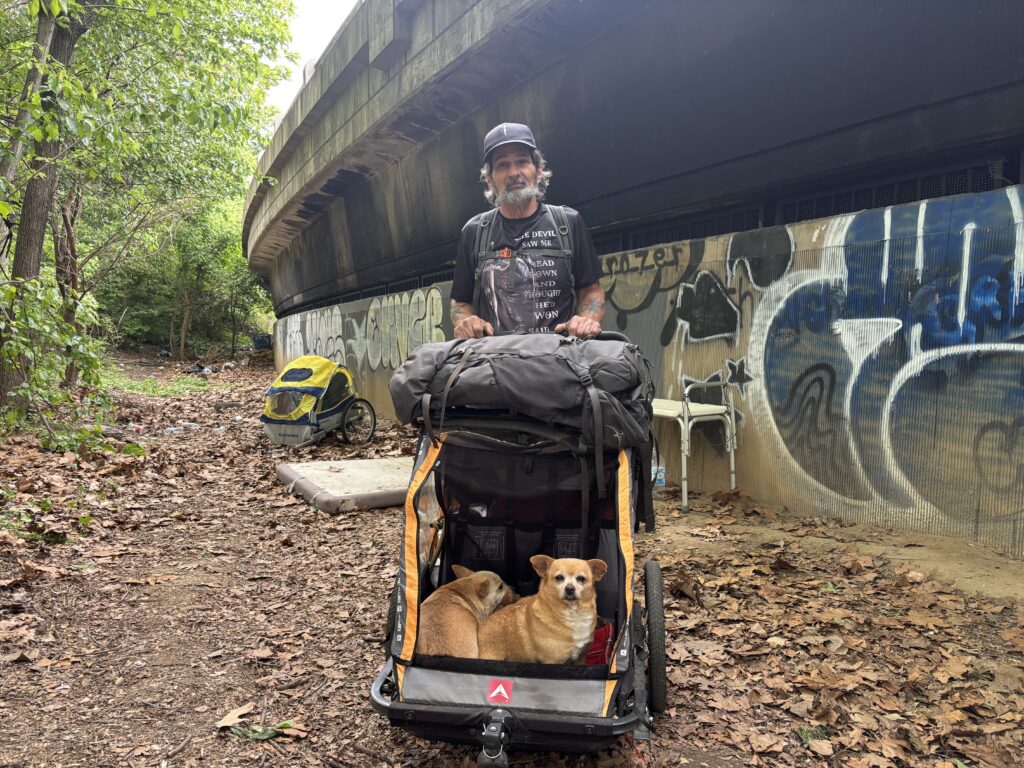
A week later, an encampment closure was scheduled for the underpass in Whitehurst Freeway on April 22. The cleaning notice for this encampment was posted in the middle of a clearing next to the freeway. There were encampments hidden next to or underneath roads located on both sides of the notice, though only one side was cleared, causing confusion for residents in the area.
On the side that was cleared, the resident was not present, though there were belongings left behind that the city team tossed away. On the other side, at least three residents had encampments set up. Two spoke to Street Sense, and both said they thought their area would be cleared, so they packed up their belongings and prepared to move, though the area was not ultimately cleared.
“They keep messing with us when there’s so many open unused properties in Washington, D.C.,” James Jackson, one of the residents, said.
Jeff Padgett, another of the residents, said encampment clearings only harm people who don’t have other resources to turn to.
“It’s wrong. You’re stealing from someone who has nothing to begin with,” Padgett said. While his and Jackson’s encampments were not ultimately cleared, Padgett said he has been in several encampment closures before. “I’ve had to start over so many times… Just cause I’m homeless doesn’t mean I don’t have anything. I’m gonna hog everything I do have, that’s what that means.
This article originally appeared in Street Sense’s May 6, 2026 edition.