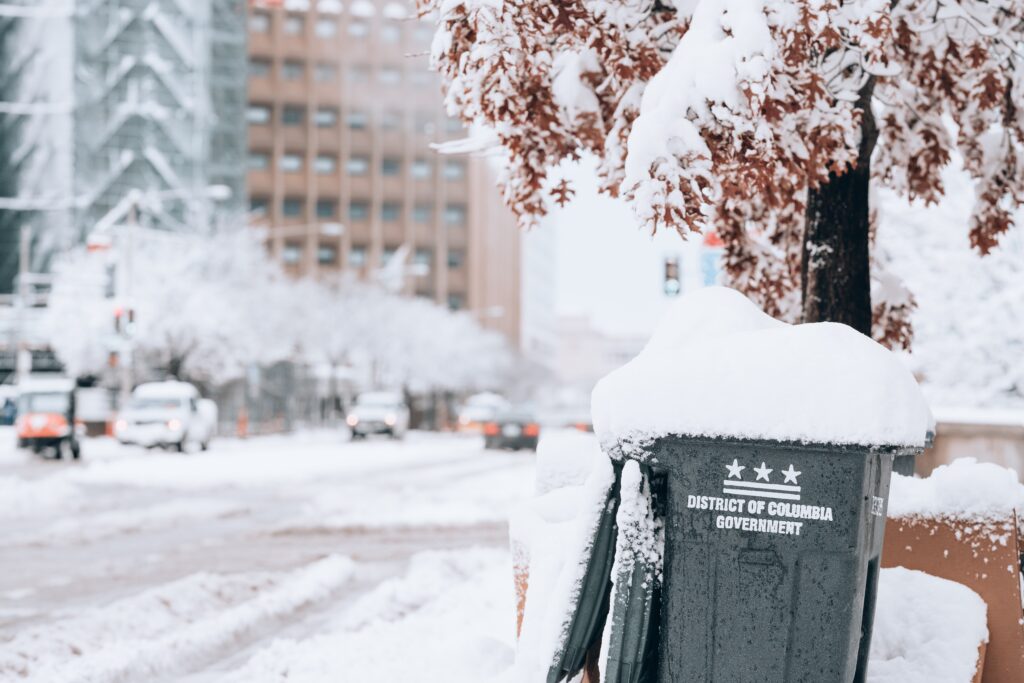
On the morning of Dec. 5, the District woke to a blanket of snow, the earliest in seven years. As service providers, outreach workers, and elected officials sounded the alarm about hypothermia season, D.C.’s unhoused residents braced for the worst.
Some of the same residents who spent the summer seeking shade under highway overpasses or cooling off in air-conditioned libraries are now lining up for hypothermia-season shelter beds, donated coats, and blankets.
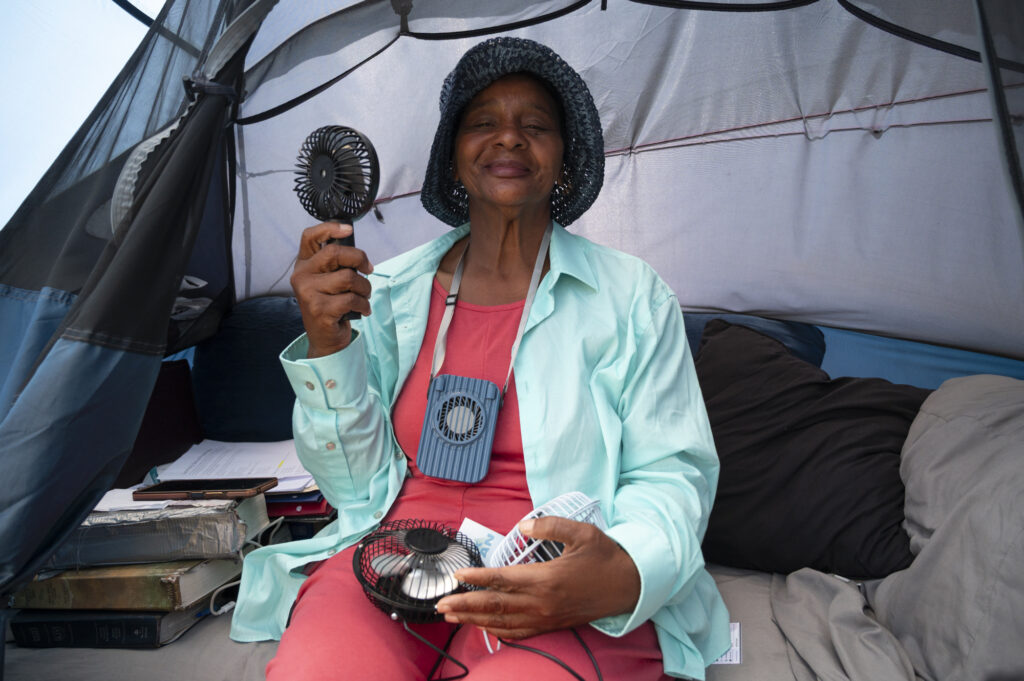
For people living outside, the shift between extreme heat and cold is not just a change in seasons; it is a compounding cycle that is difficult to survive. Last year, 120 people died while experiencing homelessness in D.C. In 2023, opioid overdoses were a leading cause of death for homeless people. But weather also plays a role, said East Peterson-Trujillo, the campaign director for Green New Deal for D.C., an organization working to bring investment to green housing and safe drinking water.
“We’ve seen the numbers of folks who have died while they’re experiencing homelessness or living outside,” said Peterson-Trujillo. “Being outside during extreme heat and extreme cold is life-threatening.”
While the constant weather hazards associated with living outside are the most visible link between environmental concerns and homelessness, they’re far from the only ones. Extreme temperatures, chemical exposure risks, and indoor concerns like mold and lead are all factors that exacerbate housing instability, leading to health issues, self-evictions, and displacement.
Environmental exposure as a housing issue
Across D.C., residents live at the intersection of environmental hazards and housing instability. Extreme heat emergencies in D.C. have grown more frequent and severe in the last decade, and unhoused residents face the highest exposure. A 2022 DCist analysis found climate impacts fall hardest on residents living in or near the city’s heat islands, where pavement, lack of shade, and tightly-clustered industrial sites raise temperatures by as much as 20 degrees above other neighborhoods. These heat islands align with low-income areas of the District, according to 2018 findings from a team of climate scientists. The impact of extreme heat falls along racial lines as well; studies show heat islands overlap closely with majority-Black neighborhoods, often due to redlining policies and credit restrictions that historically segregated minorities from white populations.
Few places illustrate this issue more clearly than Ivy City. The neighborhood sits near the heart of Ward 5, which contains half of all industrial land in the District, according to Anthony David Jr., an environmental justice organizer with Empower DC.
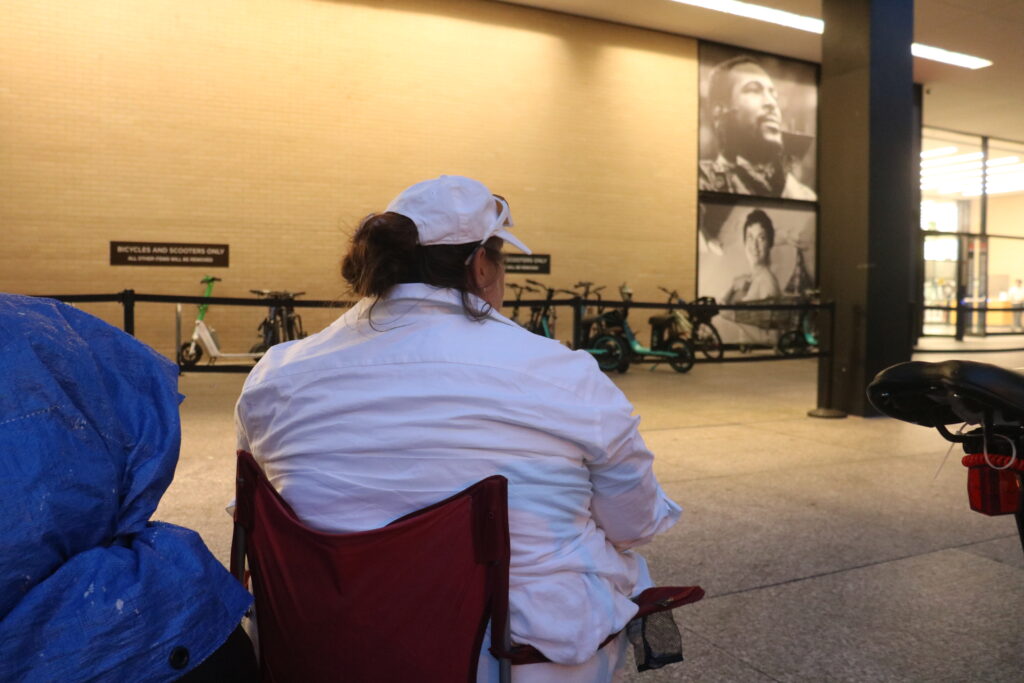
In Ivy City, the New York Avenue Men’s Shelter, which plans to expand to 407 beds by 2027, sits directly across the street from a train yard and Amtrak maintenance facility and a few blocks down from the National Engineering Products (NEP) facility, which has faced complaints of toxic air pollution. Not only is this neighborhood one of D.C’s main heat islands, David said, but residents are also vulnerable to toxic materials.
“Those unhoused men aren’t only getting chemical exposures, they’re also experiencing temperatures 10 to 20 degrees hotter than the rest of the city,” said David. “That’s a major, direct correlation between industrial land use and homelessness.”
The NEP facility near the men’s shelter was the subject of a June 16 lawsuit that accused the chemical product manufacturer of emitting toxic fumes and endangering nearby residents. Community members testified at a Dec. 11 hearing in support of legislation that would enable the mayor to use eminent domain to acquire the facility, which shares a wall with a family home. The testimonies included claims of headaches, nausea, and respiratory discomfort due to chemical vapors emitted from the facility.
In addition to pollution, exposure to extreme temperatures can also affect housed residents facing poor housing conditions, who may not always have access to air conditioning. Although electricity disconnections are prohibited during heat and cold emergencies, some residents told Street Sense in 2024 that didn’t go far enough.
“Extreme heat kills, and we know that unhoused residents and those without adequate resources face the greatest risk.” Ward 4 Councilmember Janeese Lewis George wrote in a statement to Street Sense. “When I think about constituents struggling in rental units without air conditioning during heat waves — or worse, facing eviction into dangerous conditions — it’s clear that housing is literally a matter of life and death, and we must treat it that way.”
This fall, Lewis George, one of the council’s most outspoken voices on climate and racial justice, introduced the Extreme Heat Eviction Prevention Act of 2025. The bill would prevent housing providers from evicting tenants on any day when the temperature is predicted to be above 95 degrees. This mirrors the protections already in place during hypothermia season. The bill waits to be debated in committee after a Nov. 20 public hearing.
At the hearing, housing advocates said the bill was a critical form of climate adaptation for the District’s most vulnerable residents. Lewis George emphasized these protections also buy time for tenants to access rental assistance or resolve disputes without being thrown into homelessness during extreme weather.
“Just as we don’t allow evictions when temperatures drop below freezing during the extreme cold of winter, we shouldn’t force families onto the streets when extreme heat poses an equally deadly threat,” she wrote.
Lead, mold, and environmental displacement
Extreme temperatures are not the only environmental factor determining who stays housed and who does not. Environmental degradation issues extend indoors as well. Peterson-Trujillo has worked extensively on D.C.’s lead-in-water crisis, which was first exposed in 2000 and is ongoing, with D.C. Water estimating over 41,000 lead pipes remain in the District.
“There are more lead pipes left in Wards 7 and 8, areas that are majority Black and majority low-income,” Peterson-Trujillo said.
Residents can replace their lead pipes for free from DC Water, under a voluntary program that can lead to unintended costs. While they wait, the health risks compound with the economic ones. People across D.C., according to Peterson-Trujillo, are choosing to leave rather than endure unhealthy conditions and high rent.
“The cost for replacing lead pipes is just exorbitant,” Peterson-Trujillo said. “Some folks may find that between the damaging exposure from lead in their homes and the increasing unaffordability of rent in the District that maybe it makes sense for them to go somewhere else.”
Beyond drinking water, David highlighted other unsafe indoor conditions in some of D.C.’s more affordable housing units, like poor air quality and pests, that increase the risk of health concerns.
“A lot of these units have a lot of ‘slumlords,’ as well that really exacerbate the experiences of homelessness. Because a lot of our residents who are living in affordable units are living in units that have poor air quality due to the existence of rats, HVAC systems, and such, that exacerbates health issues like asthma as well,” he said.
That dynamic mirrors broader anti-displacement concerns. Peterson-Trujillo pointed to the Healthy Homes Act, a pilot program in Ward 7 that gives low-income families free upgrades like electric heat pumps and energy-efficient appliances. They argue programs like this help residents stay in their homes instead of being pushed out by rising utility costs or unsafe conditions.
Without similar large-scale investments, advocates fear environmental hazards will push residents into homelessness or out of the District. The same cycle is visible in cases where residents stop paying rent to protest dangerous living conditions, but are subsequently evicted from their units, according to Empower DC.
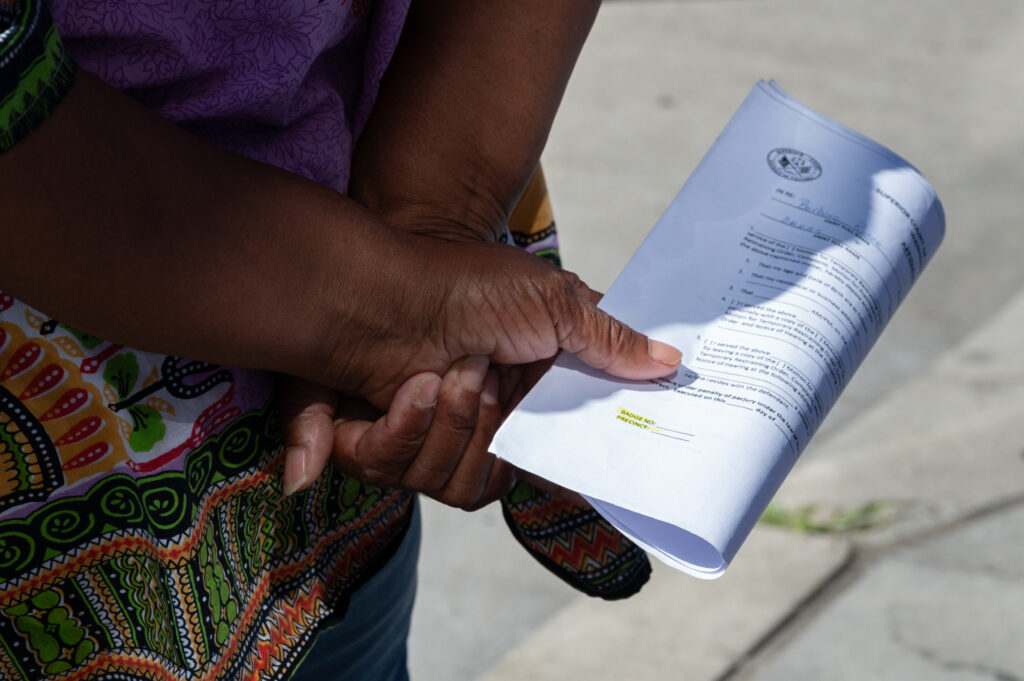
“I’ve met residents living with mold, with lead, with rats, and landlords don’t address it,” David said. “Residents fight back, but that often leads to evictions. Then they’re in court, missing work, and sometimes they don’t even know they have a court date.”
Community solutions and climate resiliency
Some potential solutions are emerging, not only in the council, but also from community members themselves.
The Ivy City Resilience Hub Eminent Domain Authority Act of 2025 would not only close the NEP facility named in the chemical exposure lawsuit, but it also proposes converting the site into one of the city’s only climate resiliency hubs.
“These hubs are places people can go during extreme heat or extreme weather, somewhere to charge their phones, get water, stay safe,” David said. “Right now there’s only one in the entire city.”
To advocates, a “climate resiliency hub” is what environmental adaptation must look like on the ground: resident-led yet integrated with long-term housing protections at the policy level.
“Beyond heat protections, we need stronger rent control, fully-funded voucher programs, major investments in deeply affordable housing like the Housing Development Growth Act, and better enforcement against landlords who fail to maintain safe, habitable conditions,” Lewis George wrote.
Green New Deal for D.C., meanwhile, is pushing for social housing, which would create government-owned, mixed-income buildings with one-third of units set aside for residents earning under 30% of the area’s median income.
“We need more deeply affordable housing,” Peterson-Trujillo said. “Being priced out is one of the biggest things that pushes people into living outside.”
Advocates stress the stakes are higher for those facing housing instability, not just because they lack consistent shelter, but because D.C.’s environmental landscape is already unequal.
“Climate change disproportionately harms low-income residents and communities of color,” Lewis George wrote. “We can’t separate environmental justice from housing justice when people are dying in inadequate housing during heat waves.”
This article originally appeared in Street Sense’s Jan. 2, 2026 edition.