Last month, the D.C. Council pushed a late-stage amendment to landmark housing legislation, which many advocates say constitutes the biggest rollback in tenants’ rights in years.
The change, which exempts tenants in certain small properties from legislation that gives them more say in what happens when their buildings are sold, could harm low-income residents, tenants’ rights advocates say, and was approved without input from the public.
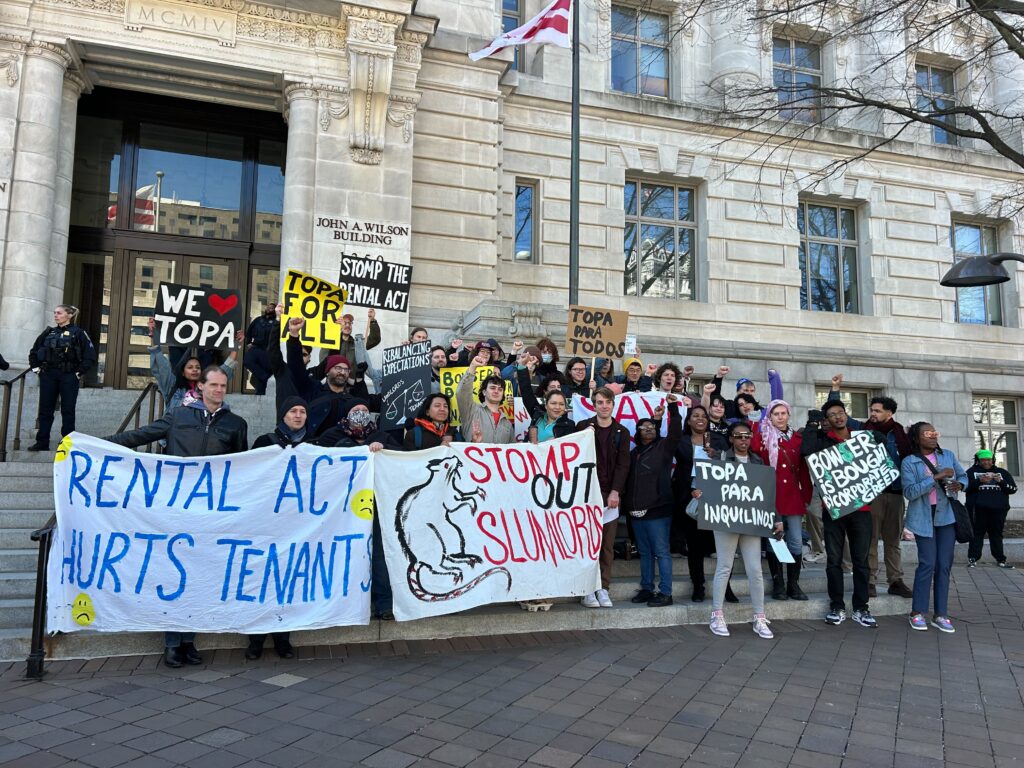
On Oct. 21, the council reconsidered the Rebalancing Expectations for Neighbors, Tenants, and Landlords (RENTAL) Act, which originally passed on Sept. 17, specifically looking at an amendment from At-Large Councilmember Anita Bonds to exempt some 2-to-4 unit buildings from the Tenant Opportunity to Purchase Act (TOPA). The council passed the amendment when it approved the RENTAL Act, but agreed to revisit it after a lengthy discussion among lawmakers about what buildings the exemption applies to. The council passed the amendment on reconsideration 9-4, with Councilmembers Janeese Lewis George, Brianne Nadeau, Matthew Frumin, and Trayon White dissenting.
For over 40 years, TOPA has given tenants the opportunity to purchase their buildings and a seat at the negotiating table when their building goes up for sale. Mel Zahnd, a supervising attorney in the housing law unit at LegalAid DC, said TOPA is the District’s “most valuable tool” for preserving affordable housing and allowing D.C. residents to control the future of their homes.
“For years now, landlords have been trying to chip away at TOPA, and it seems like this is part of that process,” Zahnd said.
The RENTAL Act, initially proposed by Mayor Muriel Bowser, exempts newer buildings from TOPA and speeds eviction timelines, citing a heightened rent backlog in the city and the need to spur housing investment. Bonds’ amendment also exempts the majority of buildings with 2-to-4 units, which she said is necessary to protect longtime homeowners who rent out units in their property.
At the hearing, Bonds said she proposed the amendment “with the intention of providing clarity and relief to individual homeowners, while not interfering with the housing industry’s ability to close real estate transactions.”
The Urban Institute found that 2-to-4 unit apartments make up 11% of all apartments in multiunit properties, with most of these apartments located in Wards 5, 6, and 7. The institute also found 77% of these smaller properties were owned by individuals, rather than corporations — data Bonds pointed to in support of her amendment.
Much of the debate among councilmembers centered on whether the amendment would exempt only individually-owned 2-to-4 unit buildings; or if buildings owned by corporations also would be exempt. Bonds asserted the amendment would still require corporately owned small buildings to abide by TOPA. But Ward 1 Councilmember Brianne Nadeau argued the wording of the amendment was unclear, and corporate owners could try to exempt their buildings from TOPA due to the variety of definitions of what constitutes a corporation.
Housing advocates and some council members say the process for approving the amendment — which many say constitutes the biggest change to TOPA the council has made in years — was rushed, with no public hearing or opportunity to present data on how the change will impact tenants.
Ward 4 Councilmember Janeese Lewis George, who benefitted from TOPA when purchasing her home in 2016, voted against the amendment, saying the council did not have enough data to know how many of the owners of these smaller properties benefited from TOPA.
“If we’re serious, truly serious, about closing the racial wealth gap and creating opportunities for Black and brown residents to stay and thrive in D.C., then we must stop dismantling the very tools that make that possible,” Lewis George said.
She criticized the lack of a public hearing, saying when the council passed legislation exempting single-family properties from TOPA, lawmakers and members of the public engaged in hours of debate. But in this case, “there was no hearing, no serious study, and no meaningful input from the public,” Lewis George said.
Advocates also criticized the broader rationale that Councilmember Robert White and Bowser have used to promote the RENTAL Act: the city needs to loosen regulations to make housing investment more attractive.
“Not only is there no evidence to support the claim that TOPA is preventing investment in D.C.’s housing market, quite the contrary, we have seen TOPA remain static, and we have seen other factors impact the D.C. housing market,” Zahnd said.
Mychal Cohen, the senior policy associate for housing at the D.C. Fiscal Policy Institute, said the changes in the RENTAL Act, like rolling back tenants’ rights and speeding up eviction timelines, misunderstand the root cause of rent nonpayment and other issues facing landlords.
“We are coming back to these really punitive responses to a housing crisis that can really only be solved by investing in renters, investing in tenants, investing in folks who are struggling to pay their rent,” Cohen said. “You’re seeing this broad step back in terms of our support for lower-income folks.”
This article originally appeared in Street Sense’s Nov. 5, 2025 edition.