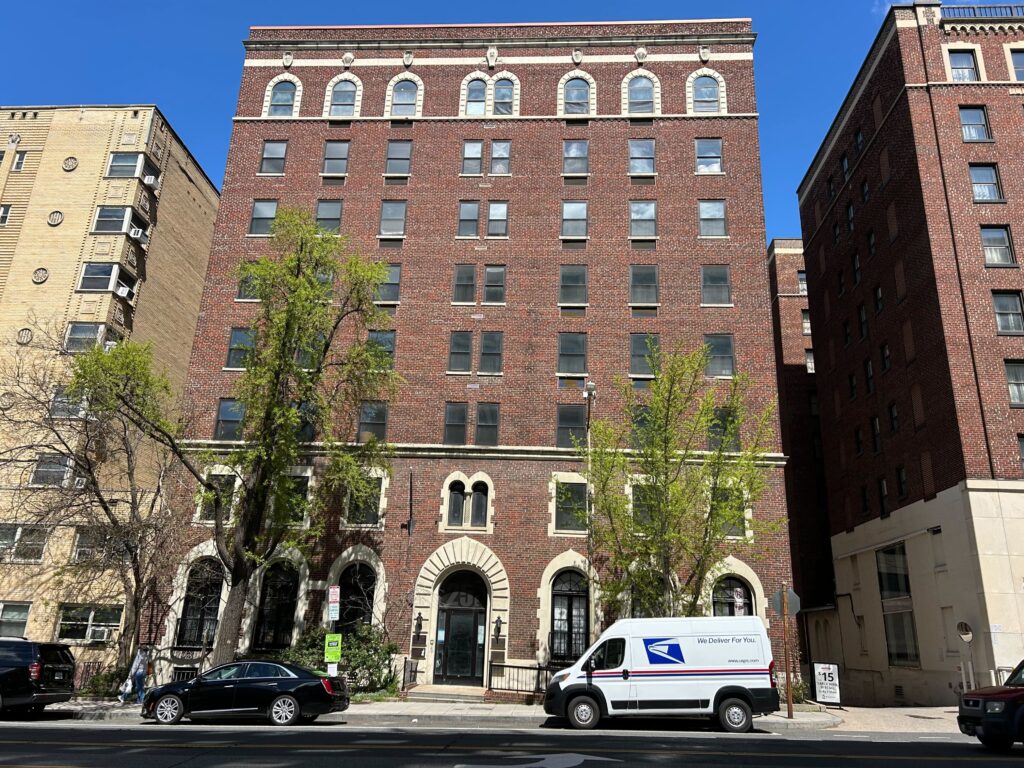
As cities across the United States grapple with homelessness — driven by population growth and a shortage of available housing — the construction industry is tasked with developing faster and more cost-effective solutions. The process of repurposing existing, underutilized buildings — known as “adaptive reuse” — is a viable strategy to meet these demands. The recent conversion of a hotel building at 25 E Street in D.C. into a homeless shelter demonstrates how this approach can be implemented.
The project entailed transforming a 10-story hotel — spanning 50,000 square feet of usable space — into a comfortable shelter featuring 102 rooms and 192 beds. Completed within 14 months, the development illustrates how using existing infrastructure can reduce construction time compared to projects built from the ground up.
One of the primary advantages of adaptive reuse is efficiency. By preserving the building’s main systems, teams can focus on the interior renovations necessary to adapt the space, streamlining the process. However, this efficiency also brings challenges. Existing buildings typically require a rigorous assessment, and very old buildings feature structural constraints, outdated mechanical and ventilation systems, and layouts and intended uses that do not comply with current standards.
In this project, bringing the building into compliance required multiple design changes and solutions during construction. These included modifications to integrate accessibility standards, life safety systems, patient examination clinics, administrative offices, and a dining hall that can be converted into dormitories. Ensuring compliance with ADA regulations was also a key priority.
Another critical factor in adaptive reuse projects is inspection and regulatory approval. 25 E Street required coordination with both third-party inspection agencies and local authorities. Maintaining progress depended on continual communication, documentation, and handling revisions efficiently.
Beyond technical implementation, adaptive reuse projects must also consider the user experience. The inclusion of amenities such as communal areas and dining facilities can significantly enhance the functionality and livability of repurposed spaces. These elements play a crucial role in promoting stability and well-being.
Location also contributes to the success of such developments. Properties located near transportation hubs and services offer added value by increasing accessibility for residents. The 25 E Street project is centrally located, directly opposite Union Station. This strengthens the role of adaptive reuse as part of a broader urban planning approach.
Adaptive reuse can deliver significant savings, particularly in densely populated city centers with high costs for land and new construction. Additionally, the environmental benefits of reusing existing structures reduce material consumption and, consequently, construction waste.
The 25 E Street project demonstrates adaptive reuse can serve as a scalable model to address urgent housing needs. By combining efficient construction practices with careful design and management, existing buildings can be transformed into functional, standard-compliant, and effective spaces that respond to urgent social needs.