When Ashley moved into her first apartment last month, she was overjoyed. After years in the foster care system and months of couch surfing, Ashley, 23, could not wait to have her own place.
“I was jumping the first day I moved in, literally, I was screaming and jumping. I almost cried tears of joy,” she said.
Ashley, who asked not to use her real name to protect her privacy, entered foster care at 15. She aged out of the system when she was in college and living in campus housing. After she graduated, she looked for an apartment she could rent with the money she’s saved from working since she was 14, but found her options were unsanitary, in neighborhoods hard to access by transit, and too expensive, she said.
Without a stable place to stay, Ashley couch surfed while she waited and hoped for her application for a housing voucher to be approved. When it was, she felt like her life had changed.
“I would literally be homeless if the system was not there,” she said.
The federal government funds the kind of housing voucher Ashley has, called a Family Unification Program (FUP) voucher, to prevent homelessness among former foster youth, who can be especially at risk of instability without the family support to get an education, find a job, or pay rent. The vouchers are available to young people who have left or will soon leave foster care and who are experiencing or at risk of homelessness, as well as to some families involved in the child welfare system.
Just a few years ago, D.C. had more than 80 unused FUP vouchers, even as young people around the District left foster care for unstable housing or homelessness. Advocates pushed for D.C. to better inform foster care youth about their options and to encourage more people to apply for FUP vouchers.
In 2023, a new policy requiring D.C. to consider all foster youth for a FUP voucher went into effect. Since then, the number of people receiving vouchers has increased significantly. Now, for the first time, D.C. has matched all of its FUP vouchers with a household, and can request more from the federal government. While the process can still be slow or challenging for young people to navigate, the changes have enabled more foster youth to settle into stable housing.
“When they acquire the voucher, and they successfully lease up here, they are able to go out, get jobs, volunteer, coach Little League,” Ruth Anne White, executive director of the National Center for Housing and Child Welfare, said. “It’s really beautiful to watch what unfolds when these young people aren’t struggling day after day to know where they’re going to lay their head at night.”
Homelessness and housing instability among foster youth
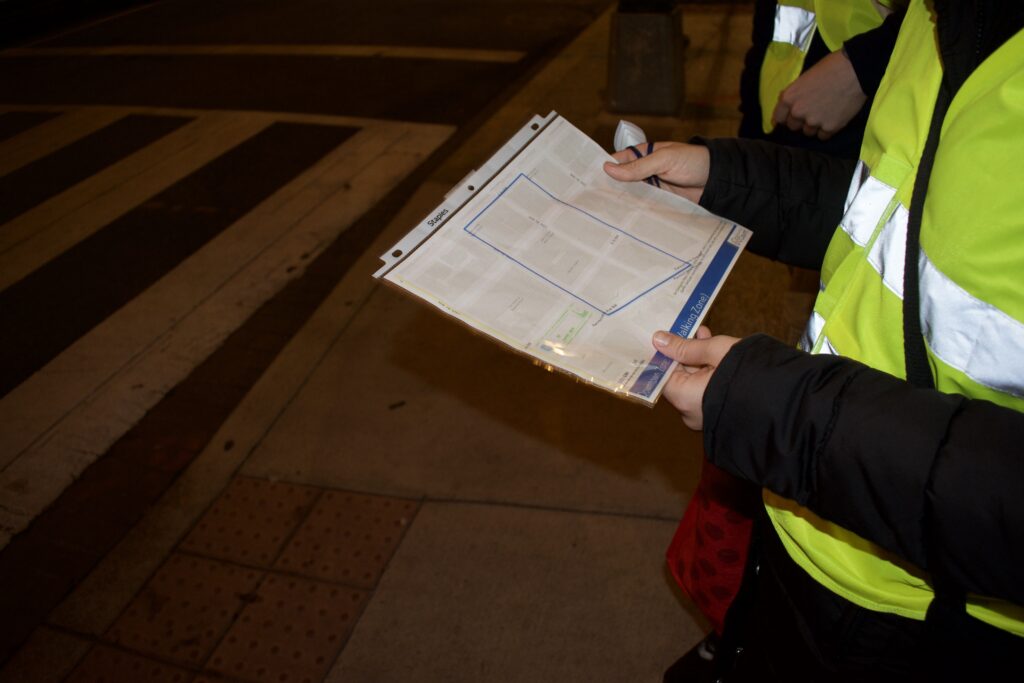
Former foster youth are disproportionately likely to experience homelessness. Around the country, between 25% and 50% of people who leave foster care experience homelessness within four years. In D.C., about 10% of adults experiencing homelessness were formerly in foster care, according to an analysis of the 2025 Point-In-Time Count, an annual census of people experiencing homelessness.
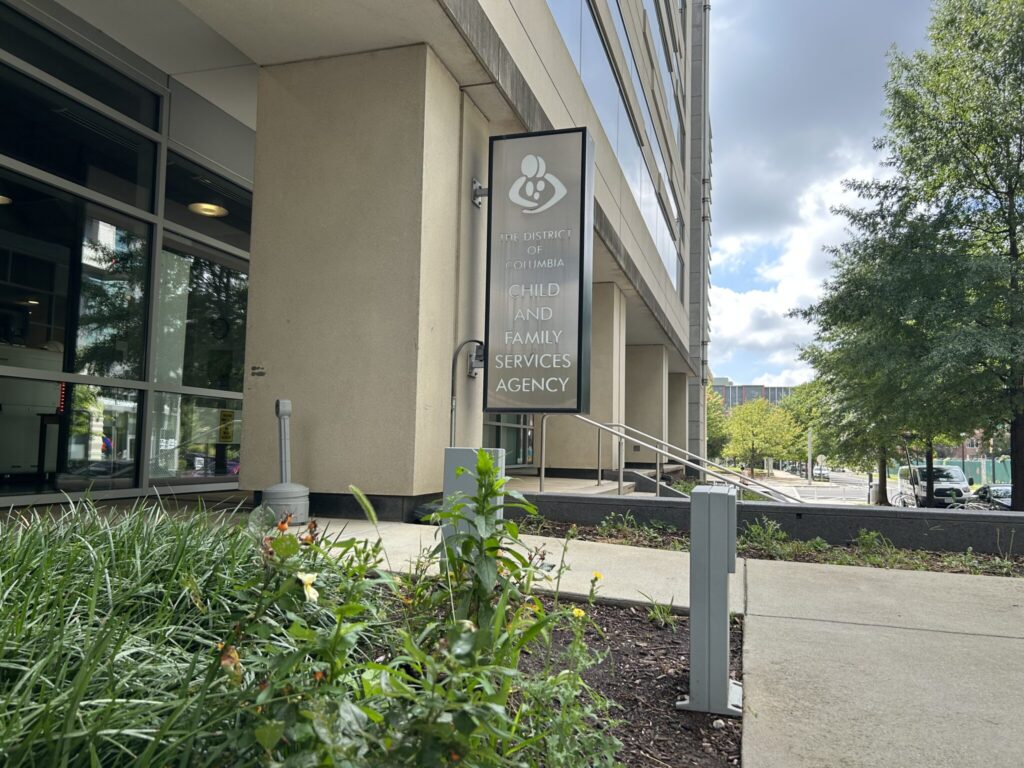
In D.C., young people “age out” of foster care at 21. Before that, the Child and Family Services Agency (CFSA) aims for most foster youth to achieve permanency — reunification with their family or adoption — but about 30 to 50 people still age out of the system each year.
In fiscal year 2024, 41 young people aged out of foster care in D.C., according to CFSA’s annual status report. CFSA tracked housing outcomes for 34 of them, while seven were “in abscondence,” meaning the agency didn’t know where they were. Of the 34 CFSA tracked, 30 youth moved into arrangements that CFSA identified as “stable housing,” including living with family or friends.

But living with family or friends may not be a safe or stable housing arrangement, White said. For example, an older youth or someone who is aging out might go back to live with the same family the child welfare system originally deemed unsuitable to care for them.
“They’ll take someone who should not be living with her mother, and they send her back to her mother,” White said. “She wasn’t good enough yesterday, but now all of a sudden, she’s good enough?”
Living with family or friends also doesn’t mean a youth’s name is on the lease, meaning disagreements could disrupt the housing situation or force them to leave.
In fiscal year 2024, only three youth who aged out of care exited to independent living. While CFSA has not yet posted its annual report for fiscal year 2025, advocates hope that as more youth are connected to vouchers, helping them get their own apartments, this number will increase.
Policy changes around FUP vouchers
Two groups are eligible for FUP vouchers: young adults up to age 24 who have aged out or are soon aging out of foster care, and parents for whom a lack of adequate housing is a factor preventing them from keeping or reunifying with their children. There’s no time limit on FUP vouchers allocated to families, but for former foster care youth, the vouchers are limited to three years, or up to five with an extension. Youth with FUP vouchers are responsible for paying 30% of their income to rent, while the vouchers typically cover the remaining cost of housing.
Since 2018, D.C. has had 421 FUP vouchers, provided by the U.S. Department of Housing and Urban Development (HUD). From 2018 to the start of 2023, at least 75 of those vouchers were always available: i.e, almost 20% of D.C.’s FUP total voucher allocation went unused each year. Advocates and foster youth reported at the time many young people were never informed of the voucher program, or were denied, with some aging out of foster care into homelessness.
In response, in 2023, D.C. implemented the Preserving Our Kids’ Equity Through Trusts (POKETT) Amendment Act. The POKETT Act directedCFSA to create a housing plan with each young person leaving foster care and to consider each of them for a FUP voucher.
Now, teens in foster care learn about FUP vouchers during their Youth Transition Planning meetings, which start when a young person is 16 and take place at least every six months, according to CFSA’s written answers to oversight questions in January. CFSA also offers housing information sessions where youth and their support teams can learn about FUP and other resources.
Advocates for foster youth say the POKETT Act has improved awareness about FUP vouchers among young people, social workers, and CFSA staff.
“Social workers and support workers are aware of this product now for housing. Most people now understand it.” Najiba Hlemi, executive director of D.C. Foster and Adoptive Parent Advocacy Center, said.
Since the POKETT Act went into effect, FUP voucher utilization has increased significantly. Now, D.C. has connected all of its FUP vouchers to a youth or family.
According to D.C. Housing Authority (DCHA) spokesperson Alison Burdo, of the 421 vouchers, 370 are currently supporting youth and families in housing, as of March. The remaining 51 have been matched with individuals or households whose applications are under review or who are still looking for an apartment — processes that can take the better part of a year.

In fiscal year 2025, 31 youth aging out of care in D.C. were connected to FUP vouchers, according to CFSA’s oversight answers, compared to 11 young people who got housing through FUP in 2024.
Ameena, who asked not to use her real name to protect her privacy, entered foster care at 13. Last month, at 20, she moved into her FUP-subsidized apartment. She told Street Sense moving into her own place felt “amazing.”
“For foster youth, we look at the FUP voucher like, ‘we’ve made it,’” Ameena said. “Living alone, you just kind of feel free.”
Obstacles remaining
While advocates celebrated improvements to the FUP process in the last few years, they also said many young people still face obstacles while trying to access housing through the vouchers.
After a young person collects all of their information and fills out a complicated application packet with their support team, their application goes to DCHA. According to DCHA answers to oversight questions in February, the average time between DCHA receiving a completed FUP application and the applicant leasing an apartment is 254 days. More than eight months.

It takes an average of 102 days for DCHA to reach an eligibility decision after an application is submitted, 42 to 43 days for a youth to be issued a voucher after being deemed eligible, and 109 days after a voucher is issued for a youth to sign a lease.
The lengthy process means some young people may age out of foster care while still waiting to get into their FUP housing.
“Although our clients were able to apply for FUP vouchers, most of them did not obtain housing through FUP before they aged out of care,” Tami Weerasingha-Cote, policy director forthe Children’s Law Center, wrote in testimony for the January CFSA oversight hearing. “Most frequently, our clients aged out while their FUP applications were pending or waiting to lease up after they had been approved for a voucher.”
When someone ages out while still waiting for their FUP application to be processed or looking for an apartment with which to use their voucher on, they may face homelessness or unstable housing arrangements in the interim.
While Ashley had already aged out by the time she applied for a FUP voucher, the months-long process left her with a gap in housing. Ashley graduated from college in May 2025, the same month she applied for a voucher. While she waited for DCHA to process her application, Ashley couch surfed and lived with mentors.
She said it took three months for her to hear anything from DCHA after applying, and eight months before she got her voucher and could start applying for apartments.
“The process for getting my FUP was very difficult because I had to do a lot of reaching out back and forth with DCHA, and they were very unresponsive,” she said. “It was a lot of me going back and forth with different people, and while doing that, I was also being told different things from different people.”
For Ameena, too, a lack of clear communication from DCHA and CFSA was a challenge in getting housing through FUP.
“I think the communication piece is really what makes it a long process,” Ameena said. “Sometimes you send in paperwork, and it might be wrong, and they’re not telling you it’s wrong, or they’re not letting you know.”
With FUP vouchers used, what’s next?
While D.C. has used its allocation of FUP vouchers, this doesn’t necessarily pose a barrier to current and former foster youth looking to apply now: the federal government also funds a second voucher program for youth aging out of care, called Fostering Youth to Independence (FYI) vouchers.
FYI vouchers have the same eligibility requirements as FUP for foster youth. Public housing authorities, partnered with a child welfare agency, can apply for up to 50 FYI vouchers a year on a non-competitive, as-needed basis. For D.C., this means DCHA should be able to access FYI vouchers in increments as small as one at a time, whenever CFSA determines there are youth who need them.
In an email to Street Sense Media, Burdo, the DCHA spokesperson, wrote that CFSA has requested DCHA apply for FYI vouchers this fiscal year, and the two agencies are “currently preparing the application.”
D.C. has never applied for FYI vouchers before. However, in fiscal years 2023 and 2025, D.C. applied for additional FUP funding, which it did not receive either time, according to Burdo. But with the higher utilization rate, advocates hope this application for FYI will be more successful.
“They have to demonstrate that they’ve used up all the other [vouchers], whatever they had in hand. That was a problem before, because they had not used them all up,” Hlemi said. “Now they’re able to say, ‘Okay, we don’t have any left.’ It shouldn’t be that difficult of a process to go into their portal and pull down some more, because there’s legislation specifically for it — states are doing it all over the place.”
White, whose organization, the National Center for Housing and Child Welfare, worked with current and former foster youth to create the FYI program, said it’s good news that D.C. plans to apply for FYI vouchers.
“They’re not ‘out’ of vouchers — it’s like they’ve successfully leased up their inventory, and now they’re going to request vouchers on demand. That’s a good thing,” she said. “Because the housing authority is moving forward and CFSA is abiding by the D.C. law, we should eliminate homelessness for youth aging out of foster care. That is something that we should all be celebrating.”
Ashley and Ameena each moved into their apartments in February. They both said the process, while imperfect, has left them with housing they feel safe and happy in.
“No one tells you how amazing it is to be living on your own,” Ashley said. “I love it.”
This article originally appeared in Street Sense’s March 25, 2026 edition.