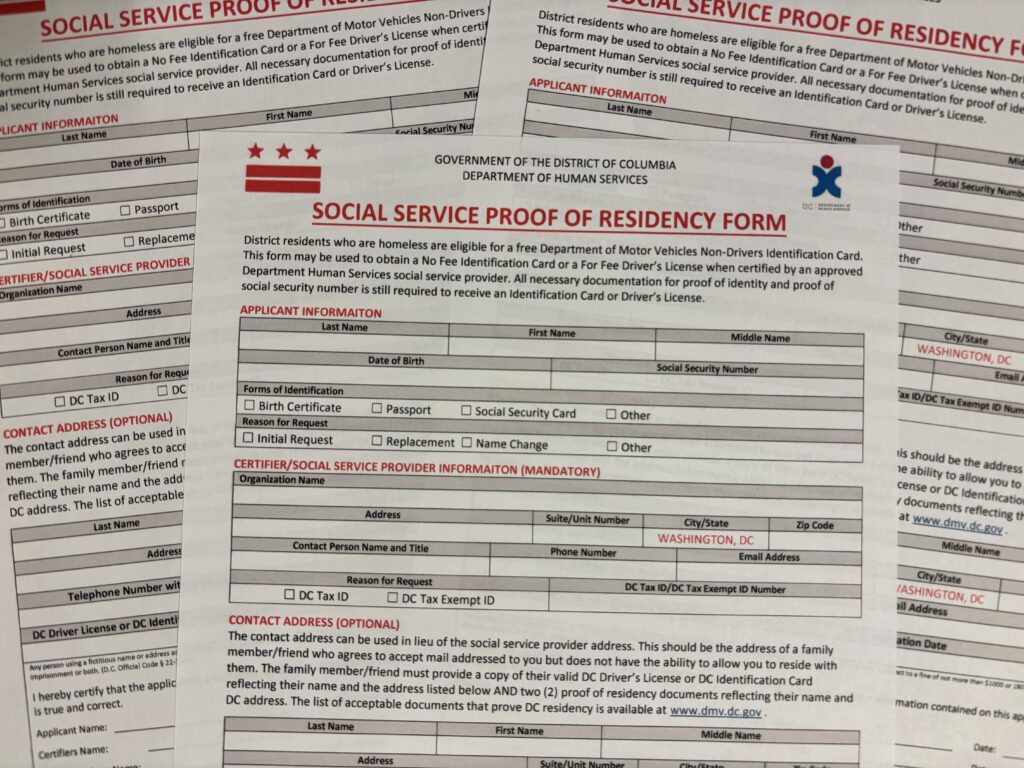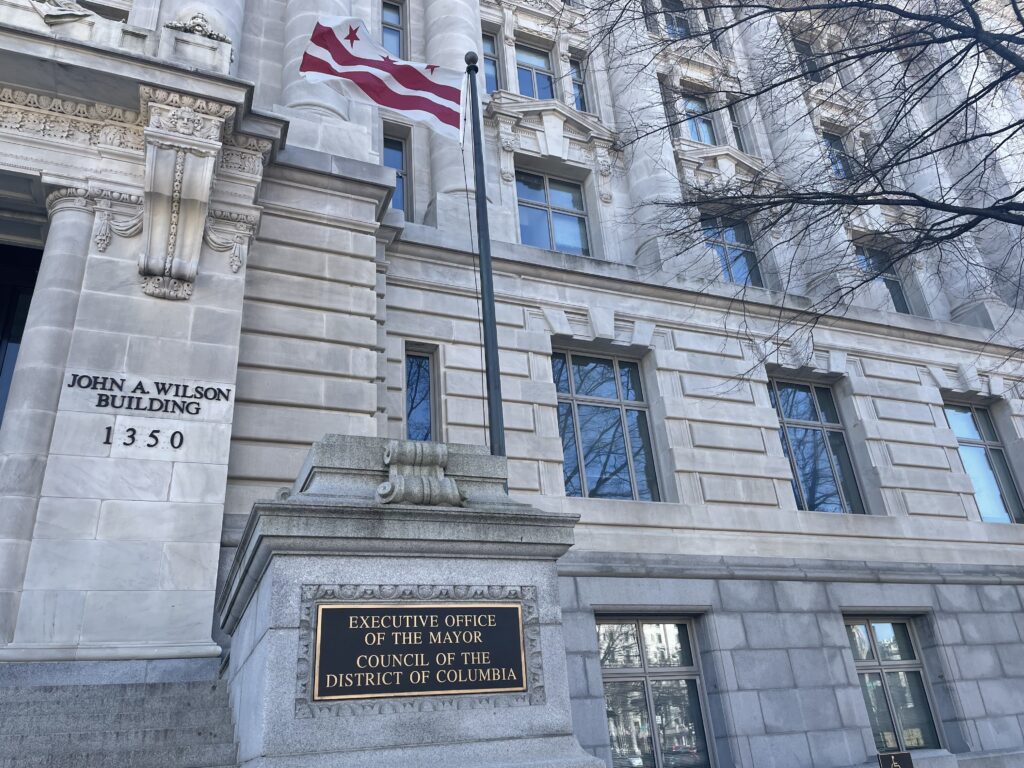
The District is debating whether to make DC Flex, a rent subsidy program the city has piloted for several years, a permanent option for residents.
First implemented in 2017, DC Flex serves 220 families and 21 individuals. It provides eligible low-income participants with a fixed annual subsidy in a dedicated account they can access to help pay for their rent. The funds provided through DC Flex are exclusively for rent payments, and participants can only withdraw up to the cost of their rent.
A bill before the D.C. Council Committee on Human Services would make the program, which is set to expire in 2026, permanent, allowing it to continue to serve people enrolled. The committee held a public hearing on Oct. 30 to discuss the DC Flex bill, as well as the “Public Benefits Security Amendment Act of 2025,” which aims to prevent public benefits theft by switching away from swipe-only Electronic Benefits Transfer (EBT) cards to ones with microchips, a more secure technology.
During the hearing, recently nominated head of the D.C. Department of Human Services (DHS) Rachel Pierre raised concerns about the financial feasibility of both bills, though she said she supported their intent. DHS is the agency that would facilitate the proposed legislation, making its opposition a potential obstacle.
The program fills a niche in the city’s housing services array as D.C.’s only shallow longer-term rental assistance program, as opposed to deep subsidies like housing vouchers, which cover the full cost of rent. For people exiting shelters, it has the potential to offer more stability than an alternative like the Emergency Rental Assistance Program (ERAP), which can provide short-term rental assistance but often only on a one-time basis. Funding for ERAP has decreased since federal pandemic-era support was depleted, and applications have been closed since November 2024.
DC Flex is targeted toward families and individuals who can generally afford their rent but are severely rent-burdened, Pierre said in her testimony. It’s intended to be a stopgap when participants experience an unexpected cost, such as a car repair expense or medical bill. Participants must have a lease under their name, and can choose how much of the subsidy they use each month.
Ward 3 Councilmember Matthew Frumin, who chairs the council’s human services committee, said the current authorization for the Flex program will expire at the end of September 2026. Participants are enrolled in the program for five years, meaning if the bill to make the program permanent does not pass, some people may see an abrupt end to the subsidy in 2026.
While comprehensive data about DC Flex’s success is not yet available, DHS reported that in fiscal year 2024, city shelters did not see anyone who had been enrolled in DC Flex reappear at their doors, a potential sign that it is an effective intervention for some to remain stably housed. The Lab @ DC, a research group embedded within the city government, is working on a full evaluation of DC Flex, which will be made public next spring.
The committee heard testimony from five speakers, mostly legal advocacy workers. While all expressed support for the intent of the bill, some raised concerns about the size of the subsidies, who the program serves, and the timeline for making it permanent, which a couple of speakers worried was rushed.
Makenna Osborn, testifying for the Children’s Law Center, urged the committee to wait to mark up the legislation until the Lab’s report is published, ensuring the bill is based on the most recent data. As it stands, each participating family receives $8,400 annually, and individuals $7,200. The bill proposes an increase, moving toward a minimum of $11,300 for families and $9,000 for singles by October 2027. With high rent prices and low incomes, Osborn said even these increased subsidies may be too low.
Policy and advocacy attorney with the Washington Legal Clinic for the Homeless, Joshua Drumming, shared similar concerns. According to Pierre, DC Flex has recently targeted people and families exiting shelters and rapid rehousing, a short-term subsidy program to help them find stable housing. But Drumming argued for the income levels of people in these programs, DC Flex does not provide enough support.
“The reality is that the majority of families or individuals in shelters or rapid rehousing do not have enough income to maintain housing in D.C.,” Drumming said. “Despite these realities, DHS continues to act as though DC Flex is comparable to the subsidies of permanent vouchers or rapid rehousing.”
Responding to this concern, Frumin said he sees DC Flex as a “tool in the toolbox;” it may be able to help some people, but it should not be expected to be a catch-all program for people in needing of stable housing.
“We have to walk and chew gum. We have to help the people who need it the most, but we also need to calibrate our assistance for those where less can push them over the line. That’s how we can most responsibly marshal our resources and help the most people,” Frumin said.
Throughout the meeting, Frumin noted his concern that if the council were to wait for the report from the Lab, a markup may not be able to occur until the council is well into the budget process. This timeline could make it difficult, if not impossible, to pass the bills, particularly given their required funding, which would have to be factored into the budget. While Advisory Neighborhood Commissioner for District 8C Salim Adofo testified in support of the bill, highlighting the need to avoid delays so people in the program do not experience a lapse in access to funds, both Drumming and Osborn urged Frumin to wait for the report.
“I can’t stress enough that everyone here is, at least in part, speculating,” Drumming said. “We really do need to see the data and see how effective and successful this pilot has been.”
The committee also heard testimony on a second bill to require EBT cards to have microchips, which Frumin said could reduce benefits theft by 90%. According to U.S. Department of Agriculture data, in 2024, the District reported over $2 million in stolen Supplemental Nutrition Assistance Program benefits. The bill also contains provisions for DHS to reimburse people for stolen benefits — something the agency has been doing since 2024, when a federal law requiring this expired.
Nicole Dooley, a supervising attorney with Legal Aid DC, testified in support of the bill.
“For some, stolen benefits will look like falling behind on bills, potentially leading to evictions and utility terminations. For others, it will look like caretakers skipping meals to ensure that their children can eat,” Dooley said. “This bill would bring D.C.’s program in line with modern methods of theft prevention.”
To become law, both bills would have to be passed by the committee and the full council, and then funded in the budget. Pierre said DHS is willing to collaborate with the council to work out logistical and financial aspects of the bills, but that, in their current forms, they would not be feasible for the agency.
This article originally appeared in Street Sense’s Nov. 5, 2025 edition.