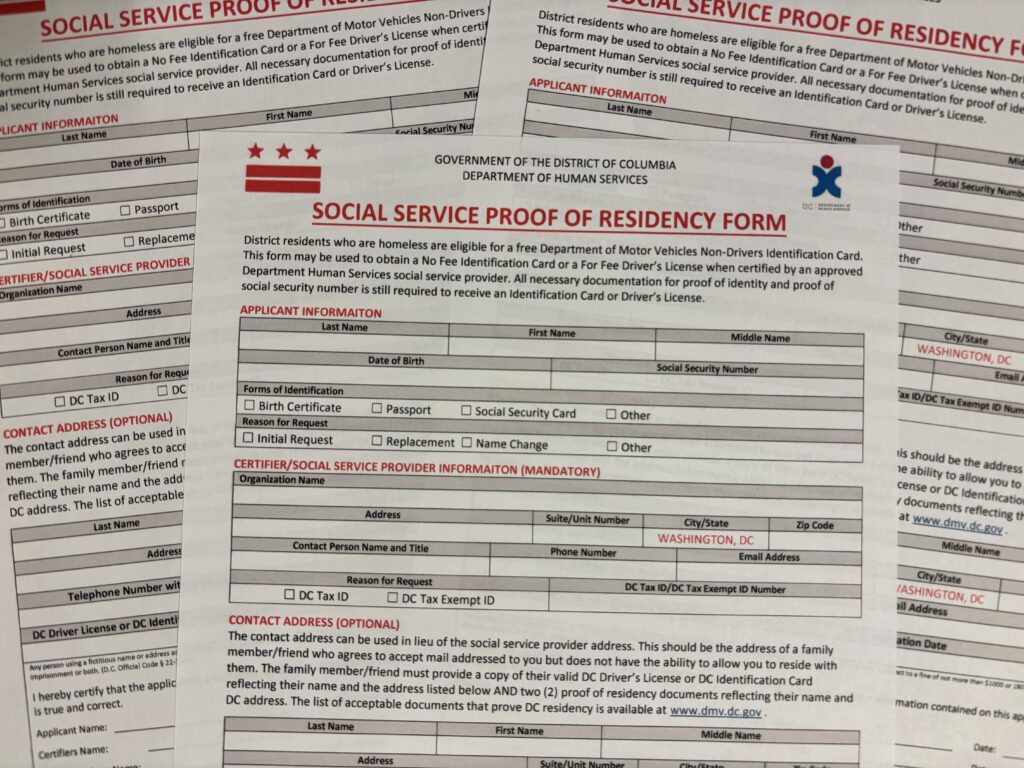
A city plan to significantly reduce poverty in the District by 2026 and eliminate it entirely by 2036 is still in the works, nearly two years after the group tasked with making the plan first convened.
The D.C. Commission on Poverty submitted its first report on ending poverty in the city in June, according to public meetings held this summer, but it is not yet public. During the meetings, members of the commission said the report is “antiquated” and the group was not fully satisfied with it, but they let it move forward to meet a deadline outlined in their bylaws.
“If you’re looking for a full understanding of what the commission believes in terms of poverty and policy reduction, I wouldn’t follow that report per se,” Ty Grooms, a senior policy advisor to the director of the Department of Employment Services, which oversees the commission, said at a meeting in July.
While the commission has been working on the report over the last several years, poverty in D.C. has been increasing. In 2024, the poverty rate in D.C. was 17.3%, up 3.3 percentage points from the previous year, according to a D.C. Fiscal Policy Institute analysis of 2024 U.S. Census Bureau data. From 2014 to 2024, census data shows the poverty rate for Black D.C. residents never fell below 21.3%, and in 2024, it reached a decade high of 30.5%. D.C.’s poverty level is far above that of the nation at 10.6%, the analysis states.
The D.C. Council first introduced a bill creating the commission, tasked with reducing poverty in the District, in 2019. The bill took effect in 2021, setting up the commission and ordering it to create a report with suggestions on how to cut poverty in half in the District by 2026. The commission began meeting in late 2022.
According to the group’s bylaws, its first poverty-reduction plan was due one year after 13 members of the commission were appointed.
The first 12 members were appointed in November 2023, with two more in January 2024 and two in October 2024, according to records from the D.C. Council. Today, only 10 of these members remain on the commission. DOES did not respond to questions about the commission’s work, including when the report was due, in time for publication.
The commission met publicly for the first time this year in June, according to commissioners’ statements at meetings. The commission has held three public meetings this calendar year so far, on June 24, July 22, and Sept. 30, with a fourth scheduled for Oct. 28. The commission’s bylaws state the group must have at least four community listening sessions annually, but the group has not held any listening sessions so far this year, according to commissioners.
During a meeting, commission members said they submitted their report sometime before June 2025, nearly a year and a half after 13 members were first appointed to the commission. Grooms said at the commission’s August meeting that the report had been with the deputy mayor’s office since July and the mayor’s office since August.
“I want this group to be successful.” Grooms said at the June meeting. “I want this group to really feel like it is part of something that is making somewhat of a difference in this city in terms of poverty reduction.”
Commissioners are unsure about the report’s accuracy today
Commission members expressed concern during the group’s July meeting their report on poverty in the city was outdated and not reflective of all commission members’ views. Commissioners said the report, once it is public, will not reflect recent cuts and policy changes from of federal and local governments, since much of the data used in the report dates back to June 2024.
Commissioner Nechama Masliansky said the group was “obligated by law” to issue a report within a certain time period, so commissioners did not object to the report.
“That does not mean we had complete buy-in on every word of it, or that it’s as complete an expression of our own concerns and priorities as members of the commission,” Masliansky said.
The group worked in tandem with Medici Road, a contracting service hired by the Department of Employment Services to write up the report, according to commissioners. Masliansky said commissioners worked on the report all of 2024, but the group did not often meet officially because it lacked a quorum. The report, according to Masliansky, consists of recommendations brought forth by the contractors since the commission lacked the opportunity and the structure to produce the report, though the group did have the opportunity to review, question, and vote on it.
“When we voted on a final, on a final basis to approve it, we acknowledged that it might not say what each of us would have written if we had together written a report,” Masliansky said.
Commissioner Robert Warren said at the same meeting that while he likes the report the commission submitted, it “falls short” in certain areas. He said as an advocate for housing, some of the wording in the report is not as “intentional” as he wanted it to be for community members affected by poverty. Fewer than 20 people “actively living in poverty” contributed to an interview or input on the report, acting Chair Elijah Moses said at the June meeting.
Commissioner Khadijah Williams said at the July meeting that for the commission to establish its credibility and value, it is not a “good look” to share a report that is out of date, but she hoped they could use the report when moving forward with future initiatives.
“We are not wasting the money that was put forth with this report if we are looking at it with fresh eyes and thinking about what can be applied and what lessons it pulled that we can use to inform what we recommend this time,” Williams said.
Changes in the poverty commission
Since its inception, the commission has undergone several leadership and membership changes, leaving it with several open seats.
The commission’s bylaws state it should consist of 19 members appointed by the mayor, with eight ward representatives and 11 at-large representatives. The commission should also have eight ex officio members, who represent agencies in the District, like the Department of Human Services, according to the bylaws. The commission is led by a chair.
There’s been turnover at both the leadership and member levels. During the June meeting, Grooms said then-Chair Marla Dean wanted to step down. In the September meeting, Moses was voted by the group to be the new chair, while Williams was voted as interim vice chair.
Currently, none of the ward-specific seats open to individuals from each of D.C.’s 8 wards with lived experience of poverty are filled. The last two ward members officially left the group before June, Moses announced during the July meeting. Sherry Pate, Ward 5 Community Member, and Absalom Jordan, Ward 8 Community Member, stepped down sometime before then, according to the Internet Archive.
Curtis Smith, a DHS employee and a non-voting ex officio member of the commission representing the agency, said during the June meeting he had been reprimanded by DHS for supporting the commission and that individuals had attempted to “quiet” it.
A DHS spokesperson wrote in an email to Street Sense the agency supports the commission’s mission, though they did not comment on Smith’s specific allegations.
“DHS supports the mission of the DC Commission on Poverty and is an active participant in the group’s work,” the spokesperson wrote.
This article originally appeared in Street Sense’s Oct. 22, 2025 edition.