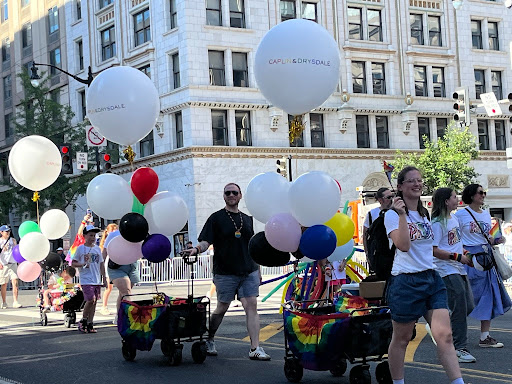
On June 20, hundreds took over Washington, D.C. for the Capital Pride Parade.
With proposed policies from the U.S. Department of Housing and Urban Development (HUD) asking communities looking for funding to sign covenants that deny transgender-inclusive housing, the Capital Pride Parade doubles as a celebration and act of resistance in a world becoming more hostile to the LGBTQ+ community. Street Sense journalism fellow Andrew Anderson documented the parade and talked with attendees about why it’s important to speak truth to power.
Anonymous, 44
Why is Pride important to you as a father?
As a father to two lovely children, I have the obligation to show them the world through the lens of my eyes, through which they see the world and shape how they see themselves. That’s what’s important to me as a father.
How can we make Pride better for the next generation?
We should start by electing better leaders who don’t have issues with others being themselves.
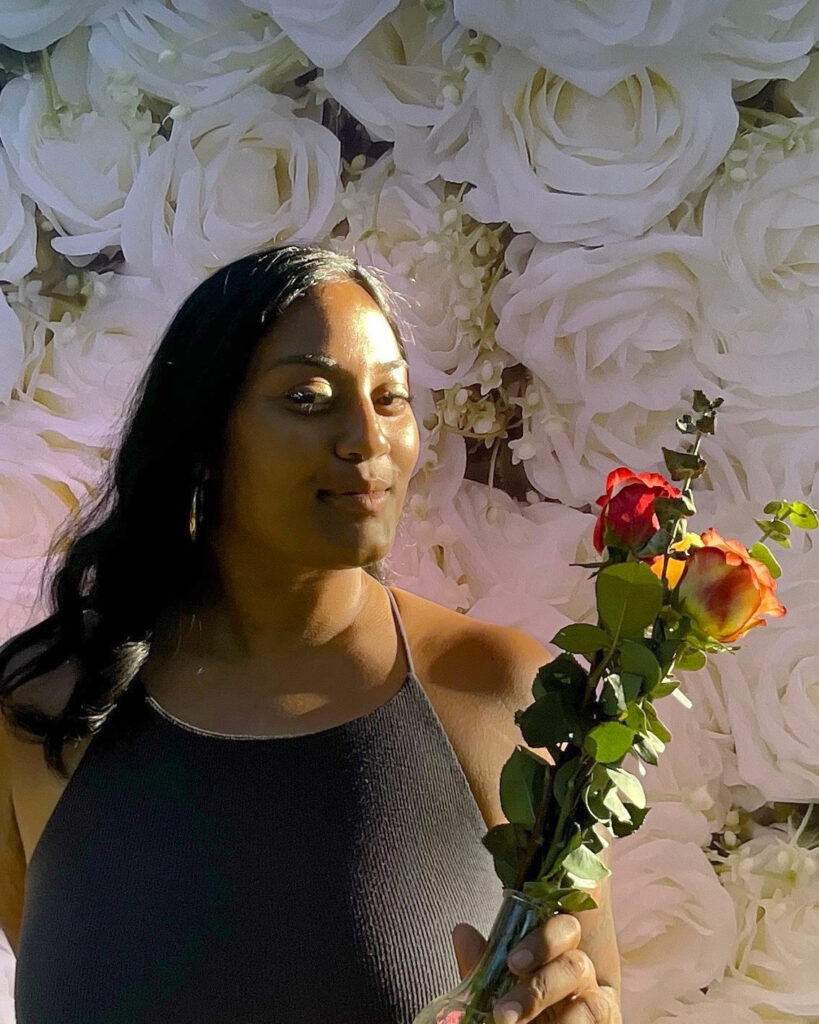
Shai Huq, 33
So, you are a supporter of the LGBTQ+ community, and you have… how long have you lived in D.C.?
I’ve lived in D.C. for over a decade, and I’m actually a member of the LGBTQ community.
How can these pride celebrations, the parade itself, how can they get better this year? This year and last year, Dupont Circle Park was closed to the Pride Parade due to safety concerns. How can we bring awareness to the issue of the National Park Service’s closing of the park for Pride?
Absolutely, so I think that to be queer is to be liberated, and we deserve full access to our public spaces. Whenever we are protecting freedoms for those part of the LGBTQ+ community, we protect everyone’s freedoms. So, for us, I think it’s a lot about reclaiming our agency and pushing our elected officials to ensure that we have spaces to gather, to celebrate, to have joy in public, and be visible. I also think that there’s space for us to make sure that our Pride events have resources available. When you think about intersectional identities, a lot of the queer community experiences homelessness at a higher rate, experiences health issues at a higher rate, because of the fact that there are oppressive tendencies that harm us, so as much as it’s a celebratory and joyful event, we also want to make sure that we’re resourcing folks so that they can come and enjoy and not be sat there wondering where they’re going to sleep that night, so it’s a mix of making sure that we are protecting our right to convene in public, it is our right to assemble in the District of Columbia, and that we find ways to incorporate resourcing, whether it’s through agencies, through the government, or through any of our amazing community-based organizations, like Whitman Walker or HIPS.
Have you ever experienced systemic racism as a result of being part of a community, such as the LGBTQ community?
Yes, both as a brown woman myself, who is queer, when I am visibly queer, the intersectional identities have caused really uncomfortable engagements with folks that have homophobia in the way they interact with me. Moreover, when I first moved to D.C., I worked on a public health campaign, and we worked around PrEP and HIV education and prevention, the intersection for our Black and brown, and specifically trans community, but the queer community on the whole ends up experiencing heightened issues because of their race; you cannot separate the two identities. The experience of the white queer D.C. resident is infinitely different, and it doesn’t mean it is better. It means that there are systems in place that are more harmful when you have a Black and Black or brown identity intersected with being queer.
How can we overcome that and combat systemic racism, especially within the queer community?
I think, especially with some of the misunderstandings about what it means to be queer, there’s sometimes a fear of engaging with us human to human, to see us as a human first, and so I would encourage folks that maybe feel some sort of way towards the queer folks in your life to have a conversation, see that we are your neighbor, not the problem, we are not your villain, we are not your enemy, and once you start to see the things we have in common, we will begin to feel the urge to fight for one another, and that then allows us to go down these avenues we talked about earlier, whether it’s advocating for free public space, advocating for more inclusivity in our health care, or our housing, or being able to support each other by resourcing each other. It sounds really simple, but ground zero is determining whether or not you see the humanity of your queer neighbors.
Last thoughts: While progress continues to be significant, the challenges still remain.
This article originally appeared in Street Sense’s July 1, 2026 edition.