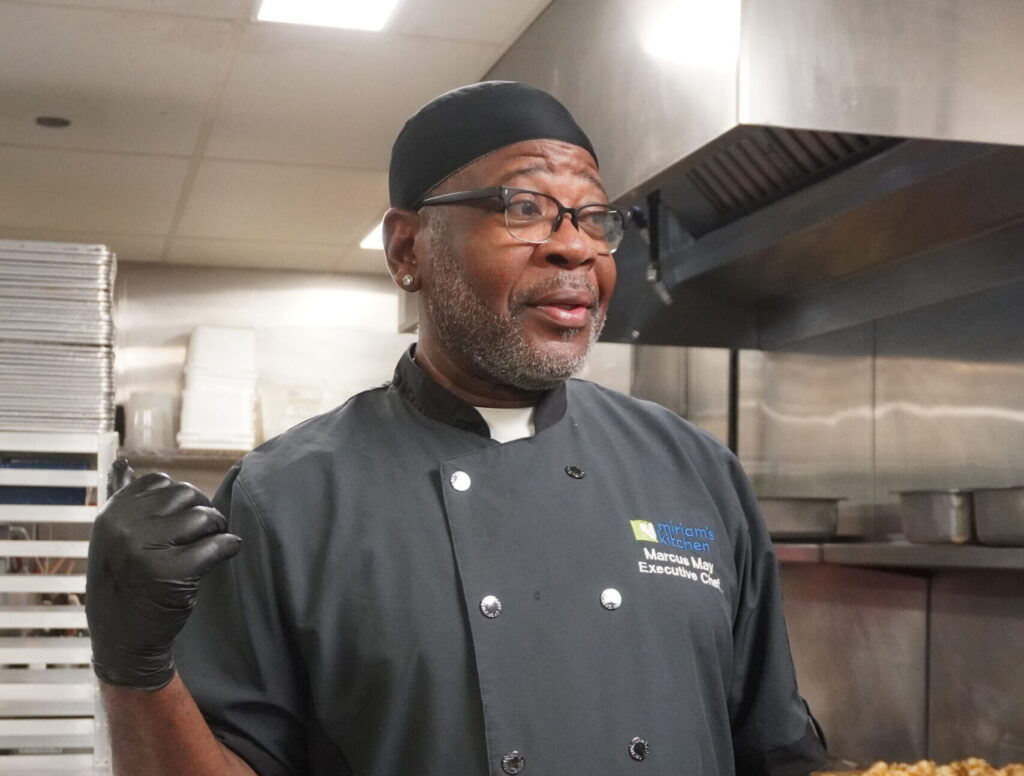
Marcus May starts work at 5 a.m. While most D.C. residents are still curled up in bed, May stands in the corner of a kitchen with a spatula in hand, flipping banana pancakes.
When May turns around, in a quick swivel of his head, he sees the overflowing spice rack, the long counters bordering the room, the serving station where his team will distribute meals, and the kitchen’s two deep sinks. At the other end of the small corridor he is standing in, between a steel table and the stove, sous chef Estela Flores flips a twenty-five-pound mound of potatoes tossed in an aromatic blend of paprika, granulated garlic and onion powder, dill, and five other spices.
By 6:30 a.m. on the morning of Oct. 6, May and Flores’ four hands flipping pancakes and potatoes turns into 26 hands chopping, scooping, washing, mixing, and dicing. People move around their stations, occasionally bumping into each other in the small kitchen. Someone starts the hot oatmeal — a diner favorite, even when it’s 100 degrees outside — seasoning it with cinnamon sticks and condensed milk.
Three people at the sinks wash lettuce and strawberries that will become veggie and fruit salads. Finally, the team scrambles 420 eggs, adding the finishing touch to the breakfast spread one of May’s diners called “the best in town.”
Most mornings, the door to the dining room conceals a line that sprawls around the block. As it opens and the first diners trickle in, grabbing a cup of coffee, some juice, and a bowl of cinnamon oatmeal, May draws closed the shade of the giant window between the kitchen and dining room. He doesn’t show his diners backstage until the food is ready, though the fragrant scent fills the dining room long before.
By 7 a.m., the dining room is packed. Flores announces the morning menu and withdraws into the kitchen. A volunteer lifts the shade, and breakfast is served.
May knows that for his guests, this breakfast spread could be their only substantial meal of the day.
May is the executive chef at Miriam’s Kitchen, a D.C. outreach organization that caters to people experiencing homelessness. Every weekday, for breakfast and dinner, guests can settle into May’s dining room and enjoy his food. They don’t have to pay to enjoy it, but May said that doesn’t change the care he puts into preparing it.
“We may be categorized as a soup kitchen,” May said. “But there’s nothing soup kitchen about what we do.”
Instead, he said his guests call it a “super kitchen.”
There is rarely a day when May’s job isn’t “super” important.
During the pandemic, with a greatly reduced staff, he worked fourteen-hour days to keep up with demand. Now, due to the government shutdown, the Supplemental Nutrition Assistance Program (SNAP) is in limbo.
On Nov. 3, the Trump Administration announced it would only be funding half of November’s SNAP budget. Prior to the announcement, Mayor Muriel Bowser committed to covering November’s SNAP benefits through local funds for the 85,000 D.C. households who rely on them. But the long-term impacts of the shutdown and other federal cuts to SNAP could increase food insecurity in the city, drawing more people to food banks and Miriam’s Kitchen.
In the aftermath of the federal government’s increased crackdown on homelessness in the District, the small one-room dining room with circular tables and friendly volunteers has become an important bridge to accessing services and finding community. The city’s rapid encampment clearings late this summer, which were concentrated near Miriam’s, dispersed people experiencing visible homelessness across the city.
“They scattered like the wind,” May said. “Losing that sense of home and community has really affected them; they are much more on edge.”
In a world that is increasingly putting a target on the back of people experiencing homelessness, May offers what little solace he can — a warm meal. In addition to the restaurant-quality food — former Washington Post food critic Tom Sietsema even enjoyed a meal here — May and his team always give people choices in what they eat.
“These people are ignored all day long; they’re pushed aside. They come in here, and we give them their dignity back,” he said.
May’s love for cooking stems from his mom, whose meals would have family members flocking to the kitchen. She couldn’t master biscuits, for some reason, but everything else was a hit.
“She could do anything. I mean, her spaghetti was legendary,” he said.
May remembers the first thing he made with his mom was a yellow cake with chocolate frosting when he was 10.
“I was just that person who — food always intrigued me,” he said.
The first time May stepped into Miriam’s Kitchen was Martin Luther King Jr. Day in 2018. He’d developed the backbone of his cooking skills when he worked as a caterer in his 30s, but he was working as the vice president of operations for a construction firm when then-executive chef Cheryl Bell invited him into her kitchen. She was organizing a “Black men takeover” for the day, and knew he could cook.
He remembers Bell chiding him for not extracting wilted pieces of lettuce from a salad. “Would you eat that?” Bell asked. “No,” he said.
At the end of the meal, the guests gave the men a standing ovation. “That one time changed my life forever,” May said.
When a part-time sous chef job opened in Bell’s kitchen, he jumped at the opportunity.
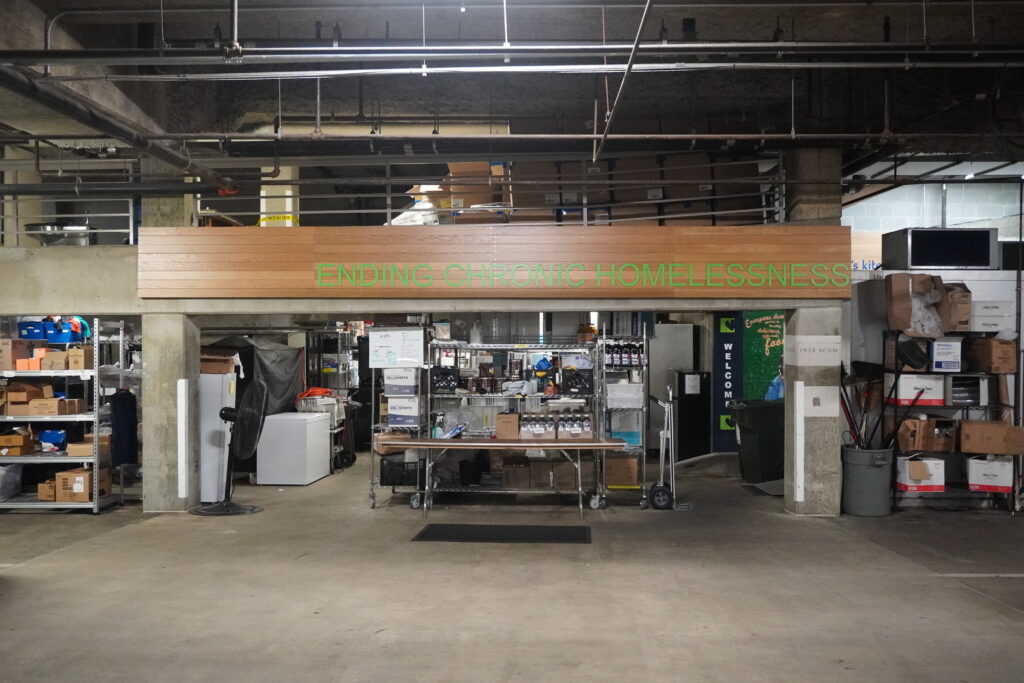
Seven years later, he runs the kitchen, supervising six paid employees and what May calls the heart of the operation: their pool of 1,600 volunteers. Together, the team feeds upwards of 400 people a day.
The intrigue for food May developed in childhood serves him well when he opens a truck full of food donations and has to figure out how to craft random ingredients into the next week’s healthy menu. He aims to create meals that contain between 1,500 to 2,000 calories and include whole grains, vegetables, fruits, and protein. Because the meals are made from donated ingredients, he often has little say in the meal’s building blocks. May compared his job to the TV show “Chopped,” where contestants must make a meal with a basket full of random ingredients. Instead of a basket, he’s opening a van.
“Time is always my enemy. There’s never enough time,” he said.
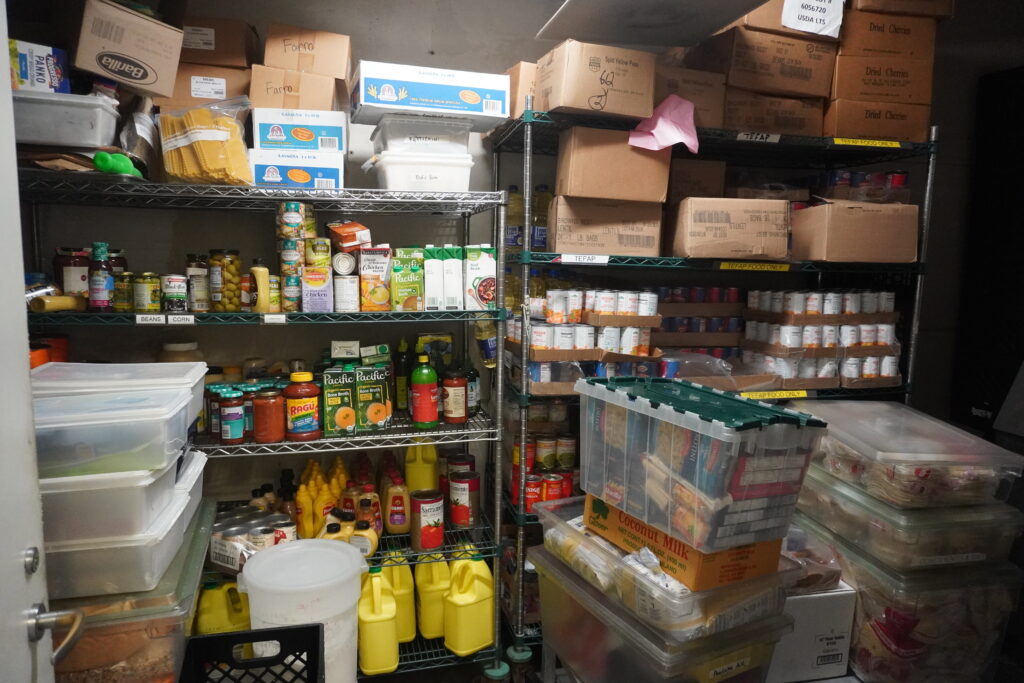
By 7:40 a.m., volunteers have served 120 meals, including 240 pancakes. As they scoop eggs and potatoes onto plates, May keeps track of how many meals his team has served, checking to make sure they will have enough food. Simultaneously, May is thinking about that night’s dinner. Tonight, one of his sous chefs will make chicken enchiladas to celebrate Hispanic Heritage Month. Chicken-anything is usually a hit at Miriam’s Kitchen.
“You say chicken, oh, I’m coming for that,” said Angelo, one of May’s guests, who Street Sense is referring to by his first name to protect his privacy while living outside. Douglas Steward, who frequents May’s dining room with some of his friends, said it was “the best eating facility in D.C.” He particularly enjoys May’s salmon.
May’s kitchen cooks 120 to 150 pounds of protein for each dinner. One night, he might serve turkey chili, then the next night, guests could enjoy May’s favorite, a Polynesian dish called caramel chicken. For breakfast, May specializes in biscuits and gravy; despite his mom’s perennial struggle to make biscuits, it is one of May’s signature dishes.
Cooking with a random motley of ingredients is not the only challenge May faces. This month, May has been down an oven. Last month, an electrical problem closed the kitchen for two breakfast shifts and one dinner shift. Before that, the coffee machine broke, and staff had to serve the 12 to 18 pounds of coffee beans that a machine usually makes in minutes by painstakingly slow pour-overs.
Still, seeing how much his food helps people drives May’s dedication, no matter the chaos. Miriam’s Kitchen offers housing, case management, health care services, and advocacy. But most of the time, people first interact with the organization when they come for a meal, making May’s job particularly important.
“The meal is the gateway to housing,” he said.
As the morning rush slows, May begins chopping potatoes from a 22-quart bucket for tomorrow’s breakfast. The knife goes dull. “There’s no rest for the weary,” he says as he grabs his own knives from the back.
By 8 a.m., 197 people have enjoyed a warm meal. The lingering aroma of spices wafting through the kitchen is overpowered by the smell of vinegar as volunteers and staff clean the stoves and countertops. Volunteers pack and freeze uneaten food for case managers to deliver to people who can’t come for breakfast.
May continues chopping potatoes as volunteers start to head out for the morning, passing cookbooks titled “The Joy of Cooking,” “Splendid Soups,” and “1,000 Mexican Recipes.”
“It’s not even a job to me. This is like a fantasy,” he said. “I get to do what I truly love. I love food, I love cooking, but then to see the impact that it has on people’s lives. I mean, directly in that moment. I mean, you can’t ask anything better than that.”
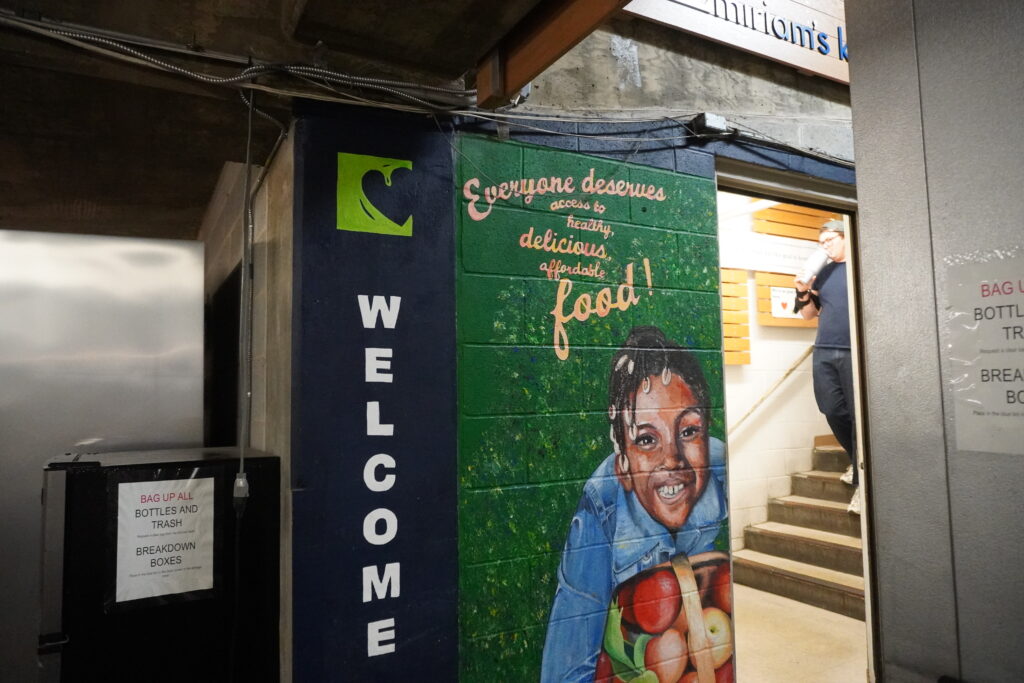
At Miriam’s Kitchen, breakfast is served from 6:30 to 8 a.m. and dinner is from 4 to 5 p.m. All meals are served in the basement of 2401 Virginia Ave. NW.
This article originally appeared in Street Sense’s Nov. 5, 2025 edition. Jelina Liu contributed reporting.