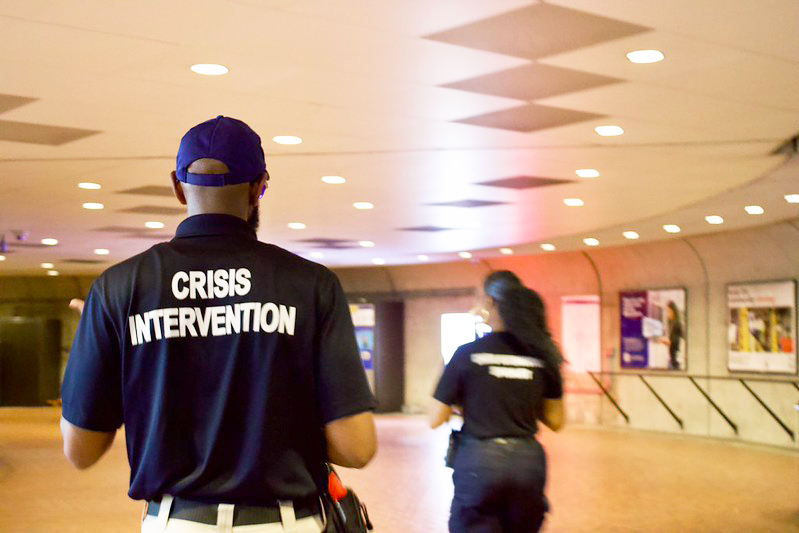
The sun beat down on the Metro bus bay at New Carrollton as two crisis intervention specialists checked each bus shelter—the only refuge from the sun in the shadeless parking lot—for individuals sleeping or living in the structures.
“We got one,” said Shannon Barnes, one of the specialists.
A man lay stretched out on one of the benches, arm slung over his eyes. Barnes crouched, getting onto his level and introducing herself. She spoke softly, assuring the man she was not the police and offering to ride with him to a day center where he could shower and find respite from the heat. He refused.
“If they want it, great. But if not, okay, have a good one. I give out my card. You know, if you ever change your mind, give me a call,” Barnes said later in an interview with Street Sense.
Hundreds of thousands of Washingtonians and commuters utilize the Washington Metropolitan Area Transit Authority (WMATA) rail and bus systems every day. Some of those riders are unhoused. Some go through mental health episodes while on transit. Instead of Metro Transit Police responding to people needing help, potentially sending them to jail, crisis specialists like Barnes and her partner Matt Hill intervene.
WMATA’s Crisis Intervention Team (CIT) has been active since 2022, according to the WMATA website. Nine trained crisis intervention specialists ride D.C.’s Metro during the weekdays in teams of two, accompanied by an officer, to offer assistance and services to riders experiencing crises, including homelessness, addiction, and mental health episodes. Street Sense rode along with a team in early July, observing a typical shift.
That day, the man at the bus stop sat up slowly, squinting as his eyes adjusted to the bright parking lot. He told Barnes and Hill, equipped with their CIT t-shirts and backpacks full of resources, he was not in need of help; he was waiting for the P31 bus.
“It’s a lot more nos than yeses,” Hill said later in an interview with Street Sense.
As the man grabbed his shoes from the ground in front of him, honking from an approaching bus grabbed the attention of the team. A bus driver flagged them down, asking Barnes and Hill to speak to a man who had been sleeping on her bus.
The team boarded the bus, spoke to the man, and offered to ride with him to D.C.’s Downtown Day Services Center. Stepping off the bus, the man agreed and began walking with the team back toward the New Carrollton Metro stop.
Sergeant John Graham, a sworn crisis intervention officer who goes out with the CIT, said the team makes between 400 and 500 contacts on average per month, through checking about 700 stations and around 100 buses.
The CIT approaches and offers resources to every person they see who appears to be experiencing homelessness, regardless of whether someone refuses services or has declined help from specialists in the past.
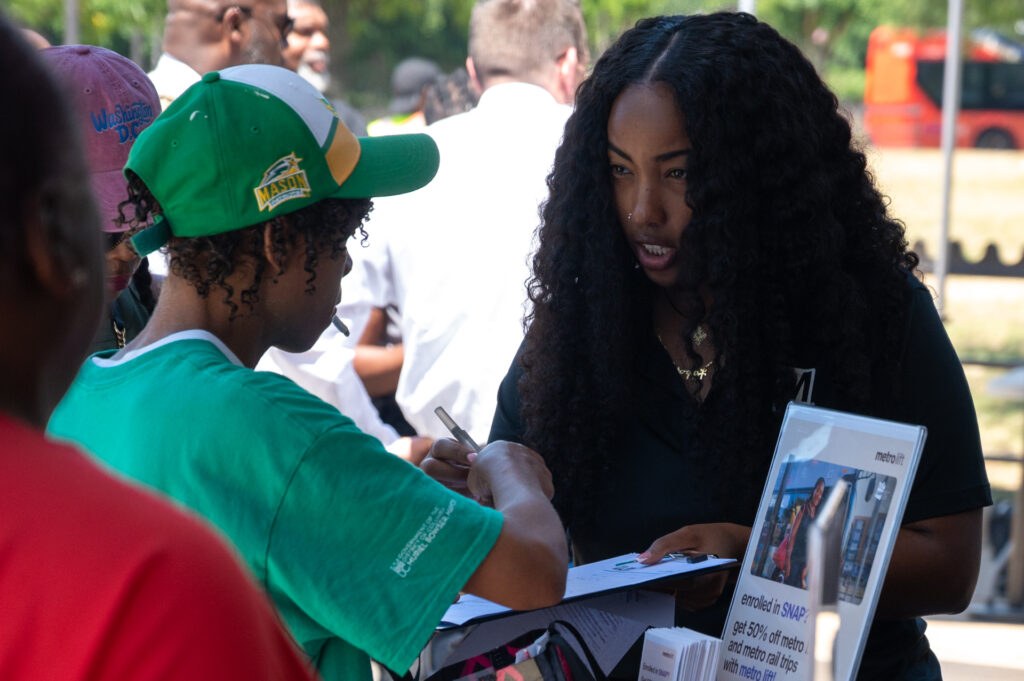
While on shift, Hill carries a small backpack on his chest and offers printouts of area-specific resources and small hygiene kits to individuals he interacts with. Barnes said she will sometimes use her own money to purchase food for individuals she comes across.
When a team of specialists encounters someone who wants to be connected with services, they ride with that person all the way to the day center or shelter they have agreed to go to. Hill said if they simply tap someone onto the bus or into the station, they don’t always go to get the services they need.
As the group walked toward the train, Barnes worked to get to know the man, asking if he lived in the DMV and if he had family in the area. She noticed his body language as he looked around, wary of the uniformed officer who walked with the unit, trying to keep his distance.
Barnes said this hesitation is normal amongst the people they interact with, as they often worry the officer approaching them is there to get them in trouble. Even though the officers the team works with are sworn members of the Metro Transit Police and are armed, they are trained CIT members too. Barnes tries to let people know the officer is just there to support the team.
“I would remind them, ‘Hey, you’re not in trouble. He’s not going to arrest you. It’s fine,’” Barnes said.
But it doesn’t always work. As the team approached the train heading into D.C., the man decided he did not want to board it after all, since Officer Christian Barrera, a sworn officer with CIT, would have to go with them.
Barrera said he tries his best to let the specialists he is working with control the interactions, because he knows seeing someone in uniform can make people in crisis uncomfortable.
“I step back and I fade away, and they can get information for me, so I can help,” Barrera said. “It’s that sense of comfort that they get with [specialists] that they don’t get with us.”
Graham, who has been an officer with Metro Transit Police for 16 years, said CIT has given officers and employees across the Metro system another option when they encounter someone experiencing homelessness or a mental health crisis on the job. He said before CIT was created, officers were used to getting calls and being forced to send riders experiencing homelessness or a mental health crisis to jail.
CIT specialists and officers are required to complete specialized 40-hour crisis intervention training tailored to the diverse communities they interact with across the DMV, according to a brochure about the team.
Graham said all WMATA employees, including bus drivers and train operators, are aware of the crisis intervention specialists and call them when needed. WMATA riders can call Metro Transit Police and request CIT, though dispatchers may decide to send officers first to make sure the scene is safe.
“In the past, people would just probably be hesitant to call because they’re like ‘I feel sorry for this person, I don’t want to call the police on them, but they do need help,’” Graham said. “And now that
CIT is here, people know that they can call CIT to get the help versus having to just call the police on somebody.”
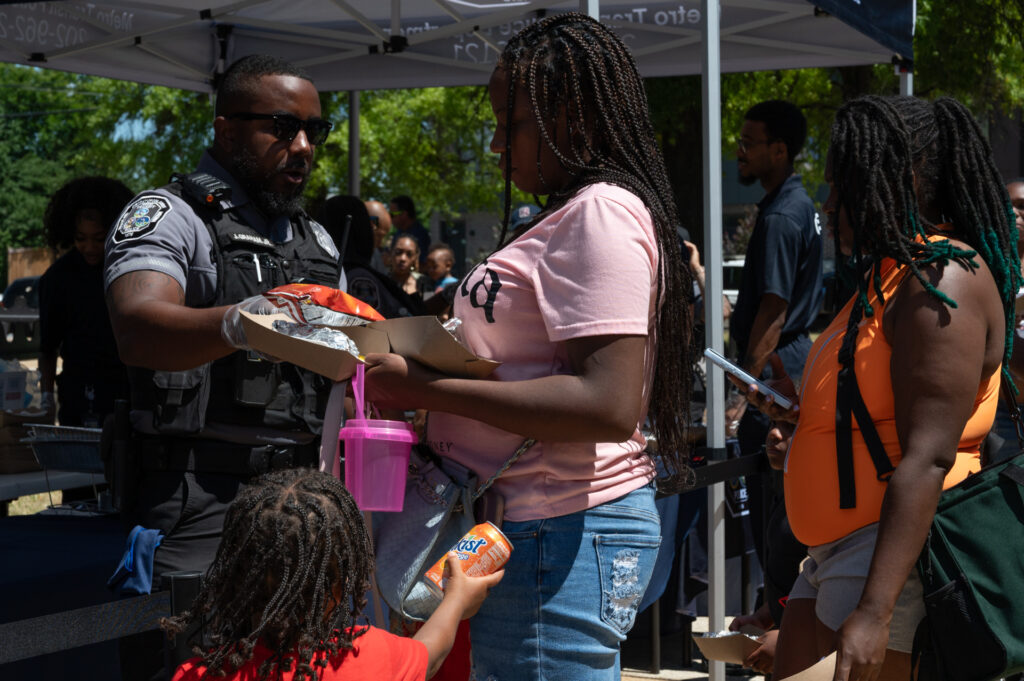
The unit has been active for about four years, and the specialists have accumulated success stories of people they have met and shared resources with throughout the transit system. Barnes shared the story of a woman some specialists helped who is now living in her own apartment and employed.
“She had a cat, so one of our specialists actually had the cat for her, held the cat until she got herself together,” Barnes said.
During a typical shift, teams of specialists like Barnes and Hill patrol the system, checking with bus drivers, station managers, and riders who might need help. As they walked from one entrance of the McPherson Square station to the other on the streets of downtown D.C., a few hours into the shift, they stopped to interact with those experiencing homelessness they saw on the sidewalk outside of WMATA property.
“Hey man, are you ok?” Hill asked a man lying outside a Five Guys by the station.
Hill, who previously worked as a campus crisis intervention officer at The George Washington University, said he joined CIT because he was interested in helping people and providing services, a change from how he dealt with crises as a campus police officer.
“On the police side, we were mostly issuing bar notices and doing enforcement that aren’t really helpful so this gives me more of an opportunity to me to actually provide help,” Hill said.
This article originally appeared in Street Sense’s July 29, 2026 edition.