The District has closed 98 encampments through the end of July, an increase from the same period in 2025, during which D.C. closed 50 encampments, according to data from D.C.’s Office of the Deputy Mayor for Health and Human Services (DMHHS).
Although D.C. officials have said the overall number of encampments has declined since closing the large tent communities that emerged during the pandemic, the District has increased the number of encampments it closed since federal presence began a year ago.
July included 14 completed closures, along with several other sites that were cancelled or abandoned before the scheduled clearing. Throughout the month, people packed their belongings, worked with outreach teams, and, in many cases, simply relocated to nearby areas after their encampments were cleared. About 60 people living outside were also impacted by the Martin Luther King Jr. Memorial Library’s new enforcement of rules against sleeping or lying down outside the downtown library.
On July 7, DMHHS cleared the encampment of one man living at 4th and I Streets SW. A police officer present at the clearing said it was taking place because the encampment was on D.C. property and that, to his knowledge, it was the first time the District had removed the man from that location. A woman living in the apartment building across from the site confirmed he had been living there for about two years. The man declined to speak with Street Sense.
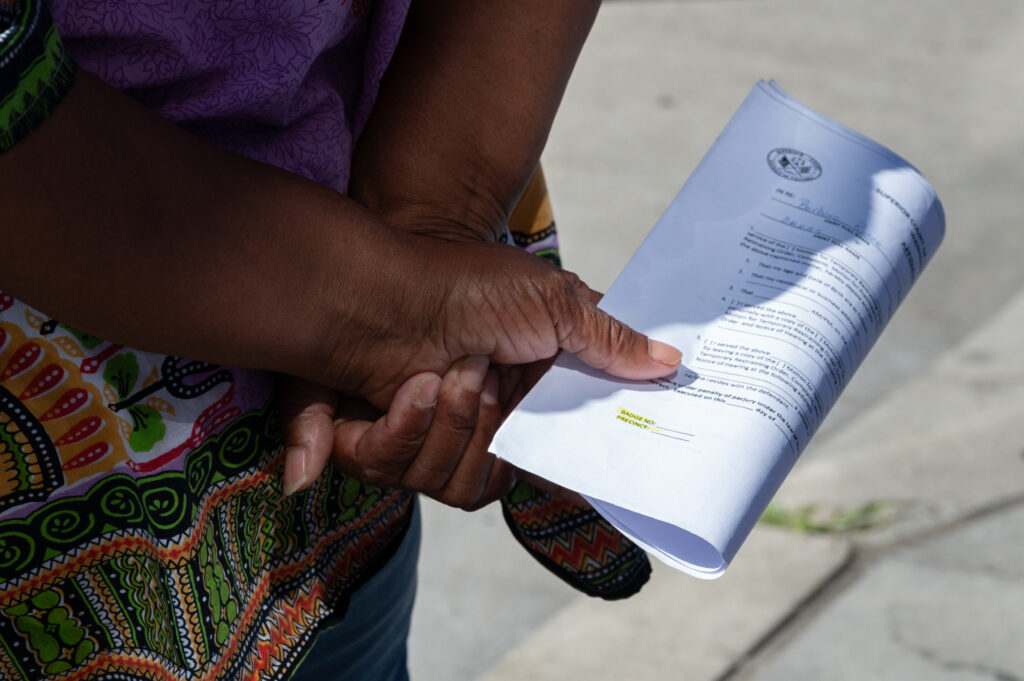
The man then moved about a block away, where police attempted to give him paperwork restricting where he could set up in the surrounding area. He refused to sign the document. Police and DMHHS did not respond to questions about the document, which is not standard in encampment closures, or the circumstances surrounding it.
The site of a clearing also scheduled for July 7 near Landsburgh Park was abandoned, as was an encampment at the Franklin D. Reeves Municipal Center scheduled to be removed on July 14. The person who had slept there left all their belongings under the Reeves Center’s entrance, which DMHHS quickly cleared right at 10 a.m.
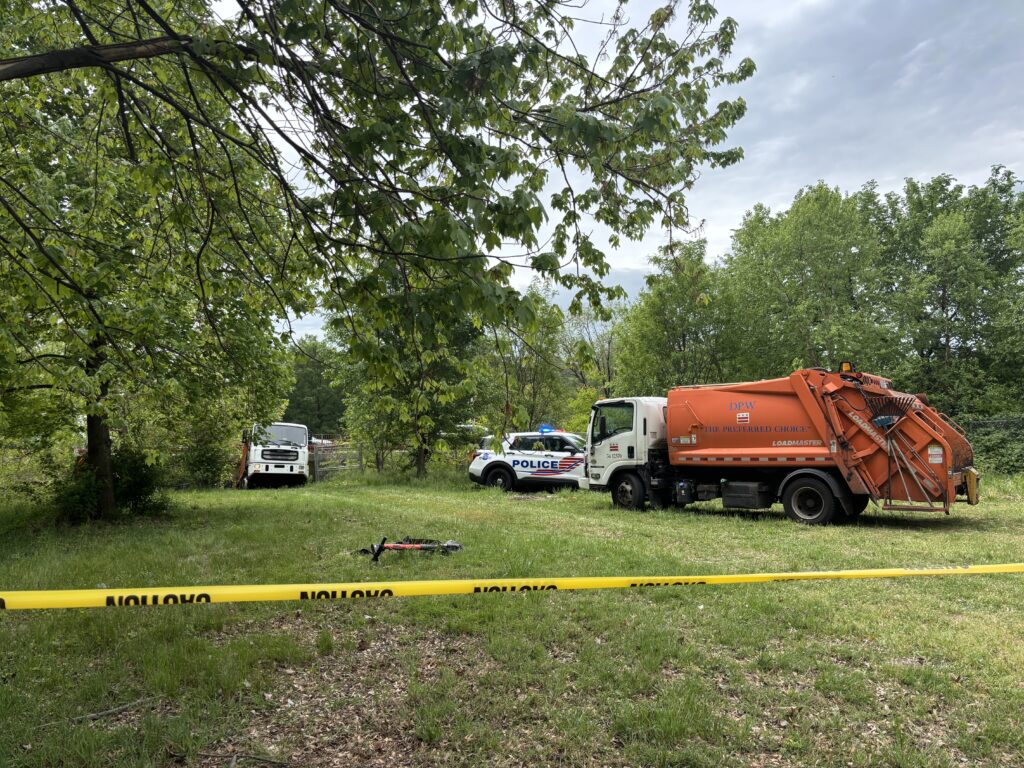
On July 22, DMHHS closed one man’s encampment at an underpass at the intersection of 27th and K Streets NW. The man, who did not give his name, said he had collected trash and debris and organized it in a pile just before DMMHS notified him of the clearing, and was frustrated he had to relocate after just cleaning up the area.
A week later, on July 29, the city closed one woman’s encampment at the park near the Eastern Market Metro stop. The woman had grocery carts, an umbrella, a suitcase, a wheelchair, and a walker. Her case manager and other outreach workers were present at the clearing and assisted her with sorting through what could be thrown out and removing her belongings from the park.
On the last day of the month, DMHHS closed a two-person encampment in front of the Shiloh Baptist Church Outreach Center in Shaw. The man and woman began working to clear their items about 30 minutes before DMHHS arrived. As they moved their blankets, bedding, and chairs, along with a bike and umbrella, around the corner, pedestrians stopped to say good morning to the two.
“What’s up, neighbor?” the man, who declined to give his name, said, pausing his cleaning to fist-bump a passing pedestrian. Tom Petty’s song “American Girl” played from a portable radio as DMHHS arrived to supervise the clearing and remove any remaining trash.
On July 30, DMHHS cleared the encampment of Josh, who had been living beneath the 11th Street SE underpass for about three weeks. As outreach workers helped him move his belongings across the street, Josh said he chose the underpass because it provided shelter from the weather and was close to the Whole Foods where he regularly gets food.
Josh, who has experienced homelessness for over 14 years and gave only his first name to protect his privacy while living outside, said he hopes to put some of his belongings into storage so he can enter a shelter recommended by outreach workers. He said he has stayed in shelters before but struggled with rules, like being required to leave during the day or having limited access to the belongings he can bring inside.
Josh said he previously turned down bridge housing, a more private shelter option, because he felt his disability and dietary needs could not be accommodated. He said he was later told he would have to restart the application process and return to the waiting list. When asked if he would consider trying bridge housing again, he said, “I’m guessing they’ll do the same thing that they did before… refusing to afford me the medical and dietary services I needed.”
During the cleanup, Josh became emotional while describing years of difficulty accessing housing, public benefits, and other services. “I’m just devastated,” he said. “They’re just playing a bunch of paperwork games.”
Natalie Note, Julian Schnittker, and Chih-Rong Kuo contributed reporting.
This article originally appeared in Street Sense’s July 29, 2026 edition.