The D.C. Department of Human Services (DHS) recently limited the locations where residents experiencing homelessness can get vouchers to receive free IDs, a move some service providers worry will create new barriers to identification.
D.C. residents need some form of identification to apply for housing, housing vouchers, benefits, and jobs. The D.C. Department of Motor Vehicles (DMV) allows people experiencing homelessness to get free non-driver ID cards, which normally cost $20, when they have a voucher from one of several centers in the area. Previously, at least 30 nonprofit centers could distribute these vouchers, but now, only three day centers and three youth drop-in centers can.
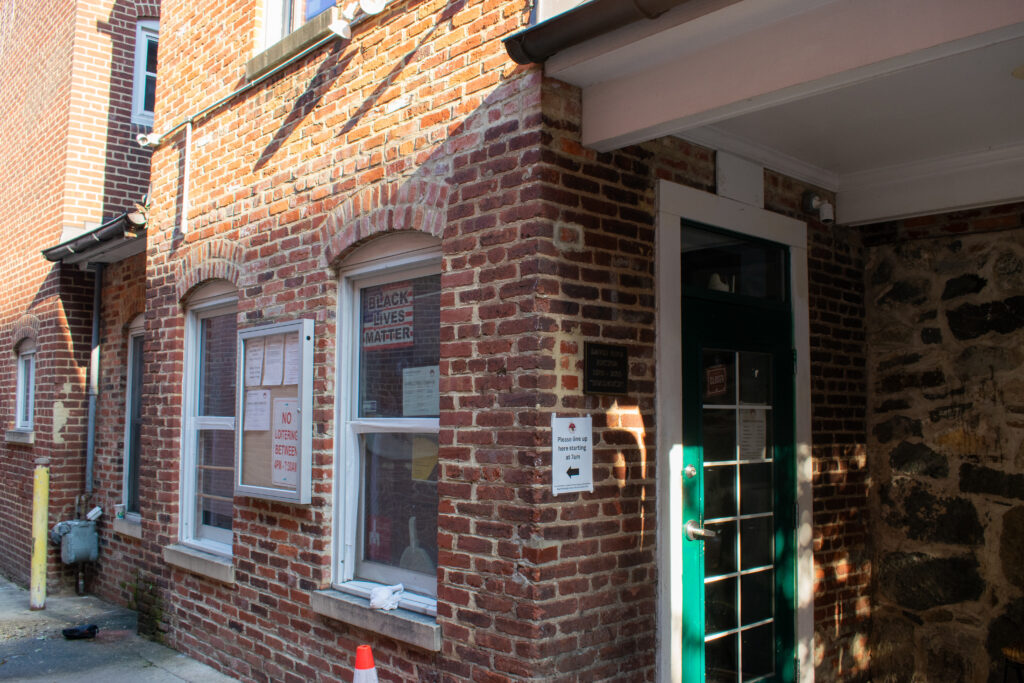
Adults experiencing homelessness are now only able to obtain ID vouchers at the Downtown Day Services Center, Adams Place Day Center, and 801 East Day Center, according to DHS spokesperson Kevin Carpenter. Youth can access the vouchers at Zoe’s Doors, Sasha Bruce, and the Latin American Youth Center. This is a sharp reduction from the dozens of locations like Miriam’s Kitchen and Georgetown Ministry Center that previously offered ID vouchers.
The new policy has been in place since April, according to Carpenter, but there’s been little public awareness of the rule change. Carpenter said DHS decided to limit the number of centers offering ID vouchers to “improve quality control” over eligibility determination for ID recipients.
Taylor Bush, outreach and advocacy manager at Georgetown Ministry Center, said she was not made aware of the change until she requested more vouchers from DHS, and the agency told her it would no longer provide them. She said the change was “very impactful,” as it has become harder for the center’s guests to obtain identification.
“I get calls almost every day for people looking for an ID voucher, and it’s upsetting that we can no longer provide that,” Bush said.
While the ID vouchers are still available, people may have to travel farther to get them. Many of the nonprofits that previously offered vouchers, like Georgetown Ministry Center, also offer case management or outreach services, meaning they may have closer relationships with more clients than staff at city day centers.
The number of vouchers given out by each site depends on demand, according to Carpenter. Slides from a recent meeting of the Interagency Council on Homelessness suggest the Downtown Day Services Center, for instance, has about 15 vouchers available per week.
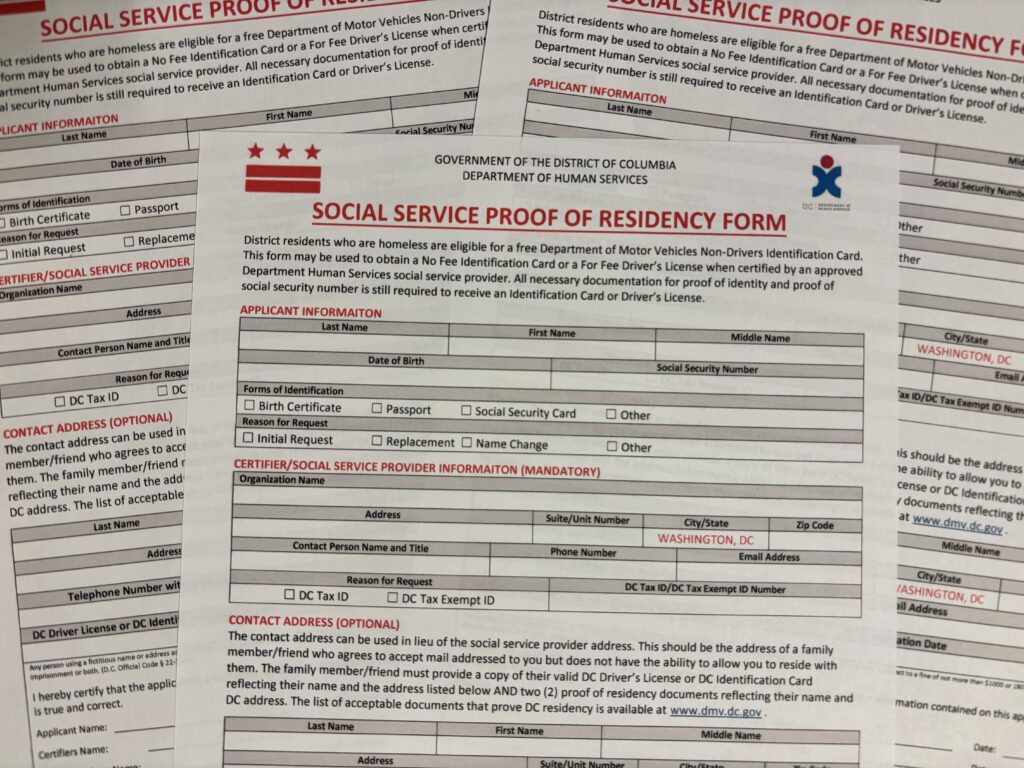
“DHS is continuing to monitor the need for Proof of Residency forms and will make further adjustments as appropriate,” Carpenter wrote.
For those experiencing homelessness, an ID or a birth certificate can be the difference between completing job applications, getting into housing, and getting food stamps or being on the streets for another six months. These documents are necessary to provide proof of residency to open a bank account and to apply for housing or jobs.
Bush described the policy change as a “setback” for those who are trying to get access to housing, apply for a job, or access to documents.
“It’s hard when you limit or like create a barrier to access resources, and like an ID is crucial for a lot of things for our guests,” Bush said.
To obtain an ID, residents need to gather the required documents, like a birth certificate — which residents can acquire through the No-Fee Birth Certificate program — their social security number, and proof of residency. Then, residents must obtain a voucher for a free ID at one of the centers offering the service, after which they can apply for a free ID at the D.C. DMV.
This article originally appeared in Street Sense’s July 30, 2025 edition.