DC Central Kitchen (DCCK)’s Culinary Job Training, a free 14-week course that teaches kitchen and professional skills to those facing housing insecurity and financial hardship, has been “transformative” for many students, including Chef Ablawa ‘Mimi’ Zounon.
Chef Zounon joined the program in 2017, during a “dark” period of her life. Zounon had been fired from her job, was going through a divorce, and was grieving her mom’s death when she came across DCCK via a recruiter at Union Station. With only home-cooking experience, Zounon began the program, eventually becoming a well- respected chef and instructor.
DCCK was founded in 1989 by nightclub manager Robert Egger. It is a nonprofit organization that focuses on both producing food for underserved Washingtonians and providing culinary training for people facing high barriers to employment. Its enterprises include managing scratch kitchens for D.C. schools, delivering food to neighborhood grocery stores, and running cafes across the city.
D.C. has a poverty rate of 17.3%, according to the 2024 U.S. Census Bureau, and as of June, D.C.’s unemployment rate is 6%. The city known for high-power government jobs has the highest overall unemployment in the country, according to the Washington Informer. These economic divides are highly racialized as well, with those living east and south of the Anacostia River earning a median income of $50,000, compared to upward of $120,000 in the wealthier parts of the city.
DCCK works toward bridging this gap of economic insecurity by offering free classes for skilled laborers. On its website, DCCK states the organization believes hunger is part of the larger systemic issue of poverty. Chief Development Officer Alexander Moore came to DCCK after interning and reading Egger’s book on nonprofit management. Moore has been involved with the organization for 20 years, and even wrote his own book, “The Food Fighters,” about the history of DCCK. The organization is not just helping people pursue a culinary career, Moore said, but creating a system where people who receive resources can then return that effort and provide for others.
“It was never sort of a one-way transaction of us helping others, but of creating this wider table, this wider circle where everybody could come together, volunteers, culinary job training students, local chefs, and everybody could contribute and try to do something that went beyond that traditional soup kitchen transaction,” Moore said. “And really got into the gap that people were facing that kept them hungry in the first place, which in many cases was the lack of stable employment.”
As an immigrant from the Ivory Coast, Zounon said she had always been “hungry for success” and gladly took the opportunity to become a chef. Although she became the MVP of her class, Zounon said the program was still very challenging. Besides learning complex kitchen skills, the program taught her life lessons such as time management and how to become less defensive.
“At some point, I asked myself, you know, what is it I’m getting myself into?” Zounon said. “The challenge was trying to deal with my personal issues at the time, and also trying to pay attention to what was being given to me. You know, it’s very challenging to sit down somewhere for eight hours while you have things to do, you have bills to pay. But it really taught me to be who I am today.”
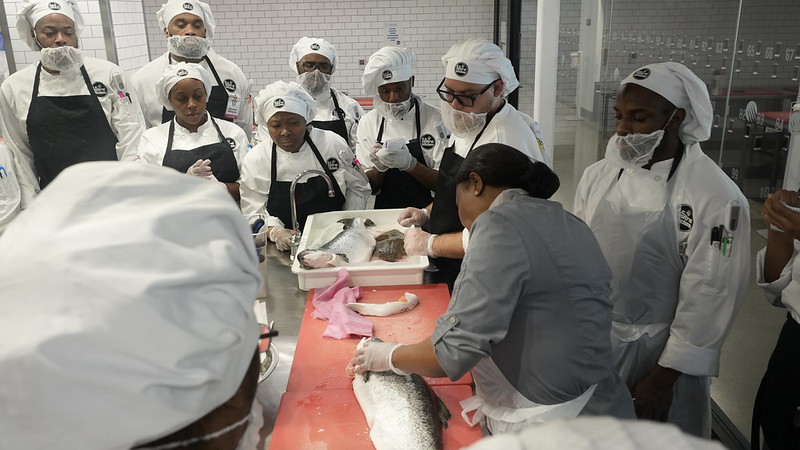
The free program is 14 weeks, with around 32 students per class expected to commit to the program for 40 hours a week. The first nine weeks include “knife and life skills,” which train students for things like food safety and culinary practices and provide courses on self-empowerment, financial literacy, resume development, and interview skills. Students then do a few weeks at an internship with DCCK cafes, production kitchens, or schools. They finally work for two to three weeks with an outside hiring partner, including hotels, restaurants, and corporate cafes. Moore said this prepares students for a job search after graduation, but many are hired internally.
Zounon has worked for DCCK for nine years. She was first hired in the kitchen as a cook right out of the program, and now she is a culinary instructor manager and teaches classes of her own. She has teaching in her blood from both her parents, and grew up educating her younger siblings.
As a chef and instructor, Zounon said she is very patient. She understands the students are coming from situations that may be difficult, like hers when she was in the course. She has learned to appeal to different learning styles to ensure all her students learn efficiently.
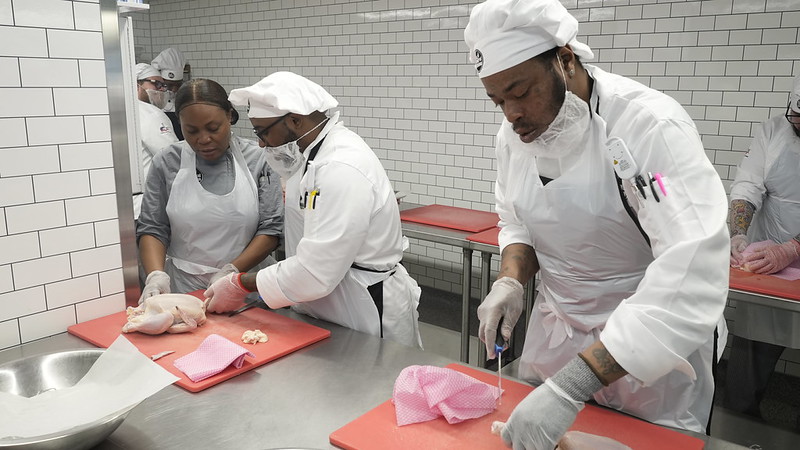
“The day that you spend with me, I will make sure that you get something out of here,” Zounon said. “If we try one way, if you don’t get it, I will try another way. The population that we teach are coming in with some trauma. Some people are so stressed. Some people are struggling with housing. So you have to be very patient.”
Zounon utilizes her creativity to make meals from very little. During COVID, she was promoted to culinary arts instructor, and tasked with creating three meals a day from donated food for 200 people. This taught her how to make the most of the food available.
“Give me one food, and I’ll give you a meal,” Zounon said. “It’s just me being creative and also loving what I’m doing. When I told one student one day, just give me one apple and I’ll give you a meal, they were laughing at me. And guess what? I did it. One apple. So it’s just me being creative as well as having a passion for what I do.”
She did not get to her skill level overnight, though. A common demonstration she gives her students to convey this point is cutting food blindfolded. When they say they want to do the same, she tells them she did “not just wake up one day and start cutting blindfolded.” It came from years of experience.
“If you don’t practice, you can’t do it,” Zounon said. “There’s no way you can be a, you know, a great football player while you stay on the bench all the time.”
Zounon said the culinary training program has “transformed” her life. She is proud to be a part of an organization that has made an impact on the city as well as her life. “I’m aware of where I was and where I am right now,” Zounon said. “I never had no health insurance, never had no vision, never had no 401(k), and I have all of them now. I have my own car. I have somewhere to live. And I’m still working.”
This article originally appeared in Street Sense’s August 26, 2026 edition.