While D.C. residents received their November Supplemental Nutrition Assistance Program (SNAP) benefits earlier this month, despite uncertainty amid the now-ended government shutdown, that won’t be the end of the story as a region with “persistently high” food insecurity faces ongoing changes to the federally-funded program.
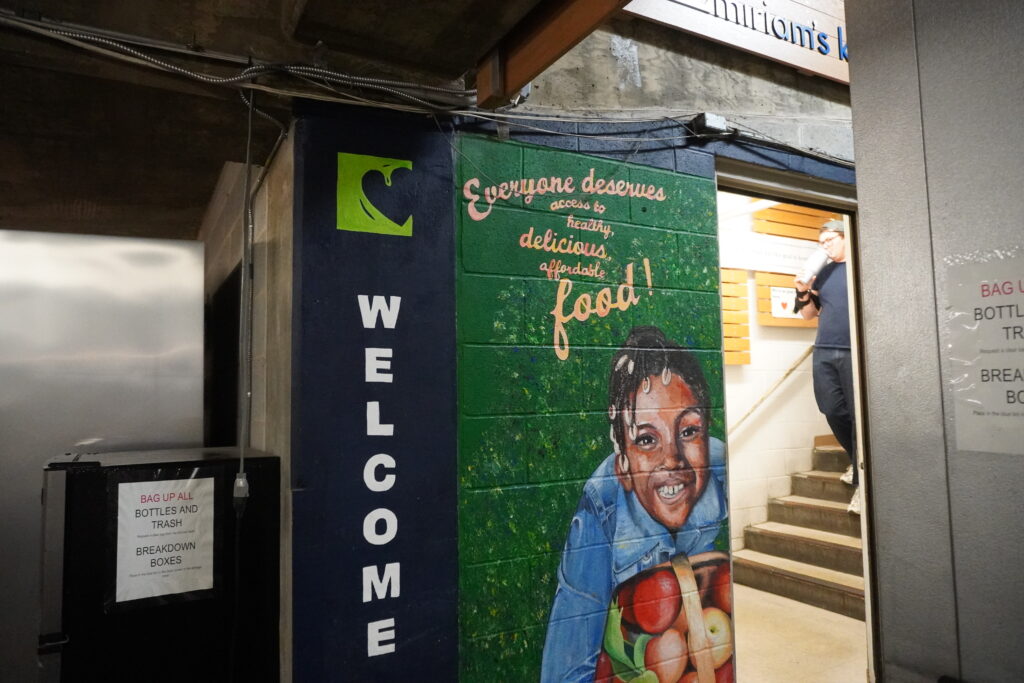
Many D.C. area residents relied on food banks and distribution centers as federal funding for SNAP was up in the air in late October and early November. But food service providers say they saw an increased need for food long before that, with some providing double the number of meals in recent months. The need for food is likely to only increase as changes to SNAP are implemented under the GOP tax and spending bill passed this summer, making it harder for individuals to qualify for the program and reducing benefits for those who do.
SNAP helps low-income individuals and families purchase food. Benefits are loaded onto an Electronic Benefits Transfer card, which can be used to purchase items at most grocery stores, convenience stores, and farmers’ markets. The federally funded program serves about 42 million people, about one in eight Americans, in lower-income households. One-fifth of D.C.’s population receives SNAP benefits, about 85,000 households and 141,000 residents, according to data from D.C. Mayor Muriel Bowser’s office.
On Oct. 30, while it was still unclear whether the federal government would pay out benefits during the government shutdown, Bowser said local funds would be used to provide full monthly SNAP benefits. November benefit payments were issued in D.C. as of Nov. 10, according to a D.C. Department of Human Services statement, which also said D.C. was the only jurisdiction to send out all benefits on time. Of the payments, $18.5 million came from local contingency funds, and $8.1 million from federal dollars with U.S. Department of Agriculture guidance, the statement reads.
The Trump administration directed states last week to “take immediate steps” to ensure families receive full November SNAP benefits. Despite the temporary relief payments will provide for families, the crisis of food insecurity in the city is far from over — and for many families, nothing new.
“We’re going backwards instead of going forward and continuing to make the improvements that we have been able to make when addressing food insecurity, hunger, poverty, and its root causes,” LaMonika Jones, the director of D.C. Hunger Solutions, said
Need for food in the DMV region
D.C. is already a region with above-average food insecurity. The Capital Area Food Bank’s 2025 hunger report found that 40% of D.C.-area residents experienced food insecurity within the past year, a 4% increase from 2022. Households with very low food security in the D.C. region have also grown sharply over the past three years, from 16% in 2022 to 22% in 2025, the report found, equating to more than 820,000 adults in the lowest tier of food security, an increase of nearly 75,000 adults per year since 2022.
The increase is driven in part by financial pressure on low-income households, with many families facing the pressures of high inflation on food and experiencing slow wage growth, according to the report. Forty percent of adults said their household finances declined within the past year, while only 16% reported an improvement, the report states.
Trazy Collins, the director of food and clothing programs at Bread for the City, said the organization has seen the demand for food aid increase this year. The organization distributed 133,000 meals at one of the organization’s centers in September, compared to about 90,000 meals in September 2024, according to Collins. And in July, the organization experienced a 150% increase in food demand, distributing over 100,000 meals that month.
“July is typically one of our quieter times,” said Collins. “We were just really shocked.”
This food insecurity has only been magnified by the government shutdown.
“These are new folks coming in for the first time saying, ‘I need to provide food for my family, and I can’t right now because I’ve been furloughed,’ or ‘I’m a contractor and not receiving pay,’ and so we expect for those numbers to continue to increase,” Collins said.
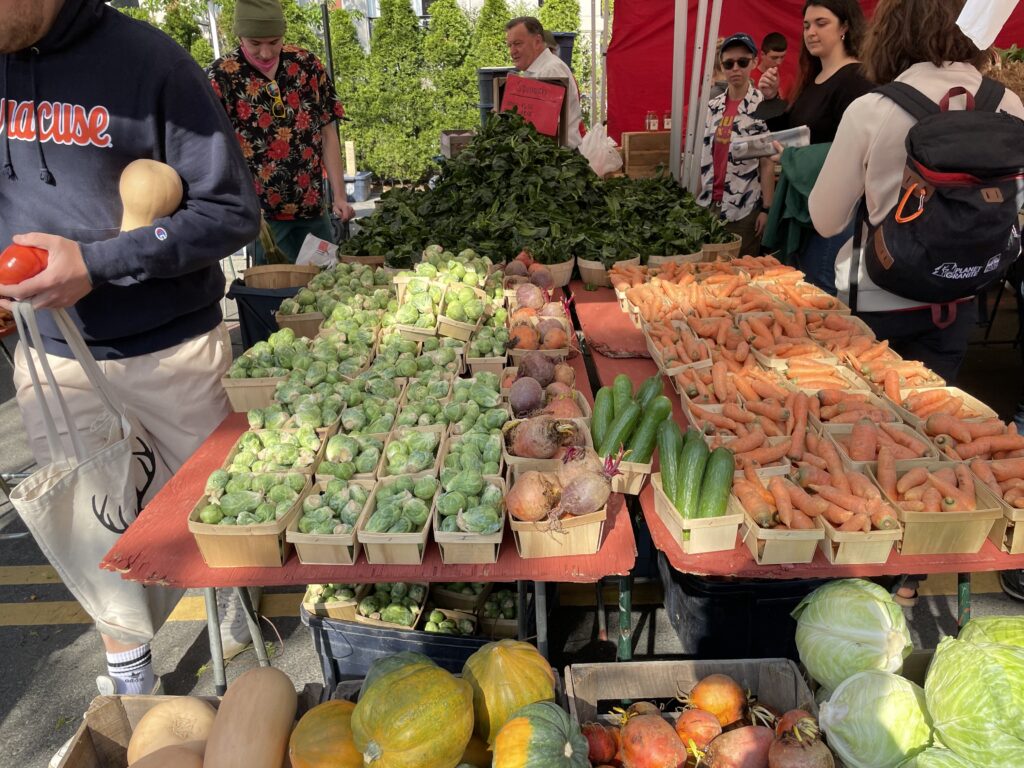
Amid the threats to SNAP, Bread for the City has tried to mitigate the increased need for food by buying more food, increasing staff capacity, and requiring additional volunteers, according to Collins. In mid-October, Bread for the City saw an additional 145 families who had not used the organization’s services prior to the federal shutdown, Collins said.
Services organizations like Bread for the City provide are crucial for some. Alice Ratajczak, a Maryland resident who has been experiencing homelessness since January 2024 and who receives SNAP benefits, said she mainly receives her meals from shelters.
Ratajczak said that after her husband passed away, she was overwhelmed with bills and unable to afford the condominium she and her husband had lived in. Forced to move out, she has been living between shelters and outside since.
Ratajczak recently began staying overnight at Shepherd’s Table, a nonprofit organization providing food and support services in Maryland. The organization offers a daily meals program, with three meals every weekday.
Jan Weetjens, the executive director of Shepherd’s Table, said in the days before the government shutdown ended, he saw an increase in people visiting Shepherd’s Table for meals.
“I was doing the breakfast service, and there were many people I hadn’t seen before,” Weetjens said.
In Maryland and Virginia, SNAP recipients received partial benefits in early November through state funds, followed by the rest of the payments later in the month, once the government reopened. 11.2% of Maryland’s population receives SNAP benefits, while 9.6% of Virginia’s does.
In October, before SNAP benefits resumed, Weetjens said he was worried Shepherd’s Table would not be able to handle the influx of different communities looking for food, especially since the organization doesn’t normally focus on serving families.
“My concern is that at this moment, the need from among that population might increase, and we might not be equipped here to deal with that,” Weetjens said.
SNAP and the government shutdown
During the shutdown, SNAP benefits experienced a flurry of problems, from legal issues to the threat of complete defunding. The U.S. Department of Agriculture (USDA) released a plan on Sept. 30 outlining how programs would be affected if Congress fails to pass a funding bill. On Oct. 1, the government shut down.
USDA paid SNAP benefits through October, but on Oct. 24, announced the department would not pay November benefits despite having a contingency fund, reversing guidance outlined in the Sept. 30 document. Democratic states, including D.C., filed a lawsuit on Oct. 28 against the USDA in federal court in Massachusetts, demanding USDA pay November benefits. On Oct. 30, several nonprofits, religious groups, and municipal governments brought forth a similar suit in Rhode Island.
Two federal judges in each case issued near-simultaneous rulings on Oct. 31. In the Rhode Island case, Judge John J. McConnell Jr. ordered USDA to continue funding SNAP benefits in November, while in the Massachusetts case, Judge Indira Talwani ruled that withholding November benefits was illegal, but gave the administration until Nov. 3 to respond.
In response, on Nov. 3, USDA said it would pay about half of the benefits, though Trump announced later he planned to stop SNAP payments altogether during the shutdown.
On Nov. 6, Judge McConnell ordered the Trump administration to pay full November benefits by the next day. USDA immediately appealed the decision, but issued guidance to states greenlighting full November benefits.
The Supreme Court granted an emergency stay of the lower court order to the Trump administration on Nov. 7, temporarily allowing it to continue with partial payments rather than full while the case underwent the appeals process. USDA sent states letters the next day demanding they “immediately undo” any moves to provide full SNAP benefits.
Then, after the government reopened, USDA issued guidance on Nov. 13 instructing states to issue full SNAP benefits for November.
More worries ahead
The government shutdown was not the only issue SNAP recipients are facing. Trump signed the One Big Beautiful Bill Act into law in July, changing both SNAP funding and how individuals qualify for benefits. To partially offset the cost of trillions of dollars in tax cuts, the legislation will reduce SNAP funding by around $186 billion over 10 years, the largest cut in the program’s history.
Fewer people may qualify for benefits under stricter rules regarding working hours. Under the previous requirements, adults without disabilities or dependents could receive SNAP benefits for just three months out of every three years unless they verified they were working at least 80 hours per month or qualified for an exemption. Exemptions used to include people experiencing homelessness, veterans, and those younger than 24, but the bill removed those, imposing work requirements on more people.
“We’re looking at anywhere between 20 and 30,000 residents that are going to have to follow these 80 hours per month work requirements for the first time,” Jones said about D.C. residents facing changes to SNAP.
Even if people may fit the new requirements or get a job to stay on benefits, they still have to worry about filling out “onerous” paperwork in applying for SNAP, which Weetjens said is an extra burden.
“It would be kind of a double-edged sword,” Weetjens said. “On the one hand, more stress for people to comply with those requirements, and then less likelihood that they will actually be able to enhance more chances to no longer qualify.”
Ratajczak said she is lucky to have some money for herself that she can use on food, but with the changes to SNAP, she is worried about the future.
“It will affect me, because I’m going to have to take it out of my monthly income, and I’ve got so many responsibilities and bills that it is going to cause a problem,” Ratajczak said.
While Jones suspects the changes will lead to an increase in food insecurity, that might be hard to confirm — days before the government shutdown, the USDA announced it would stop producing an annual household food insecurity report, calling it redundant, costly, and a proponent of fear mongering.
Jones said she has relied on the USDA report to understand how many households are experiencing food insecurity, but without it, Americans will no longer have a picture of what food insecurity may look like at a given time.
“The USDA report is not just informational for D.C.,” Jones said. “What is the regional impact? What does it look like for D.C., Maryland, Virginia, as well as the rest of the Mid Atlantic region?”
She worries lawmakers do not understand what food insecurity is like and how SNAP benefits are a helping hand for many. She said there is a negative social stigma toward those who receive SNAP benefits, and many false assumptions that people are committing fraud to receive benefits.
“I’m not confident that at the federal level, there is a deep understanding of what this looks like on the ground,” Jones said. “What a food-insecure family goes through when they are applying for SNAP or they’re utilizing with, there’s not an understanding of what this looks like.”
This article originally appeared in Street Sense’s Nov. 19, 2025 edition.