April 13 update: In early April, the D.C. Department of Human Services updated its webpage to say work requirements would begin June 1, instead of May 1.
The D.C. Department of Human Services (DHS) announced the District will implement new Supplemental Nutrition Assistance Program (SNAP) work requirements on May 1, following the Trump administration’s changes to federal policy. The city says these new requirements will apply to 17,000 D.C. residents. Changes to SNAP will primarily impact adults without children, older adults, caregivers for children aged 14-17, people transitioning out of foster care, veterans, and unhoused people.
DHS will screen current SNAP recipients during their next recertification after May 1, on a rolling basis. There’s a three-month grace period, meaning D.C. residents will receive benefits until the end of July, even if they don’t meet the new requirements. After three months, though, recipients who don’t meet the requirements or show they have an exemption, like raising a young child or having a disability, will be disqualified from the program.
According to DHS, once someone is disqualified, they will not be able to receive benefits again until 2029, unless they begin to meet the work requirements or can show they have an exemption.
The city has estimated up to 12,900 people could lose their benefits under the new requirements, but even more people could be impacted due to confusion about the changes, said Nicole Dooley, supervising attorney in the public benefits law unit at Legal Aid DC. The changes are coming at a time when food prices are rising due to inflation, and D.C. is cutting other local benefit programs.
“SNAP is a lifeline for D.C. residents,” Dooley said. “It’s low for the amount of money that people have to spend on food for their families, but it’s so necessary… to meet those basic needs. To link it to meeting these work requirements is just not the direction that we should be going in right now.”
On July 4, 2025, President Donald Trump signed HR-1, also known as the “One Big, Beautiful Bill Act.” The Republican tax bill introduced work requirements for Medicaid recipients, reduced federal spending on SNAP and Medicaid, and increased work requirements for SNAP recipients. Under the bill, asylum seekers and refugees will also lose SNAP eligibility unless they have lawful permanent resident status.
In the biggest change affecting D.C., the bill discontinued a waiver that exempted states with high unemployment rates from implementing work requirements for able-bodied adults without dependents (ABAWD). D.C. received this waiver in February 1999, and it was renewed annually until the end of 2025. Updated ABAWD work requirements began in most states late last year, with the waiver delaying implementation in D.C. till the spring.
Starting this year, most D.C. residents considered ABAWDs will be required to work or be in an approved training program 80 hours a month, or participate in the SNAP Volunteer Program, and report this to the government. All adults who are 18-64 years old and who do not have an exception (including having a verified disability, being pregnant, caring for a relative, receiving unemployment, meeting TANF work requirements, or having a child under 14) will have to meet new work requirements. D.C. has no say in these changes.
The federal bill also removed exemptions for several groups of able-bodied adults. The bill requires older SNAP recipients, between 60 and 65, previously exempt from work requirements, to return to work or volunteer in a job market that is more difficult to navigate for older adults in order to continue receiving benefits. The requirements will also force more parents to work, by lowering the age of youth considered dependent from 17 to 14, making their parents or guardians no longer exempt from work requirements.
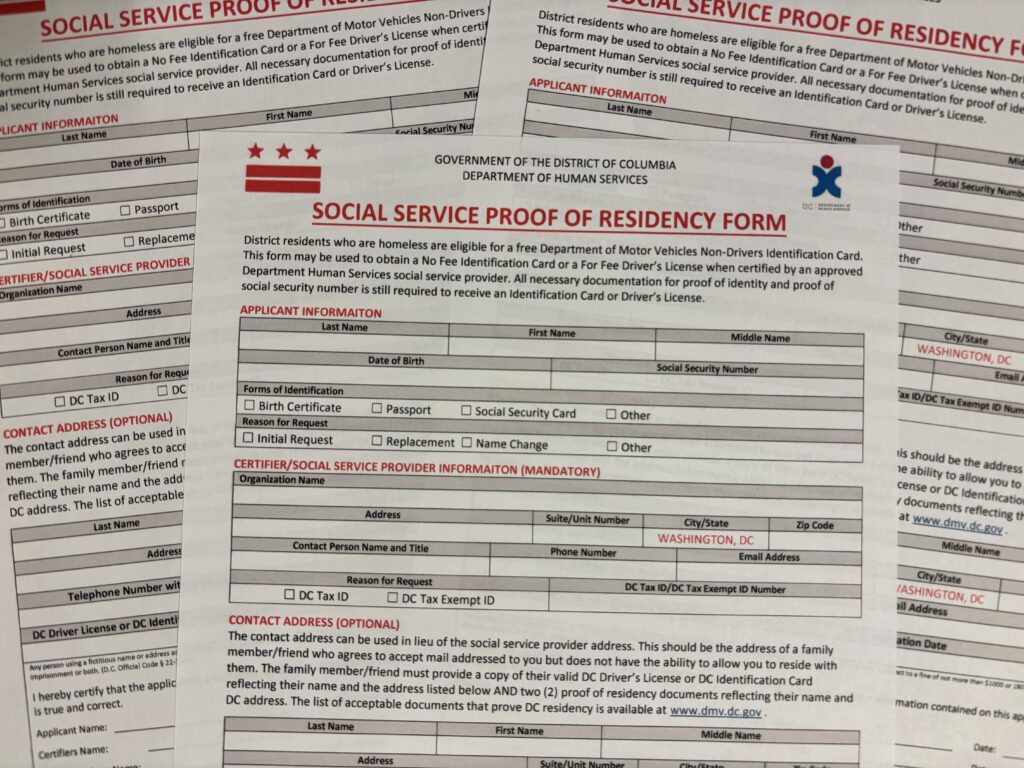
The federal bill also removes exemptions for unhoused people, veterans, and people transitioning out of foster care – groups which were exempt from previous work requirements. Seeking employment, unhoused people face discrimination and systemic barriers. Basic requirements for applying to jobs, such as having an address, ID, and access to professional clothing, can be barriers to employment for people experiencing homelessness.
In the District, the changes will “put a lot of households at risk,” said LaMonika Jones, director of D.C. Hunger Solutions. “The majority of SNAP clients are already working, but it doesn’t take into account the dynamics that exist within a particular state [territory, or district], D.C. being one of them.”
If people do not meet ABAWD work requirements, they will lose benefits after three months. In order to be eligible for the program again, they must begin to meet the work requirements. If someone is not able to meet their requirements because of a one-time event, like an illness or car trouble, they can report it to DHS and may be able to keep their benefits.
At a March 6 hearing, DHS Director Rachel Pierre testified that to prepare for these changes, D.C. extended slots in its SNAP Employment and Training program, which helps recipients find jobs, and is working with community members to help document when they are giving back to the community. The DHS website includes information on how to connect with the training and volunteer programs.
According to Brookings, there is little correlation between SNAP work requirements and increased employment. Instead, there is a large decrease in the number of people who use SNAP. In a March 6 DHS performance oversight hearing, officials predicted between 8,500 and 12,900 people would lose SNAP benefits due to federal changes.
Because D.C. is a high minimum wage jurisdiction, simply working a minimum wage job in D.C. could disqualify some people from SNAP benefits, depending on family size. But D.C. also has a high cost of living. Ward 3 Council member Matthew Frumin questioned DHS officials about these issues during the hearing.
Brian Campbell, administrator for DHS’s Economic Security Administration, said the goal of DHS is to get people employed. At the same time, “We want to make sure that we help people keep their SNAP benefits as much as possible,” Pierre said.
But some people affected say they understand the change. “They should have done that a long time ago because it’s not right that you’re skimping the government off of the food stamps,” said. Cynthia Herrion, a vendor at Street Sense. “A lot of people get caught up with that now. It’s a good thing that it’s happening this way.”
Herrion, 69, receives $30 in SNAP benefits monthly, in addition to Medicare food allowances. She usually spends this money on “the main groceries everybody else gets:” fish, chicken, fruit, frozen vegetables, water, and eggs. Before she retired, Herrion worked for the Westin Hotel on 14th and M St. as a supervisor for laundry. While Herrion will not be impacted by the changes because of her age, she knows other older people who’ve been confused by the process.
This winter, DHS sent a notice to all D.C. SNAP households of these changes, including to many residents who will not be impacted by the changes, but then thought they would be. According to DHS’s webpage, the agency is informing all recipients about the changes, whether or not they will be impacted by them.
“A lot of people, even the elderly, they don’t understand…I wish they would send letters out to, mainly the seniors, because they’re confused,” said Herrion. “They don’t know what’s what.” Legal Aid’s Dooley also said there could be “hiccups” with implementation, as there could be issues with providing certification and processing documents to verify somebody meets these work requirements. Because of these reasons, Dooley said she expects some people to lose coverage even if they meet work requirements or are exempted.
The tax bill also changes how SNAP benefits will be calculated, which may lead to some people receiving less each month. Previously, DHS used the maximum standard utility allowance for most SNAP households in D.C., allowing them to receive a higher level of benefits. Now, recipients, except for older adults and disabled people, will have to provide documentation to receive these benefits.
This “will ultimately decrease the amount of SNAP benefits that a household will receive, making an issue for households to afford groceries,” said Jones.
Work requirements are coming to D.C. alongside significant cuts to local benefits. The city substantially cut D.C. Health Care Alliance and created new eligibility requirements, restricting access to health care for low-income and undocumented residents. Additionally, D.C.’s budget includes significant cuts to Temporary Assistance for Needy Families, which will begin in October.
Tazra Mitchell, chief policy and strategy officer at D.C. Fiscal Policy Institute, warned of the impacts of these changes during the Feb. 26 DHS performance oversight hearing. “These SNAP changes are coming at a time when we’re facing likely the largest cut to D.C.’s local safety net in a generation,” she said.
Editor’s note: The case management department of Street Sense receives funding from the Department of Human Services to run a SNAP Employment and Training program. The department was not involved in the publication of this story, and Street Sense maintains a firewall between our newsroom and vendor support services, like case management.
This article originally appeared in Street Sense’s March 11, 2026 edition.