This article mentions suicide.
In life, surely we are not always guaranteed second chances. I guess I’m just lucky, or as someone once said, “hard work creates opportunities which some might misread as being lucky.” I remember my grandmother, who was born in 1912, telling me about receiving news, good or bad, by telegram, and the anxiety of thinking you missed the messenger and wondering if he’d come again.
If you’ve been following, you know I see my life through 1940’s film noir. Hey, I’m a pre-cable boomer! One of my favorites is the original “The Postman Always Rings Twice” with John Garfield and Lana Turner. Just like the drifter in this screen classic, I was on a serious losing streak. A backpack full of four-leaf clovers would’ve been wasted on me. Without intending to, I was making good situations bad and bad situations worse. It seemed like everything I touched turned to shit.
With all that “bad luck,” mixed with not the best of choices, I’m grateful I was not subjected to and judged by the rules of baseball, three strikes, and you’re out! It was a while before someone told about of the other side of Home Run King Babe Ruth’s legend, that he was the All-Time Strikeout King as well. In life, when taking the big risk of going for fences, sometimes you swing and miss. Lord knows I’ve made the same mistakes, not realizing life continuously sends you the same challenges. They present in different forms but are the same set of choices requiring a change of direction, an adjustment in our swing, or maybe a bit of emotional growth or maturity.
Making a left instead of a right and failing to quickly correct course leads to negative consequences like multiple bouts of chronic homelessness, relapses into addictive cycles, involvement in the criminal justice system, loss of promising relationships, and inability to capitalize on career opportunities. All that led to a series of evictions over the years, which meant I was perpetually starting over. It not only physically and emotionally wore me out, but did the same to the loving and caring people around me. I caught a lot of voicemails during that period and not many call-backs. The same went for the great professionals at agencies tasked to help end my homelessness. They had so many requests for assistance they had to, over time, reprioritize their time and resources, putting me on a sort of no-fly list for services in several spaces. I was the classic slow learner who couldn’t remember his last mistake. It was like I was watching that old TV game show “Concentration,” where you have to remember where halves of a prize are hidden behind numbered squares. Well, I kept calling out the same numbers. And what do you know, I got the same results. Later in recovery, I learned that was the definition of insanity.
The sad hurting part was that in most cases, I had worked my ass off for many months to be on the verge of reaching that elusive goal of those experiencing homelessness, to have my own housing and self-sufficiency, only to have rug pulled out from under me, by the “system,” mystery bureaucrats, or an uncaring political party, all the while failing to accept the villain was none other than me. Alone with my unchecked thinking fueled by my anger, blaming, and lack of responsibility it was the perfect storm for craziness. Everyone else could see it but me.
I was a heartbreaker alright, and people were not helping by telling me they saw all this promise, because it went unfulfilled. I knew I had been a disappointment to many who had invested tremendous amounts of emotional energy in my turning the corner. They mostly walked away bewildered. They had to, so they could move on to help that next person. It’s said the average social worker’s career lasts six years before burnout, and I’m sure I’m part of the reason why.
I began to feel I deserved to be abandoned. All the good people would see in me, I couldn’t see anymore. After a while, I’d been down so long I felt worthless, undeserving of happiness or peace. Even my longtime friend, sponsor, and godfather to my child said, “Man, I care too much for you to stand by watching you crash and burn again. I love you and your daughter, but can’t sponsor you or actively be in your life any longer; the drama and hurt is just too much.”
And that’s the kind of thing I was hearing everywhere I turned. There was no “Bridge over Troubled Waters” for me, and I gave up hope. And hope is the only currency that buys a person with literally nothing another day. On that last day, which actually was my first day of a new life, all I possessed was a donated grade schooler’s backpack, a Ziploc bag with a bar of soap and a washcloth, a twin sheet, and a few snacks from some soup kitchen. I no longer dreamed; I had no belief in tomorrow or self, which used to be my superpower, let alone a belief in anything spiritual. There was nothing left to do but wait those 10 seconds for the tape to self-destruct like in “Mission: Impossible” and get on with the last dance.
Lacking the balls to just blow my brains out, I went to the bottom of the bottle and accessorized the drink with dry substances when I could afford to, in hopes of committing suicide on the installment plan. If you’ve seen “Leaving Las Vegas,” you’ve viewed what I thought would be the final moments of my life. Vacillating back and forth between wanting to live, but not if it meant accepting responsibility for the mess I’d made, I continued to wake up in a living hell of my own creation.
Then something happened to me, of all people. I had seriously pooh-poohed anyone suggesting I should try a spiritual journey for a solution to the nightmare. “Oh hell no,” I’d say as I would reject idea after idea because I had to do it my way, which was actually the same ole way. I’d bet my life on it, man; I was so far down it would take an Old Testament miracle for me to have another shot at a decent life.
I had quit on myself so many times because of my fear of success, which would mean I’d have to become responsible for my actions, own the damage I’d done, and consciously turn in my gold victim card. It would damn sure take something like God himself coming down to D.C. and parting the Anacostia so I could walk across to the last place I remember living in a state of happiness and feeling secure, Barry Farms as a child.
But this morning I awoke to a brightness in the sky I couldn’t remember seeing in a long time. So beautiful, it was moving. Though I had been drunk and high for who knows how long, suddenly, I had what those lame alcoholics call a moment of clarity. And in a Random Act of Kindness (RAOK), I heard this voice clearly. Yeah, I know how this sounds if you know me, but please don’t call the crazy wagon yet. It’s why I rarely share this part of my story. But the voice was clear, strong, and solid, not unlike Morgan Freeman’s and with the same believable authority: “Walk out this alley.” For the first time in a long time, I followed instructions without thinking or wanting to know why, because the pain I was in was so great I had nothing to lose. I didn’t know, but I had learned to accept defeat and surrender to win.
As I got out of the alley, I heard it say, “Walk upright.” And I knew exactly what that meant. There’s no shame or guilt greater than the one I’ve placed on myself for being human and making mistakes. Billy Joel says in “Second Wind” we’re born to make mistakes, but making the same ones over and over digs such a deep hole it leaves you in a situation impossible to get out of by yourself. Which is hard to accept for so many.
From that alley I began the ending to my “Odyssey,” and like the hero of Greek mythology, my journey lasted over 10 years and had many trials. I called Fairfax Detox for what was to be the final time. Using my miles, I got an opening (and a warning about them not holding the bed past 2 p.m.) Thus, the long way home began by taking the first of five buses and a Metro ride, spending hours in transit with my fare card long since timed out. I asked drivers for free rides, telling them of my reason for needing help, and to my surprise, every one of those usually no-nonsense drivers and rail station operators showed me favor and got me all the way to Fairfax Circle. I thanked the last driver on behalf of all their kindness that morning. A calm feeling came over me. “Wait a minute,” I thought with deja vu. “I’ve been here before.” I looked around, and way across the circle sat the Lamb Center, lit up like a neon sign on a dark, rainy night, a Christian day shelter run by a great bunch of loving people and one of the best-kept secrets for a person experiencing homelessness who truly wants to change. Right then, it came back to mind that they had a noon 12-step meeting I used to attend in another recovery. I went in and took a seat, just waiting for the meeting to end to ask someone for help to go the final 20 miles or so to a new way of life. I wasn’t sure what it would bring, but it had to be better that painful one I left.
As we filed out the door, one guy walked up, and I’ll never forget his face or name. I always thought I’d see him again to thank him for his RAOK, but I haven’t seen him in 14 years of going to Friends of Bill’s gatherings. But I pray he’s well and sober because without his selfless act, I wouldn’t be. He saw me looking dejected and said, “Look, I’m on my lunch break, but I’ll take you.” He put out his hand, saying, “My name is Chip. I’ve got three years.” And because of his RAOK the rest is history. If I’ve done anything worthwhile with my life, it’s because of that guy, and I’m forever grateful.
It all happened so fast, from an alley on the border of Trinidad and Ivy City, and because of a series of RAOK, I reached Chantilly by the 2 p.m. deadline. After being strip-searched, debugged and given something to eat, I was deep asleep. I was in a place I was familiar with; I’d been there what seemed like a thousand times. This time, I was told I’d only get the minimum care for seven days and nothing else. The county wouldn’t be willing to fund another treatment. They were giving me the drive-thru dry-out.
The advice I got with my one phone call was to just be present, listen, and say nothing, because I knew all the answers except how to stop drinking; basically STFU. My only assignment was to sit and use the days to make sure I was finished debating the pros and cons about a life THAT WAS KILLING ME!
In the one meeting I had with staff, I was asked if I was now ready to do exactly what I was told, including assessments from mental health professionals and compliance with the medication prescribed. At this point I’d usually exert my rights, but on this day I was too beat to push back and surrendered, saying yes. I remembered being told my job was to simply do my best, and the Creator would do the rest. But they never said how long it would take to get home.
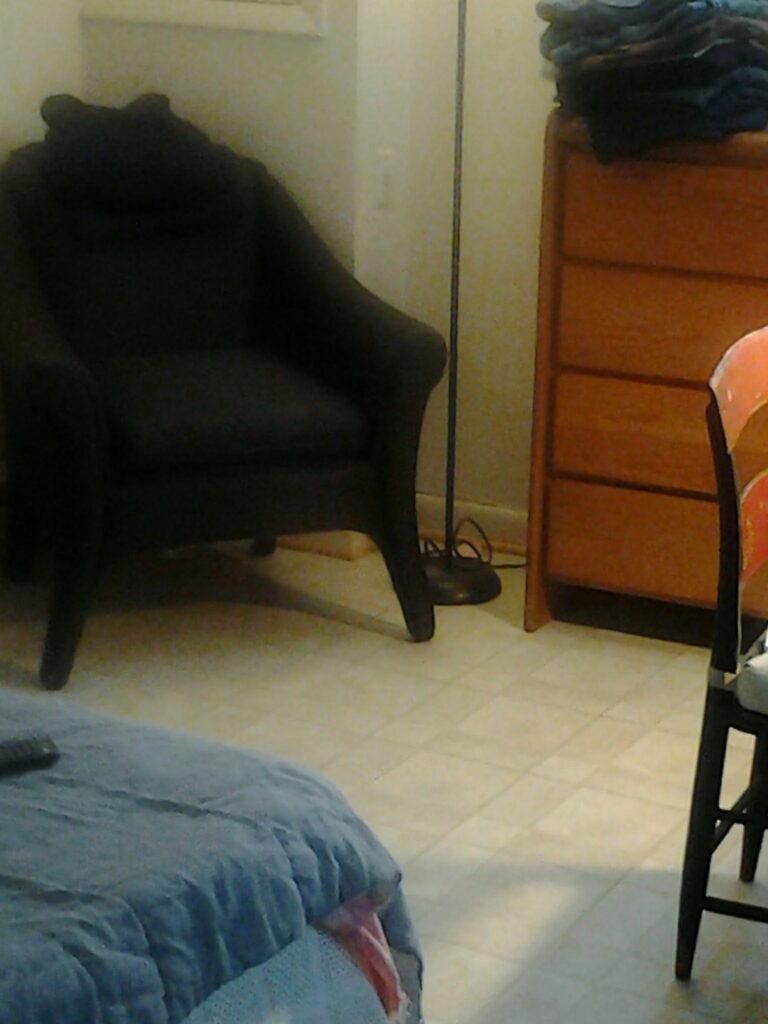
Each day, I called every shelter in the D.C. area. Panic set in on the last night, after there were no openings and detox staff had already told me I was to be discharged in the morning. I put a false face on, saying I’d go back to the streets and stay sober. Right then, in a RAOK, an angel named Georgette walked in the TV room. She heard my conversation and said her boyfriend was in a new recovery house with only two guys, and I should call. They accepted me, and just like that my “Nightmare on Elm Street” was over. Early the next morning, I was discharged and taken to Bellehaven Oxford House in the Alexandria section of Fairfax for a new beginning. I had no job, no money, and no room for failure.
To be continued…
This article originally appeared in Street Sense’s July 29, 2026 edition.