On Dec. 10, the D.C. Council’s Committee on Health debated with mental health providers, telecommunications company advocates, and city agency heads on the application of a 988 tax. Mental health and community groups, along with the city government, supported the tax, but advocates for the telecommunications industry opposed the bill. Nonetheless, all parties agree about the value of the hotline and its impact on D.C. residents.
The 988 Lifetime Support and Sustainability Establishment Amendment Act would make a helpful tool for preventing police involvement in mental health crises a fully funded fixture of the city budget through a monthly telecommunication fee on landlines, wireless, prepaid, and voice-over services. The 988 tax would be similar to the District 911 fee, with fees based on line type. All revenues would be deposited into the 988 fund and used only for directly related purposes.
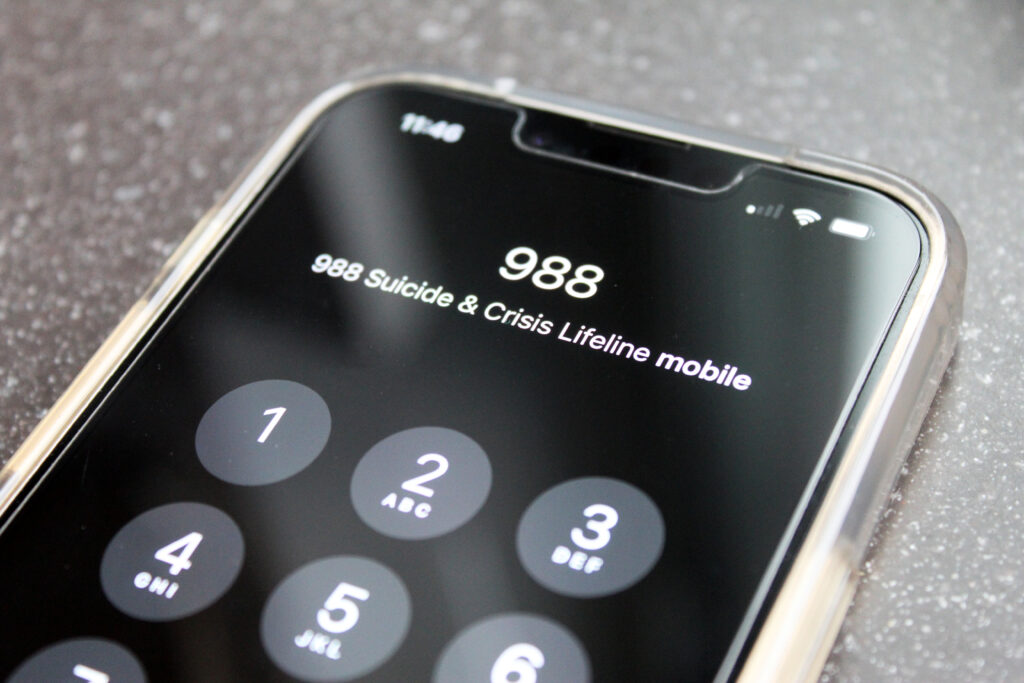
The 988 Suicide and Crisis Lifeline is an emergency line people can call if they’re having a mental health crisis. It debuted three years ago, when the National Suicide Prevention Lifeline went from 10 digits to three while expanding its services. The program is currently funded through temporary federal grants and doesn’t have a designated local budget allocation, which the tax would create.
Barbara Bazron, the director of D.C.’s Department of Behavioral Health, said that at some point it may be necessary for D.C. residents to pay a tax to maintain the 988 line. 988 is federally funded at this moment, according to Bazron.
988 received 10,200 calls in fiscal year 2024, a slight increase from 9,700 calls in fiscal year 2023, according to Bazron.
Throughout the hearing, everyone supported 988. Organizations like community activist group Harriet’s Wildest Dreams, homeless services nonprofit Miriam’s Kitchen, and the network of community advocates Anacostia Parks and Community Collaborative all supported the bill.
But advocates for telecommunications companies such as AT&T and Verizon, like Jake Lestock, director of state legislative affairs at the Cellular Telecommunications Industry Association, oppose growing taxes to support the service.
“If this legislation were to be enacted, D.C. would have the highest 988 tax in the country,” Lestock said at the hearing. “Consumers already pay government fees and surcharges significantly higher than the sales tax imposed on goods and services.”
The bill would add a 76-cent per line per month tax on wireless and other telecommunications, the same as the 911 fee. Most states have not chosen to enact a new 988 tax on their residents, Lestock said, and only 11 states have chosen to fund these services through taxes. Under the new tax, a family with four wireless lines that pays $100 per month for a phone bill would pay an additional $36.50 annually, according to Lestock.
Jillian Burford, a policy organizer with Harriet’s Wildest Dreams, a community activist group focused on aiding Black lives at risk for state-sanctioned violence in the Washington D.C. area, testified for the bill.
The 988 crisis hotline gives the D.C. community another resource to assist with mental health issues besides police intervention, she said, which can lead to jail or death in the worst-case scenario. Instead of walking away and ignoring someone who needs help, the community has a number to call, and the data shows they are using it.
“By redirecting 911 to 988, we are decriminalizing mental health crises and saving lives,” Burford said. “A cop is a cop, and mental health is not a crime, so why do we call 911?”
This article originally appeared in Street Sense’s Jan. 14, 2026 edition.