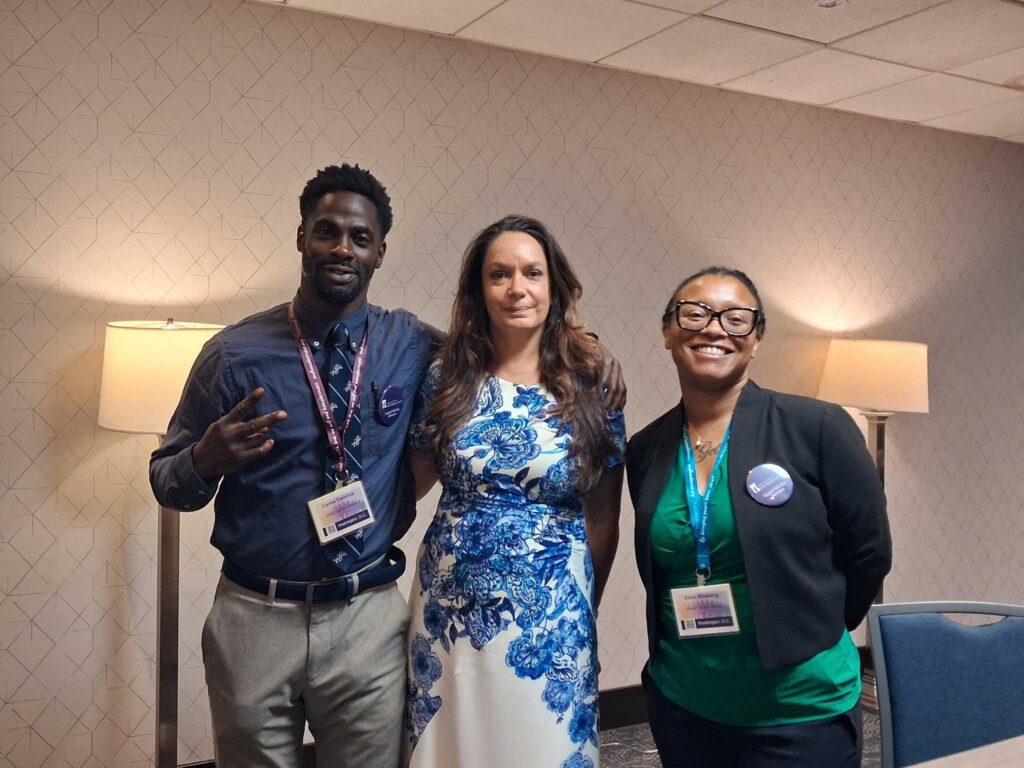
As I reflect on my three days at the National Alliance to End Homelessness Conference in the District. I’m reminded how the American homelessness crisis is not a static tragedy; it is a dynamic “underworld,” a geographic and psychological space where survival is a grueling, full-time job. For those of us with lived experience, the reality is often masked by a veneer of functionality. As a barista and bartender, I once worked double shifts not only for the wages, but to minimize the hours I spent in my car. This “underworld” is populated by thousands who, like me, navigate a social safety net that functions more like a sieve than a floor. To dismantle this crisis, we must bifurcate our strategy into two pillars: prevention and deterrence. Prevention involves the interruption of the pipeline into homelessness, stopping the first instance of housing loss before an individual ever touches the street. Deterrence is the clinical interruption of the cycle of recidivism, ensuring those who have scaped the underworld are not dragged back by systemic inertia.
The anatomy of invisibility: Rural realities and “doubledup” populations
Strategic intervention is frequently paralyzed by a fundamental misunderstanding of what homelessness looks like outside urban centers. In rural regions like Cleveland, Georgia, or the outskirts of Virginia Beach, homelessness is “hidden” within the private sphere. Jeff from the state of Georgia, who didn’t provide his last name, and Ty Walker from Virginia’s observations reveal a massive “doubled-up” population, individuals living in precarious, “housed but unstable” arrangements. This includes families taking in pregnant teenagers or relatives who have nowhere else to go. Within this hidden population, we see survival strategies that are often misinterpreted. For example, some individuals engage in what is colloquially termed “hobo-sexuality,” entering or remaining in precarious, often unhealthy relationships strictly as a survival strategy to secure a roof. Because these individuals are not on a sidewalk, they are structurally ignored by current resource allocation models.
The primary mechanism for federal funding, the Point-in-Time Count, is a flawed instrument that fails to capture the transience of the unhoused:
- Temporal distortion: By counting only once a year in the depths of January, the system captures a snapshot of the coldest month when the unhoused are most likely to be “stacked up” in hotels or temporary shelters, missing the year-round reality.
- Geographic erasure: In tourist hubs like Virginia Beach, Not In My Backyard policies push the unhoused into rural outskirts to maintain a “clean” image, effectively removing them from the count and the resource pipeline
- Demographic blindness: The count fails to account for the “doubled-up” and those in survival-based relationships, treating homelessness as a binary (sheltered/unsheltered) rather than a spectrum of instability. Without an accurate accounting that recognizes these “gray areas,” we cannot implement the economic stabilizers required to prevent “literal” homelessness.
The financial lynchpin: The “cliff effect”
Financial literacy is the strategic lynchpin of stability. However, literacy is useless when the system itself is, as advocates Kaimbrea Vance from Partners In Care in Hawaii and Tashmia Bryant from the Corporation for Supportive Housing describe it, “completely upsidedown.” The most significant institutional barrier is the “cliff effect.” In the Hawaiian context (though it serves as a universal systemic critique), a minor $20 increase in income can trigger a disproportionate $800 loss in food and housing benefits. This creates a perverse incentive where the poor must deny raises to avoid total collapse. Strategically, we must advocate for a shift from “money” to “currency.” While money is often viewed as a static resource for bills, currency is a flow. We must frame social services (the Supplemental Nutrition Assistance Program, Medicaid, and Temporary Assistance for Needy Families) not as “handouts,” but as a diversified financial portfolio of income streams. Stability is achieved when these resources flow in concert with side hustles and traditional employment.
“That mental load kills us on a daily basis… I’m five seconds away from homelessness every month while I’m trying to manage these bills,” Tamiah Coffee of the Kansas Statewide Homeless Coalition said.
This mental load is a predictable result of a system designed to manage poverty rather than end it. Transitioning to systemic stability requires moving from individual crisis management to institutional reform.
Reimagining the pipeline: Justice-impacted citizens and discharge planning
The discharge process from prisons and jails is the most critical intervention point in the “penal-to-homelessness pipeline.” Currently, housing is often a secondary thought in release planning, leaving individuals to choose between the street or unstable addresses that violate parole. Carlos Carolina, a Street Sense vendor and D.C. resident, argued for a strategic shift from the label “returning citizen” to “productive citizen.” This is not mere semantics; it is a policy framework that shifts the state’s role from “monitoring-based parole” to “investment-based reentry.” The “90-Day recidivism window” is the period of maximum volatility. If a “productive citizen” is not linked to stable housing and life-skills support upon release, the system has effectively designed their return to a cell. Housing must be integrated into discharge planning with the same urgency as medical care or legal supervision.
“Nationwide, 17,500 people on average become homeless for the first time every week in this country,” Ann Oliva, the CEO of National Alliance to End Homelessness, said.
These numbers reflect the catastrophic failure of our institutional “warm handoffs.” Whether exiting foster care, hospitals, or prisons, the lack of immediate, stable housing ensures the cycle of the underworld continues unabated.
From barbarism to community: The strategic power of empathy
Ending homelessness requires reclaiming the public narrative from “shame” to “collective responsibility.” We must reject the false binary presented by groups like the Cicero Institute, which suggests we must either let people “rot” or force them into what Oliva warns are essentially “detention camps.” Evidence shows voluntary services and community-based care are historically more effective and provide long-term stability. Missouri native and member of Creative Innovative Street Outreach and Community Engagement, Anton Washington, identifies the core of our failure:
“How barbaric can you be to allow someone to stay on the streets while you walk past them and not give them what they need? … That’s barbarism,” Washington said.
Policy must reflect the “freshwater” model, understanding you cannot put a freshwater fish in saltwater and expect it to survive. We must fund models that prioritize permanent housing over transitional shelters. This includes the social housing model, where universal government-owned housing removes the profit motive from human shelter, and the “kauhales” (tiny homes) model in Hawaii. The kauhales are not just shelters; they are permanent communities where tenants serve as security guards or cooks, reducing overhead while restoring dignity.
The year of the harvest
The dismantling of homelessness requires a radical rejection of silos. We must advocate for data sharing between the criminal-legal system, the education system, and housing providers to identify those in the “earthquake gaps” before they fall. Washington envisions the coming years as the “year of the harvest,” a time when the veil of systemic invisibility is lifted, and the community reclaims its power. This harvest is the result of seeds planted today: financial literacy, empathetic policy, and the reimagining of our fellow citizens as “productive” rather than “problems.” The national community is responsible for filling the gaps in our social safety net. We must refuse to settle for a system that merely manages the sidewalk; we must build a blueprint that ensures every human being has a foundation upon which to stand.
Editor’s note: Street Sense vendors and journalists were able to attend the National Alliance to End Homelessness conference through a partnership with the organization, which allowed reporters to attend for free and provided small stipends for travel. NAEH worked with reporters to set up interviews during the conference, but did not review any of the articles ahead of publication.
This article originally appeared in Street Sense’s July 29, 2026 edition.